
Writing on Jewish life, relationships, trauma, and resilience
American Jewish Parents, Don’t Raise Frightened Jews

Illustrative. AI image created by the author.
American Jewish parents are asking how to prepare their children for a world where antisemitism is once again visible.
The recent Democratic primary in New York’s 10th Congressional District offered two different political answers.
I think it exposed a much deeper parenting question.
Brad Lander and Dan Goldman, two Jewish, Zionist candidates, offered different answers to the question of how to keep Jews safe in a frightening time.
Lander and Goldman are serious men who genuinely care about Jewish safety. Both built explicit plans for confronting antisemitism into their campaigns for the second most Jewish congressional district in the country.
Lander won by nearly two to one.
I’ve read the analysis. I’ve read the headlines. What I haven’t read is anyone asking the question I can’t stop thinking about:
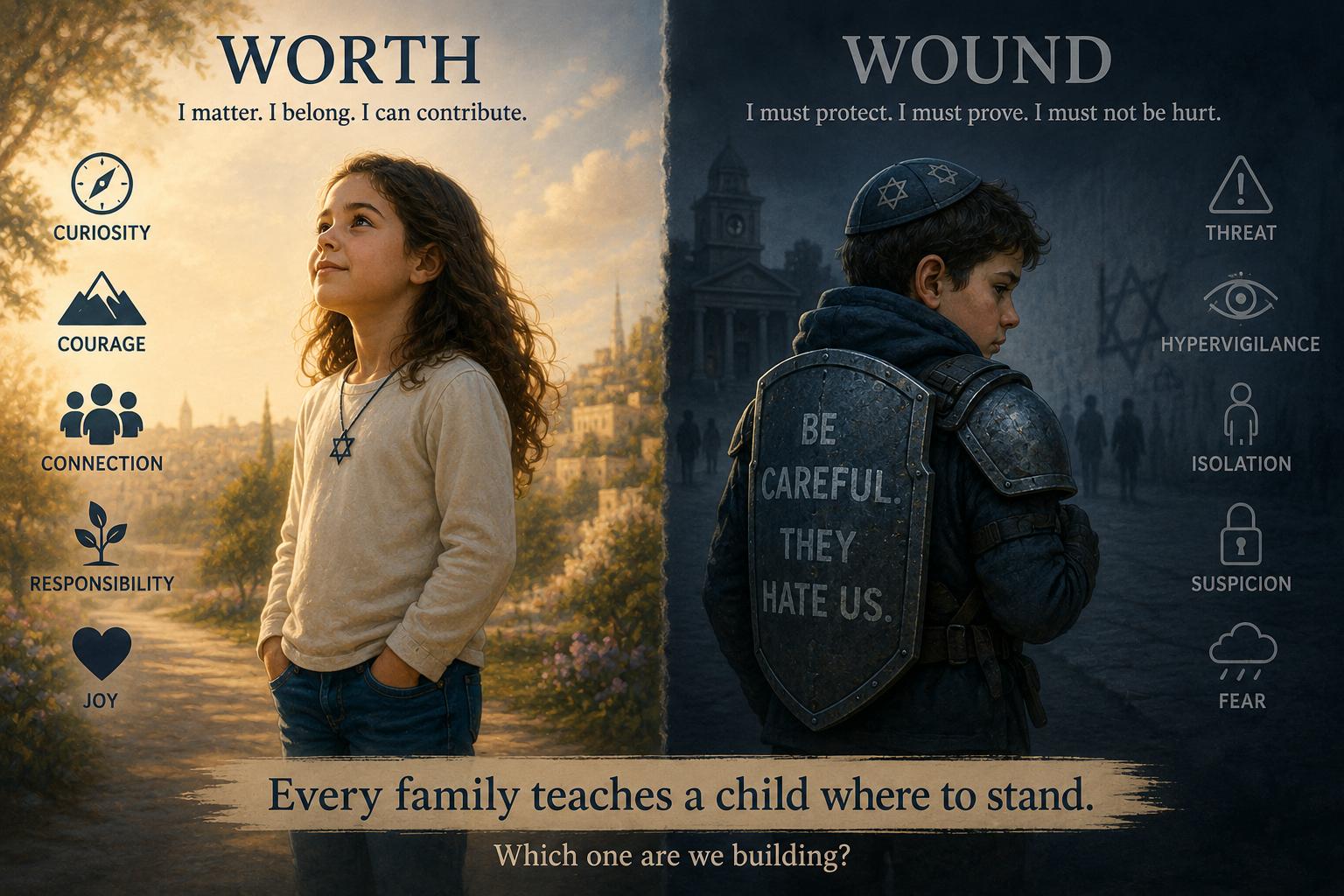
What are we teaching our children to carry inside themselves — and is what we’re giving them a foundation, or a wound?
Two strategies. One missing conversation.
The Forward’s Joel Swanson wrote perceptively that the Lander-Goldman race wasn’t really about Israel. It was a contest between two ancient strains of Jewish thought: the universalist strand that insists Jewish ethics point outward first, toward solidarity with all who suffer; and the particularist strand that insists loyalty to one’s own people is the structural precondition for Jewish survival.
Both readings are genuinely grounded in our tradition. Both have been tested by history. Neither one is wrong.
But both are arguments about which adults will protect Jewish children. Neither is an argument about what we are building inside those children before they are old enough to vote — or to face a slur in a school hallway, a hostile professor, a chanted crowd outside their campus Hillel.
The question I’m asking isn’t primarily political. It’s developmental. Before children become voters, advocates, or leaders, they become people. The emotional habits they acquire at home become part of the way they experience the world—including what it means to be Jewish. That’s where I find pioneering family therapist Virginia Satir’s work especially illuminating.
What we are actually transmitting
I’ve spent decades understanding how fear travels between generations. What I’ve learned—and what Satir spent her life documenting—is that children don’t primarily absorb our beliefs. They absorb our emotional posture toward the world.
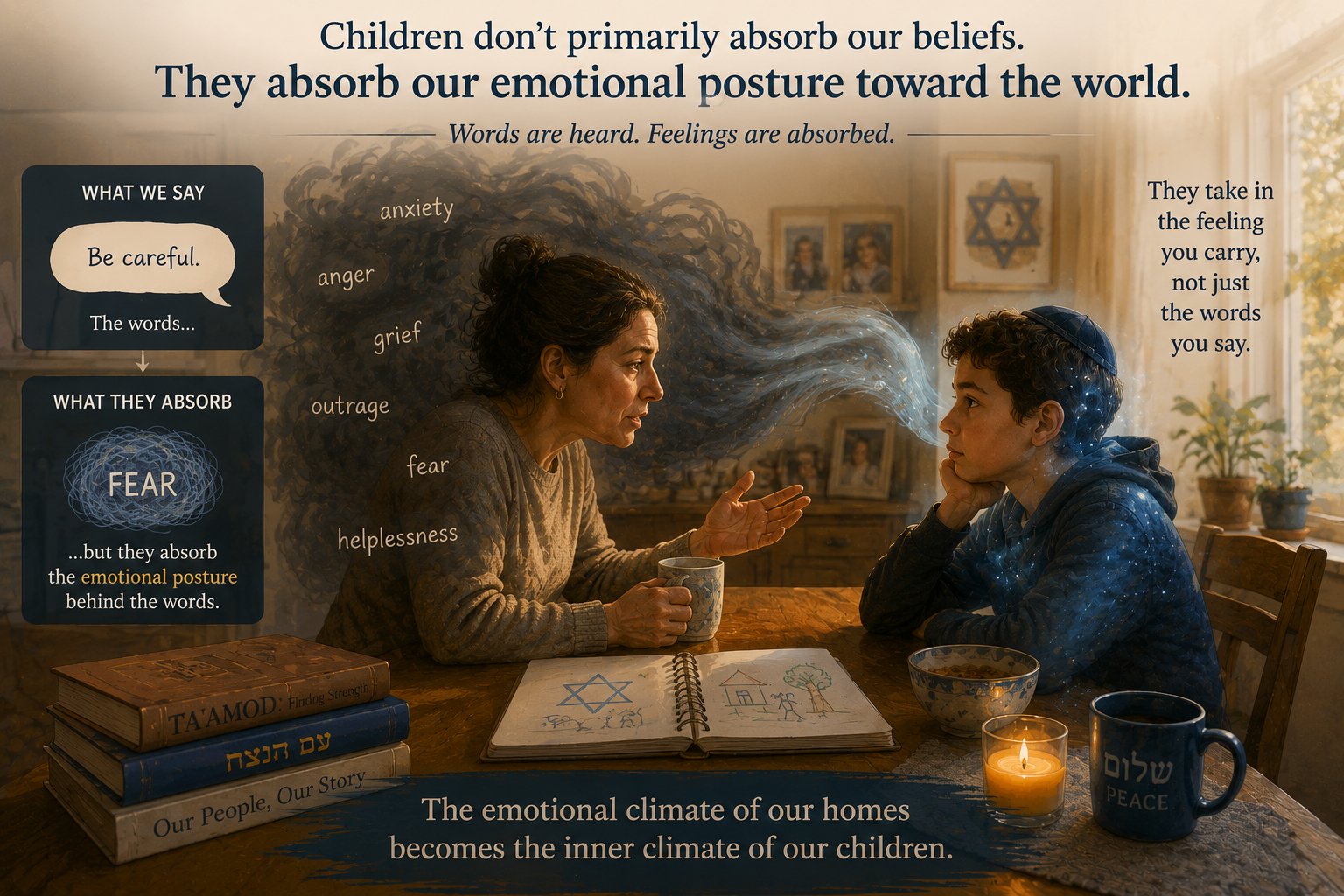
When we talk to our children about antisemitism, most of us — with the best of intentions — transmit one of two things.
The first is fear organized as vigilance: They have always hated us. They always will. Be careful. Be aware. Be ready. This produces children who are alert, often informed, sometimes brave. It also, over time, produces children whose Jewish identity is structured around threat. They know what Jews are against. They are less sure what Jews are for.
The second is pride organized as grievance: No people has suffered as we have. No hatred is as old or as persistent as ours. Our pain is singular. This produces children with a powerful sense of historical identity. It also, if we are honest, can produce children who experience the acknowledgment of anyone else’s suffering as a diminishment of their own — which is precisely the psychology that makes the Lander-Goldman divide so bitter, and so hard to bridge.
Satir drew a distinction I return to constantly: the difference between worth and pride.
Pride is comparative. It requires someone beneath it. It is fragile, because it depends on external confirmation — on the world recognizing our pain as legitimate, our history as singular, our claim as primary. When that confirmation doesn’t come, pride converts quickly into rage.
Satir wasn’t writing about Jewish identity or antisemitism. She was describing something more fundamental: the difference between a person whose value comes from comparison and one whose value is secure enough to remain intact in the presence of another’s dignity. That distinction seems deeply relevant to the way many of us are trying to raise Jewish children today.
Worth is different. Worth is the interior knowledge that I matter — not because my suffering is greater than yours, not because my history is longer or my grievance more legitimate, but because I am a human being and a Jew, and those two facts are inseparable and sufficient.
A child grounded in worth can acknowledge another person’s pain without feeling erased by it. A child grounded in pride cannot — because for them, acknowledgment of another’s suffering always feels like a subtraction from their own.
Here is the question I’d put to every Jewish parent in America right now: which one are we building?
What Lander was actually pointing toward
In his victory speech, Lander said something that got less attention than his comments about Gaza:
“I like talking to Jewish voters who feel anxiety about the times we’re in and say, ‘I have these values, I want to treat everyone like they’re equal and with dignity and created in God’s image. How do we navigate the times we’re in?'”
He added, with a smile: “Those are probably the longest conversations at the polls.”
Those are exactly the conversations we should be having at home.
Not: which political coalition will keep you safer?
Not: which candidate understands Jewish history better?
But: how do we stay fully human — and fully Jewish — in a time that is pressing us toward fear?
That is a parenting question before it is a political one. And most of us are not asking it, because we are too busy fighting the political version of the argument to notice that the deeper conversation is not happening.
What we actually say — and what children actually hear
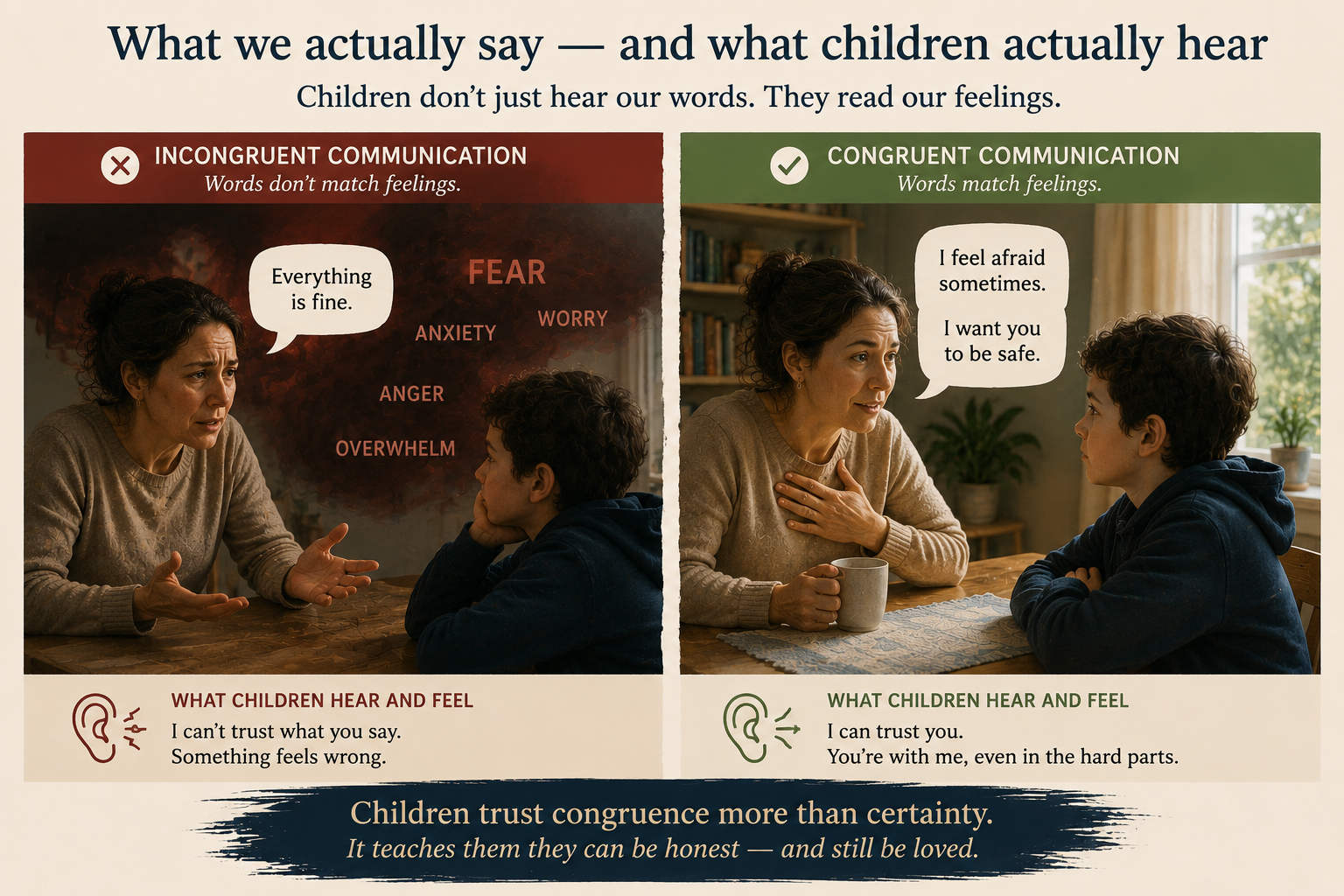
In the work I do with singles, couples, and families at PAIRS Foundation, we talk about congruent communication: speech that aligns what we feel inside with what we say out loud.
Incongruent communication — the kind most of us fall into under stress — hides the real feeling behind a position. It says: They hate us. The left is lost. The right is dangerous. Israel is all that stands between us and annihilation.
These statements may contain truth. But as a primary message to our children, they are incomplete in a way that does damage. They tell children what to fear. They do not tell children how to stand.
Congruent communication says something harder and more useful: I am afraid sometimes, and I want you to know that fear is not the whole story. Our people have faced hatred before and found ways to remain fully human. You can be alert without being defined by threat. You can know your history without being imprisoned by it.
This is not naivety. It is not the same as telling children antisemitism doesn’t exist or doesn’t matter. Antisemitism is real, visible, and rising enough that our children need to know how to recognize it and respond with both clarity and dignity.
But there is a difference between preparing a child for the world as it is and teaching a child that the world is primarily a threat to be survived. The first builds capacity. The second builds hypervigilance. And hypervigilance, over a lifetime, can quietly hollow out the very identity it was meant to protect.
The question beneath the political question
The Lander-Goldman race will be analyzed for months as a data point in the ongoing fracture of the Democratic Party over Israel and Gaza. That analysis is legitimate and important.
But what happened in NY-10 is also a mirror held up to American Jewish families — a reflection of something we have not yet resolved in our own homes.
Two Jewish men, both committed to Jewish safety, both fluent in Jewish history, ended up in a campaign so bitter that the Forward described the rift between their positions as “widening rather than closing.” Their voters, many of them Jewish, chose between them not on the merits of their antisemitism strategies but on the basis of something deeper and less articulable — a felt sense of which kind of Jewish identity, which emotional posture toward the world, felt most true.
That felt sense was formed long before they voted. It was formed in living rooms and at dinner tables, in synagogue classrooms and family arguments, in the stories parents told and the fears they transmitted, in whether the adults in the room could say I am afraid without that fear becoming a verdict on the whole world.
The political argument we are having about antisemitism is real. It matters. It has consequences.
But it is a surface argument. Underneath it is a question that only families can answer:
Are we raising Jewish children who know their worth — or children who know their wound?
Those two things are not the same. And the difference between them will shape not just which candidates Jewish voters choose in 2028, but what kind of people walk into that voting booth.
What parents can actually do
This is not an argument for any political position. Parents who hold Lander’s universalist values and parents who hold Goldman’s particularist values can both raise children grounded in worth rather than wound. The politics are secondary. The emotional transmission is primary — the way your children learn to feel Jewish, not just what they learn to think about being Jewish.
Think of the Jewish teenager who can sit in a classroom where Israel is being criticized and respond with clarity rather than panic — who can say “I hear you, and here is what I know to be true” rather than shutting down or shutting out.
Think of the young adult who can hold Passover with a non-Jewish partner and speak about what the Exodus means to her without needing it to mean something diminishing about anyone else.
These children exist. They were built, slowly, at kitchen tables by parents who practiced something. A few practices that translate:
- Name the fear without making it the identity. When antisemitism appears in the news, in school, in a conversation — name what you feel. This scares me. This makes me angry. And then name what else is true: We have navigated this before. We know who we are. Fear is not the same as helplessness. Children who can name their fear are not controlled by it.
- Tell the whole story of Jewish history, not only the chapters of persecution. Persecution is real and children need to know it. But a Jewish identity built exclusively on what others have done to us is a Jewish identity organized around victimhood. The chapters of creativity, resilience, humor, scholarship, argument, repair, and return are equally ours. Give children all of them.
- Model the difference between vigilance and contempt. Children absorb our emotional register, not just our words. If every conversation about antisemitism ends in contempt — for the left, for the right, for non-Jewish allies, for other Jews who see it differently — children learn that antisemitism is a reason to close, not a reason to stand. Vigilance stays alert and remains open. Contempt shuts down.
- Let the conversation be complicated. The question Lander described — how do we hold Jewish values and treat everyone with dignity and navigate a frightening time — is not a question with a clean answer. Letting our children sit with that complexity, without rushing them to a position, is itself a form of preparation. It teaches them that hard questions are survivable. That not knowing is not the same as not caring. That Jewish thought has always moved through argument toward something better.
These are not techniques. They are habits. And habits practiced at home become instincts carried into the world.
Politicians can negotiate coalitions.
Only parents can shape the human beings who will inhabit them.
The antisemitism debate in our politics is real. It matters. But politics is downstream of people, and people are downstream of homes.
What we build inside our children — worth or wound, openness or armor, identity grounded in what we are or organized around what we fear — will outlast every primary result, every congressional term, every political realignment.
That work does not require a platform or a podium.
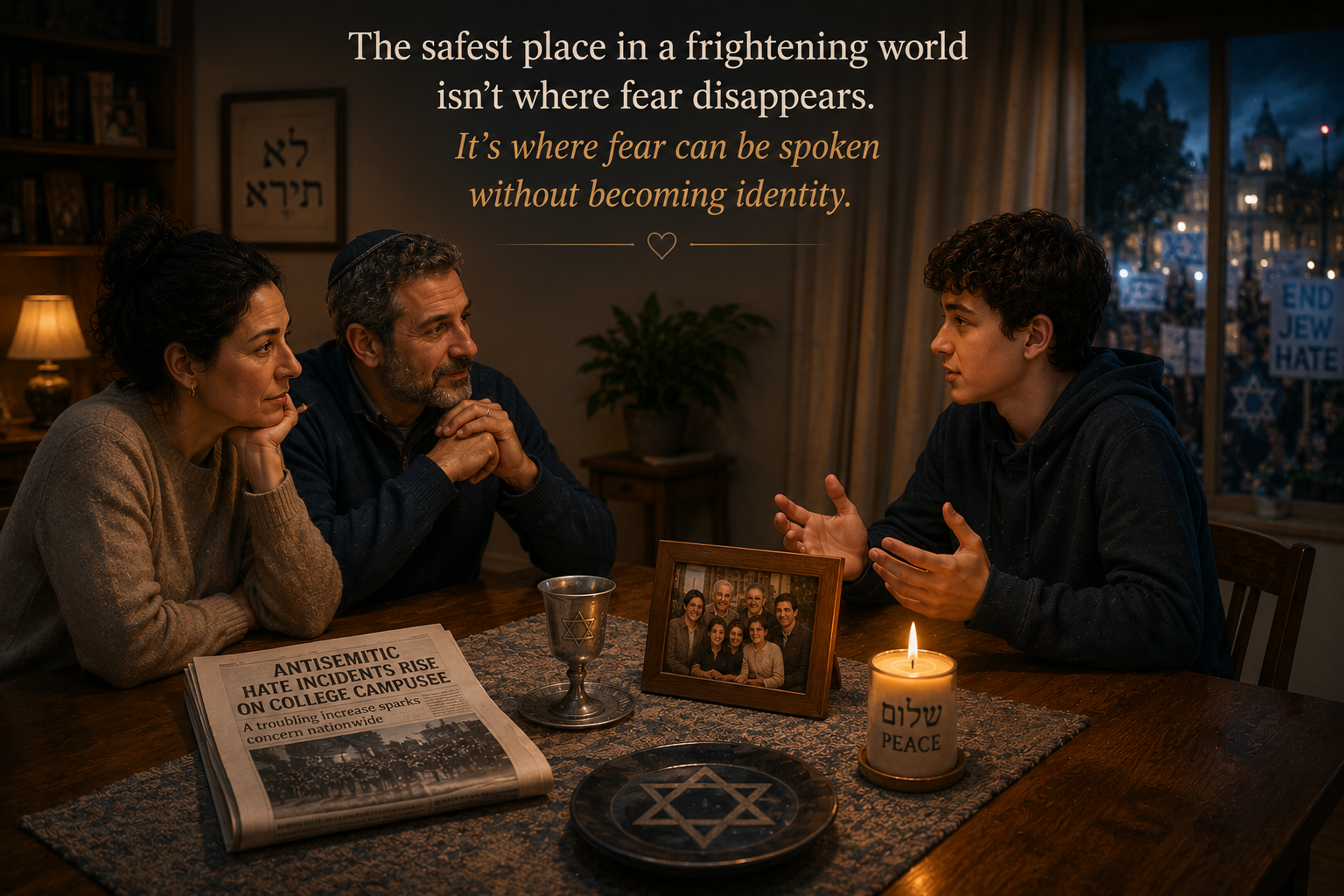
It requires a kitchen table.
Our children will inherit much more than our opinions about antisemitism.
They will inherit our emotional posture toward the world.
The question is whether that inheritance will be built on worth—or on wound.
Related Topics