
Amid UBS Inquiry, Grassley Calls on Trump to Unseal Nazi Records
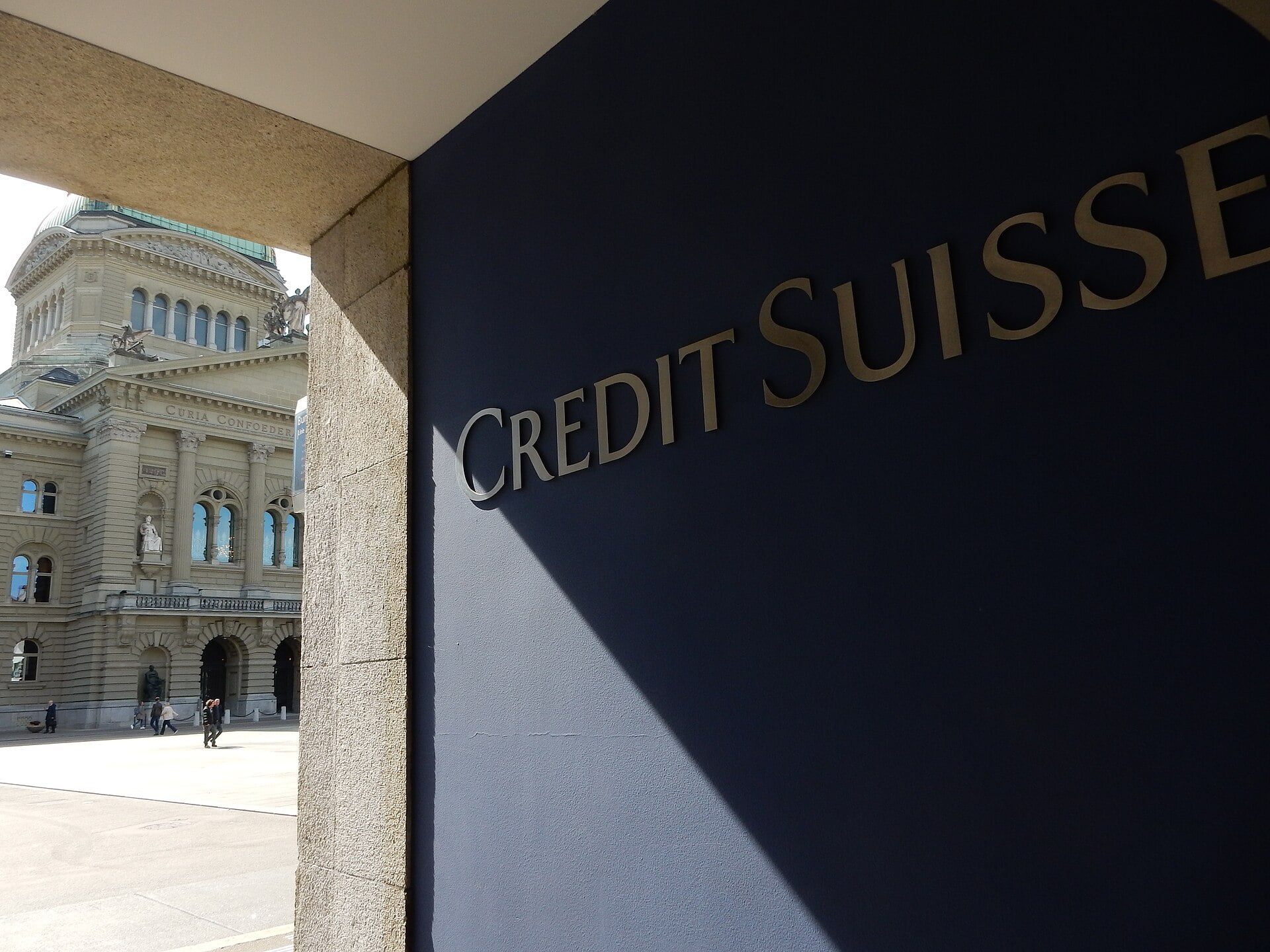
Senate Judiciary Committee Chairman Chuck Grassley has escalated a years long campaign against Swiss banking giant UBS and its predecessor Credit Suisse, calling on President Donald Trump to sign an executive order compelling federal agencies to declassify records connected to Nazi war crimes. The request, made in a letter to the White House, marks a significant intensification of the Iowa Republican’s push to force full transparency from a bank he says has repeatedly obstructed investigators digging into its wartime past.
Grassley urged Trump to force federal agencies to declassify documents, raising the stakes in his years long pressure campaign against UBS and predecessor bank Credit Suisse. Neither the White House nor UBS — which acquired Credit Suisse a few years ago — immediately responded to requests for comment on the letter.
In his message to the president, Grassley described a bipartisan investigation he has led since April 2023, saying it has revealed previously undisclosed and unknown Nazi-linked accounts at Credit Suisse. The senator wrote that his inquiry, alongside related probes into the Holocaust era, has uncovered hundreds of undisclosed Nazi-linked accounts, the theft of money and gold, and the looting of treasured artwork.
To bolster his case for executive action, Grassley pointed to a recent precedent set by the president himself. He cited Trump’s January 2025 order declassifying documents related to the assassinations of John F. Kennedy, Robert F. Kennedy, and Martin Luther King Jr. as a model for the kind of sweeping disclosure he is now seeking regarding Nazi War Crimes Disclosure Act materials. Grassley’s letter argued that a new executive order requiring the release of any unreleased material under that law — including still-classified records that warrant declassification review — would send an important signal about the government’s commitment to historical transparency.
A Years long Fight Over Wartime Records
Grassley’s appeal to the White House is the latest chapter in an investigation that traces back more than three years, when he first began examining how Credit Suisse handled accounts tied to Nazi officials, collaborators, and the networks that helped war criminals escape justice after 1945. The probe gained new urgency after Credit Suisse’s 2023 collapse and its emergency, government-brokered acquisition by rival UBS — a deal that left UBS holding responsibility for an investigation it did not start but has since found itself unable to escape.
At the center of that investigation is Neil Barofsky, the independent ombudsman overseeing the inquiry, whose relationship with UBS has grown increasingly contentious. Barofsky and UBS have been at odds over certain documents that UBS has withheld from him, citing attorney-client privilege. The dispute has not stayed confined to closed-door negotiations; it has also been playing out in court, with UBS saying it will turn over the disputed files to Barofsky only if a US judge confirms that any new revelations cannot lead to the reopening of the bank’s 1999 settlement. That earlier settlement resolved long-running claims over dormant Holocaust-era accounts at Swiss banks.
But UBS’s effort to shield itself from further liability hit a setback this spring. In April, a judge rejected the bank’s bid for an order that would have protected it from potential lawsuits stemming from new revelations about Nazi-linked accounts. That ruling appears to have emboldened Grassley’s committee to press harder, both on UBS directly and now on the executive branch.
Committee Hearings Reveal Scale of Withheld Material
The scope of the standoff between investigators and the bank has become clearer through a series of committee hearings held over the past several months. Testimony from Barofsky before the Senate Judiciary Committee has painted a picture of a bank that promised full cooperation but scaled back access once congressional scrutiny intensified.
According to a Senate Judiciary Committee summary of an April floor speech, Grassley recounted how a February hearing was meant to showcase the cooperative work between UBS, Barofsky, the Simon Wiesenthal Center and his committee. Grassley said UBS had committed to fully exposing the wrongs committed by Credit Suisse, framing the information about Nazi-era misconduct as belonging to humanity as a whole. But that cooperation reportedly changed once the committee signaled it might hold a hearing. Barofsky told the committee that shortly after UBS learned a hearing was being considered, the bank informed him it would, for the first time, conduct a privilege review and begin withholding certain relevant materials from him and his team.
The discrepancies didn’t end there. Barofsky also told the committee that UBS leadership had provided misleading information, even after being warned that the information was inaccurate — including testimony at the hearing that the bank had withheld fewer than 150 documents. That figure has since been revised dramatically. Barofsky informed the committee that, as of March 11, 2026, approximately 23,000 pages of material had been redacted or withheld from him — a gap between the bank’s public statements and the actual scale of withheld records that has fueled Grassley’s frustration.
UBS has also taken legal action against organizations involved in the investigation. The bank pursued legal action against the Simon Wiesenthal Center, though a federal court in New York ultimately ruled against UBS’s efforts — a decision Grassley welcomed as protecting the center’s ability to speak freely on Holocaust-related issues.
Separately, a March hearing before the committee featured direct questioning of UBS executives about the bank’s handling of the investigation. Barofsky discussed his investigative progress at that hearing, including new evidence regarding Credit Suisse’s involvement in forced asset transfers and Nazi ratlines, along with UBS’s efforts to restrict his access to relevant documents. Bank representatives, for their part, confirmed to Grassley that Barofsky’s final report to Congress would include as many unredacted names of Nazi-linked account holders as possible, within the bounds of Swiss law — a caveat that has left open questions about how much will ultimately be disclosed.
Forced Transfers and New Evidence
Beyond the fight over document access, the substance of what investigators have already uncovered has drawn attention in its own right. Barofsky testified to lawmakers about previously unreported examples of Credit Suisse executing forced transfers of Jewish clients’ assets to Nazis — a description that goes beyond the passive dormant-account narrative that shaped earlier restitution settlements and instead points to active complicity in asset seizures.
Barofsky has also made clear that he does not consider his work finished while so much material remains out of reach. He testified that he could not honestly consider his inquiry complete unless UBS released the withheld files, which the bank deems either private attorney work product or protected by attorney-client privilege.
Pressure Campaign Widens to the Administration
Grassley’s outreach to Trump did not begin with this latest letter. The senator had already urged the Trump administration to pressure UBS for answers in a May letter to officials, sent after the Treasury Department approved the bank’s plans to expand its US operations. That earlier appeal suggested Grassley saw the Treasury’s regulatory leverage over UBS’s American business as an opportunity to extract further cooperation — an avenue that appears to have produced limited results, prompting the more dramatic request for a declassification order now.
For its part, UBS has consistently pushed back on characterizations that it has stonewalled investigators. The bank told the Washington Examiner it remains committed to engaging constructively with the committee. UBS has also pointed to the history of the investigation itself as evidence of good faith, noting that beginning in 2020, Credit Suisse — and, following its acquisition, UBS — conducted what the bank described as a monumental voluntary investigation into Credit Suisse’s World War II-era conduct, with UBS continuing to support those efforts as a testament to its commitment to finding the truth.
A Broader Reckoning
The push for declassification arrives against a backdrop of renewed international attention to Nazi-era financial and logistical networks. Argentina, for instance, has moved to open its own state archives on the subject. Buenos Aires announced plans to declassify all government-held files relating to Nazi fugitives who fled and settled in the country after World War II, with the documents expected to include Nazi-linked bank accounts and records detailing the “ratlines” — the monetary and logistical pathways Nazis used to escape justice. Grassley has separately sought similar records from other governments, arguing they could help illuminate how Nazi officials planned their escape routes after the war’s end.
At home, the scale of the investigation has grown well beyond its original scope. Tens of thousands of documents uncovered through a related Senate Budget Committee investigation into Credit Suisse’s World War II-era accounts have indicated extensive new evidence of previously unknown or only partially known Nazi-linked account holders that the bank failed to disclose during earlier rounds of scrutiny. That bipartisan inquiry, led by Grassley and Senator Sheldon Whitehouse during the 118th Congress, compelled a full examination of Credit Suisse’s records by a third-party forensics team from AlixPartners, work that continues to feed into Barofsky’s ongoing review.
Whether Trump acts on Grassley’s request remains to be seen. But for Holocaust-era restitution advocates, survivors’ families and historians who have spent decades pressing Swiss banks for full accounting of wartime conduct, the senator’s invocation of a presidential order — the same tool used to unseal assassination-related files — signals that the fight over UBS’s remaining Nazi-linked archives may soon move from congressional hearing rooms to the Oval Office itself. As Grassley put it in pressing his case: “We owe nothing less to the victims of one of the darkest periods of human history:” (Editor’s note: UBS’s second-quarter 2026 results: If you download the PDF in this link you’ll notice in page 41 from 55, the amount of money put aside for litigation U$S 1.6 billions.)
See also:
*6/2020: Cry for me Argentina : l’extraordinaire liste nazie
*5/2020: La Mission de P. Filipuzzi
*9/2023,: ‘Credit Suisse Must Investigate Servicing of Nazi Clients’ (US Senate)
*1/2024: The Deal of the Century ‘is not a gift’ (UBS CEO)
*4/2026: Pedro Filipuzzi Interview | Alexandre Gilbert #332