
CEO of Time to Stand Up for Israel
An infectious illness: Obsession
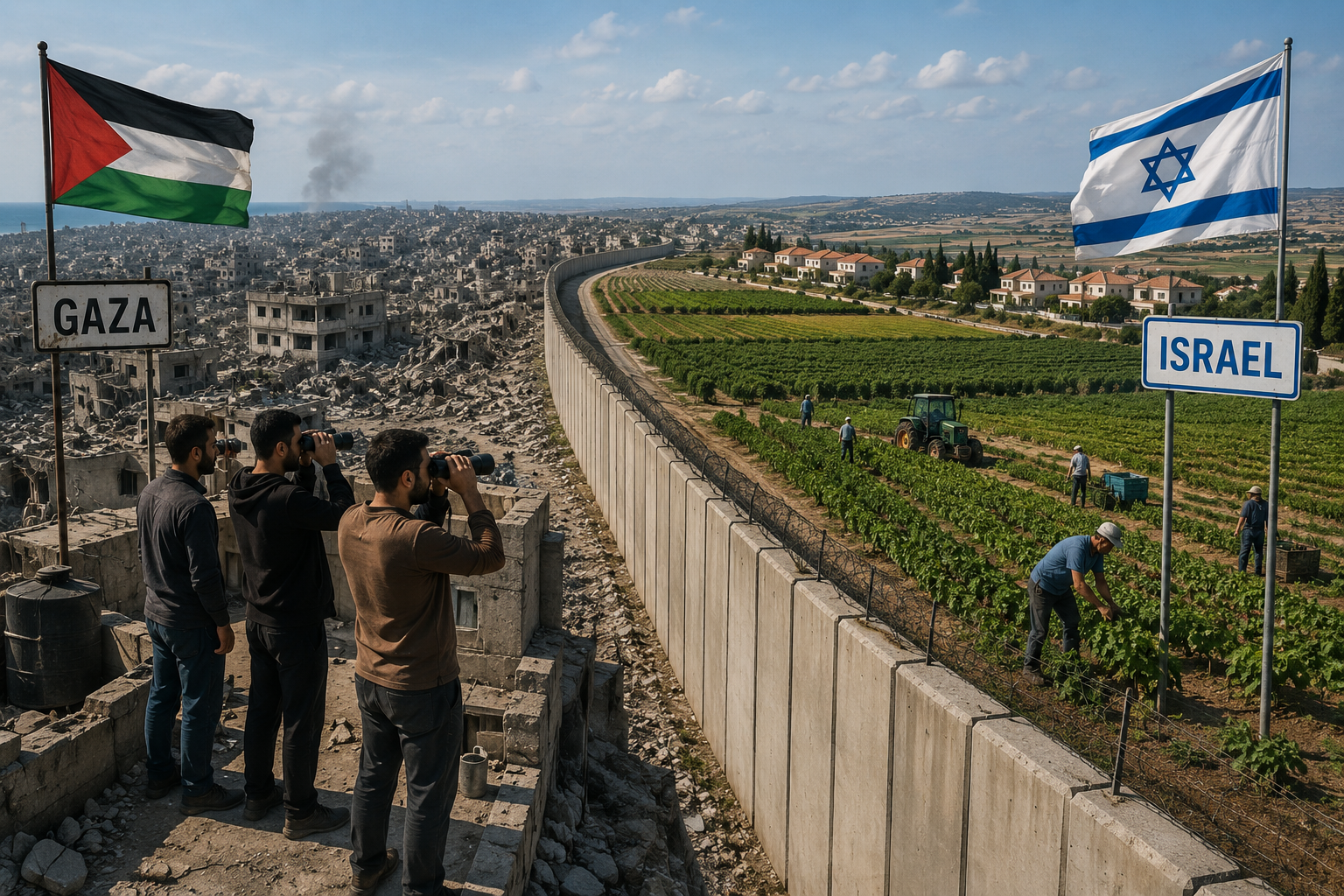
Photo credits: Sabine Sterk (AI)
The “Palestinian” infectious illness: Obsession
Some people spend their lives building.
They create businesses. They invent products. They develop technologies. They build schools, hospitals, roads, parks, and communities. They wake up every morning asking themselves one simple question: how can I make tomorrow better than today?
These are the people who move humanity forward.
They see opportunities where others see obstacles. They understand that success is rarely handed to anyone. It must be earned through hard work, sacrifice, determination, and a willingness to take responsibility for one’s own future.
Then you have the “Palestinians”:
Imagine for a moment that the same energy invested in conflict had been invested in construction.
Imagine if every tunnel had become a factory.
Imagine if every rocket had become a school.
Imagine if every slogan of resistance had become a business plan.
Imagine if every child had been taught that success comes from creating something rather than destroying something.
The “Palestinians” appear to have an unprecedented obsession with Israel.
Consumed by Israel’s achievements, they seem determined to possess the same success, prosperity, and international recognition. Yet instead of following the path that transformed Israel through innovation, hard work, education, and nation building, they have allowed their national identity to become rooted in hate, historical distortions, and narratives that often bear little resemblance to reality.
The suffering of their own people is treated not as a tragedy to be solved, but as a political asset to be displayed before the world. Poverty, conflict, and hardship become tools for attracting international attention, sympathy, and financial support. In this framework, resolving problems can appear less important than preserving them.
What began as an obsession has become contagious. It has spread far beyond the region, fueling an international epidemic of hostility toward the Jewish state. Across universities, media platforms, political movements, and social networks, criticism of Israel frequently crosses the line into demonization, holding the world’s only Jewish state to standards demanded of no other nation.
The result is a climate in which facts are often ignored, context is discarded, and hatred is amplified. Rather than encouraging coexistence, peace, and development, this obsession perpetuates division and resentment, trapping generations in a cycle that benefits political agendas far more than it benefits ordinary people seeking a better future.
This is a pattern already going on for decades, the “Palestinians” have received international attention on a scale few people on earth could ever imagine. Their cause dominates news broadcasts, university campuses, political debates, international organizations, and social media platforms. Billions upon billions of dollars have been poured into Palestinian territories. Countless diplomats have invested endless hours attempting to create peace and stability.
Yet when I look at Gaza and the Palestinian leadership over the years, I see one enormous missed opportunity.
What would Gaza look like today?
I believe it could have been one of the most successful regions in the Middle East.
It could have become a thriving economic center on the Mediterranean coast. It could have attracted investors, tourists, entrepreneurs, and innovators from around the world. It could have built modern housing projects, industrial zones, universities, hospitals, and technology centers.
Instead of becoming known for violence, it could have become known for opportunity.
Instead of being associated with destruction, it could have been associated with development.
Instead of producing headlines about war, it could have produced headlines about success.
But that is not what happened.
In my opinion, the fundamental problem has always been a mindset that places conflict above construction.
Time after time, opportunities were rejected.
Time after time, confrontation was chosen over cooperation.
Time after time, energy that could have been directed toward building a future was directed toward fighting the past.
The result is visible to everyone.
While Israel focused on developing industries, agriculture, medicine, science, technology, and infrastructure, Palestinian leadership repeatedly focused on hate, demands, and confrontation.
That comparison makes many people uncomfortable, but it remains unavoidable.
Israel did not become successful by obsessing over what others had. Israel became successful by building.
Cities were built.
Universities were built.
Companies were built.
A modern economy was built.
A nation was built.
Meanwhile, Palestinian society remained trapped in a cycle of victimhood and anger that has benefited leaders far more than ordinary people.
What fascinates me most is how this obsession has spread far beyond the Palestinian territories themselves.
Today there are activists across Europe, North America, and elsewhere whose entire political identity seems to revolve around Israel.
They rarely protest against the mass killings in Sudan.
They rarely speak about the oppression of women in Afghanistan.
They rarely march for the victims of terrorism in Nigeria.
They rarely organize demonstrations for the suffering people of Yemen, Congo, Syria, or Iran.
Yet Israel dominates their thoughts, conversations, campaigns, and social media feeds.
Why?
That is a question worth asking.
The world contains countless conflicts and humanitarian disasters. Millions of people suffer under brutal dictatorships and violent regimes. Entire populations are subjected to persecution, starvation, and repression.
Yet somehow one tiny country receives an amount of attention that seems wildly disproportionate when compared with global reality.
To me, that reflects an unhealthy fixation.
Every discussion returns to Israel.
Every problem is linked to Israel.
Every outrage seems reserved for Israel.
Meanwhile genuine catastrophes elsewhere barely receive a mention.
I believe this fixation does enormous damage.
It prevents honest conversations.
It discourages self reflection.
It rewards blame rather than responsibility.
Most importantly, it offers Palestinians a dangerous illusion that their future depends entirely on the actions of others rather than on the choices they make themselves.
No society has ever achieved prosperity by focusing exclusively on what someone else possesses.
Prosperity comes from building.
Peace comes from building.
Freedom comes from building.
A future comes from building.
The tragedy of the Palestinian cause is not simply the suffering that has occurred.
The greater tragedy is the lost potential.
An entire generation could have been taught to create instead of destroy.
An entire society could have focused on opportunity instead of resentment.
An entire region could have become a model of success rather than a symbol of endless conflict.
I still believe that future is possible.
But it will never emerge from obsession.
It will emerge when construction replaces confrontation, when responsibility replaces victimhood, and when people finally decide that building a future is more important than fighting the past.
That is the choice that remains.
And until that choice is made, peace will remain far away.
Related Topics