Ancient and Unique Uzbekistan: Namangan II
Every year, at the end of spring, in the “city of flowers” Namangan, a real flower extravaganza takes place – the Flower Festival which the city is famous for.
Flowers symbolize a good mood, joy, and beauty.
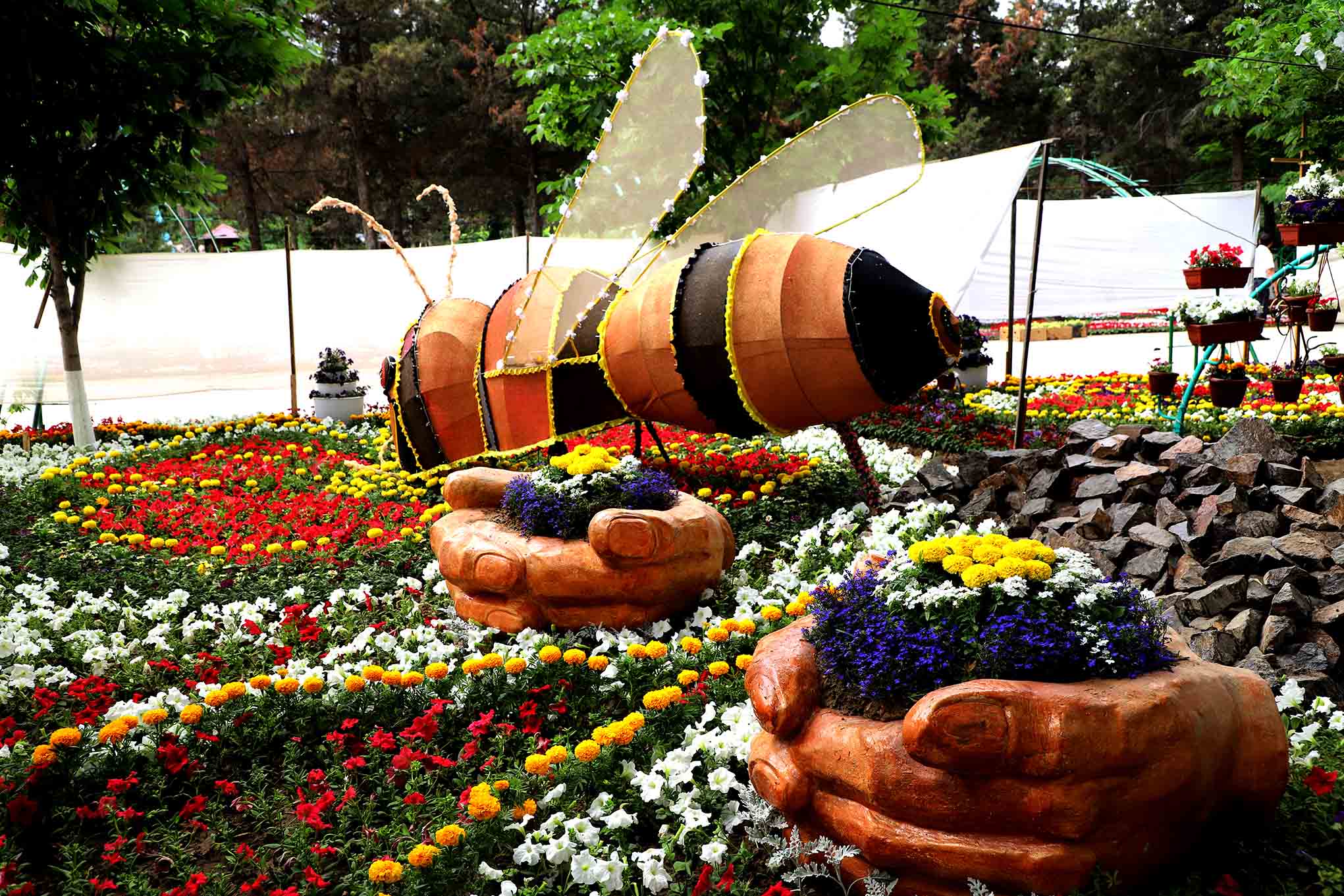
That is why people from Namangan lovingly grow a wide variety of flowers – a symbol of beauty, tenderness, love, and respect.
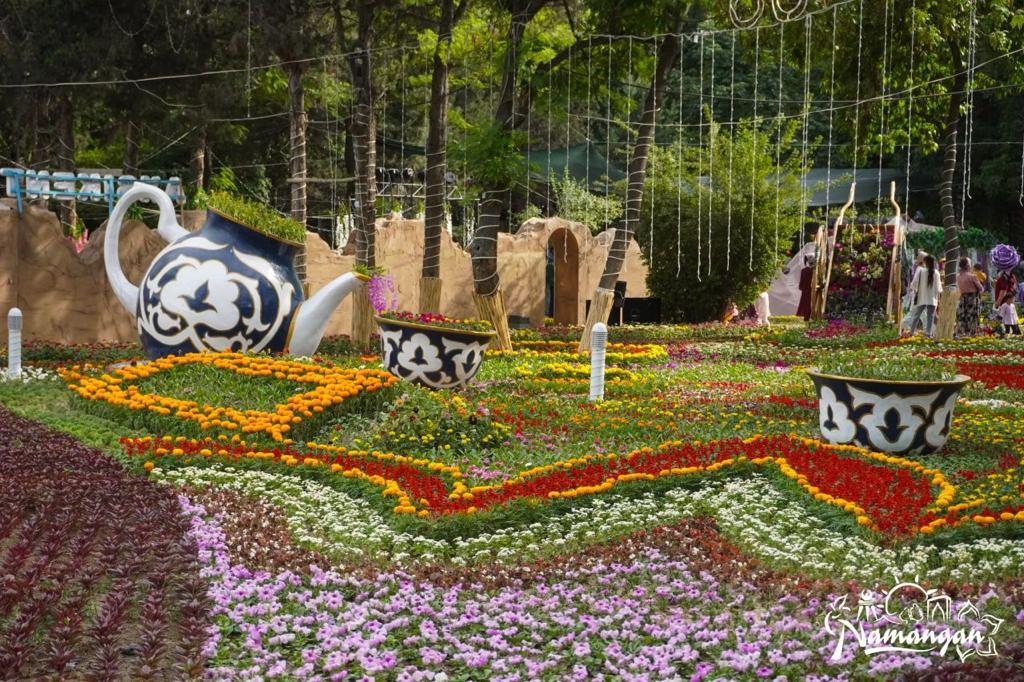
Guests come to admire the botanical masterpieces not only from all over the republic but also from other countries.
For direct participation in the holiday, where flowers that have become an international brand of Namangan were demonstrated, invitations were sent to representatives of 20 countries, in particular, residents of Namangan’s twin cities – Isparta, Jalal-Abad, Qingdao, Incheon and Seongnam, Punjab, Chelyabinsk and Yekaterinburg.
This year has become a jubilee for the annual festival. In May 2021, this solemn and beautiful event celebrated its 60th anniversary.
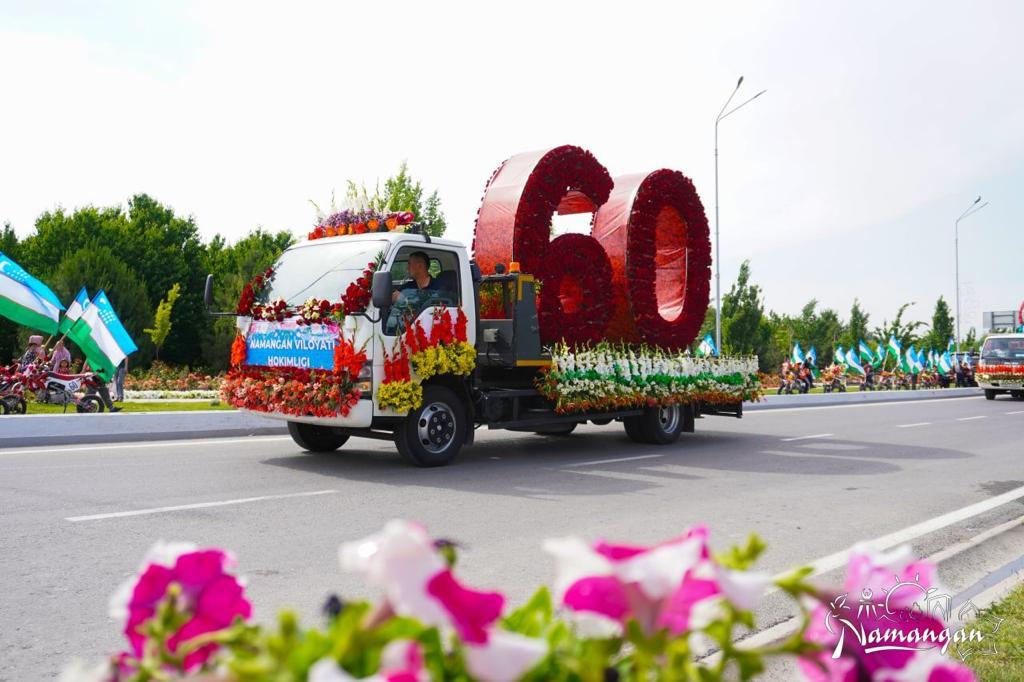
The Flower Festival in Namangan has been held since 1961 and is a grand event for every Uzbek, reflecting the richness of the available plants and flower culture.
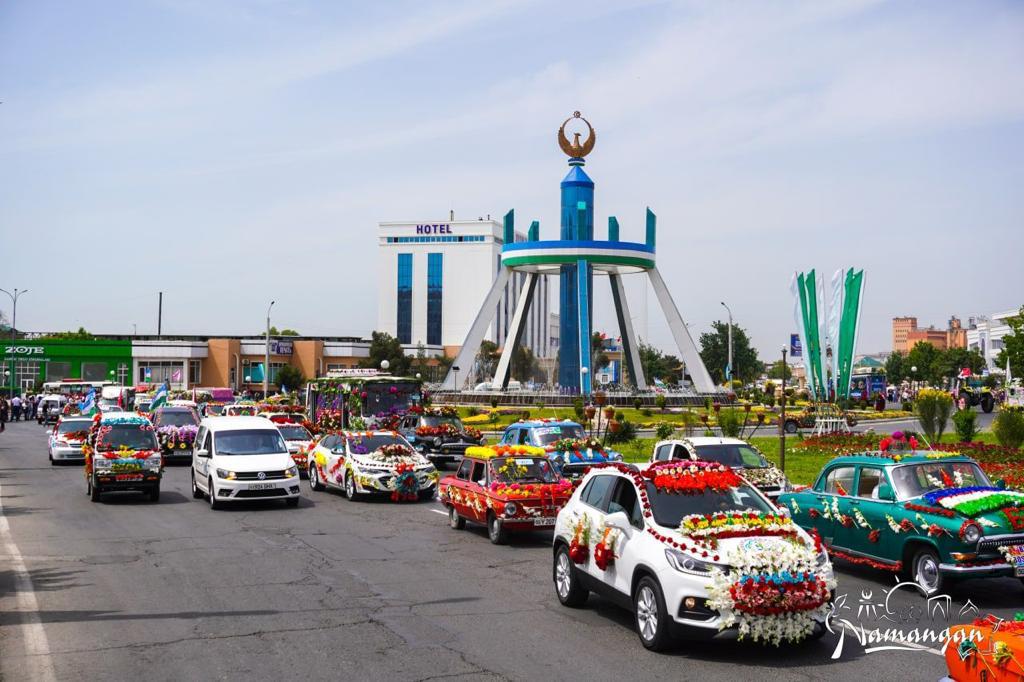
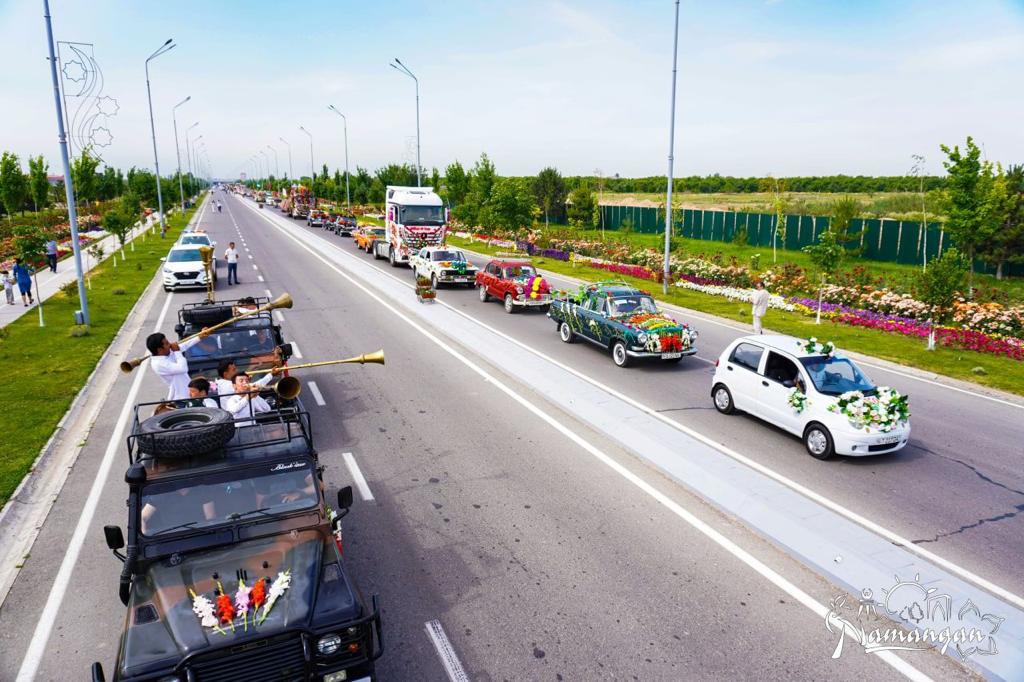
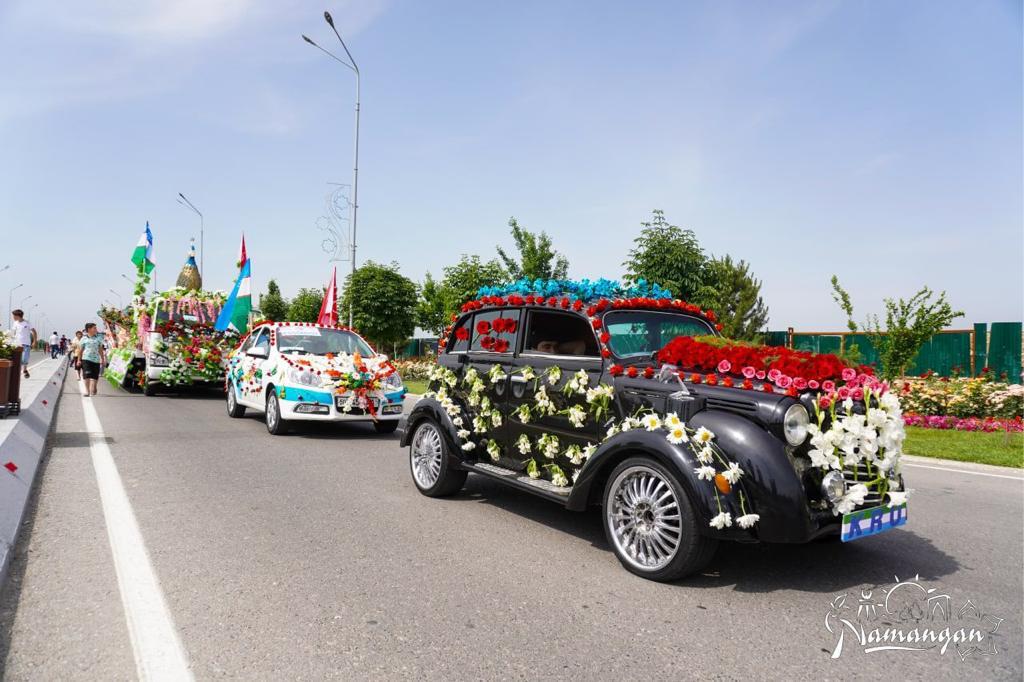
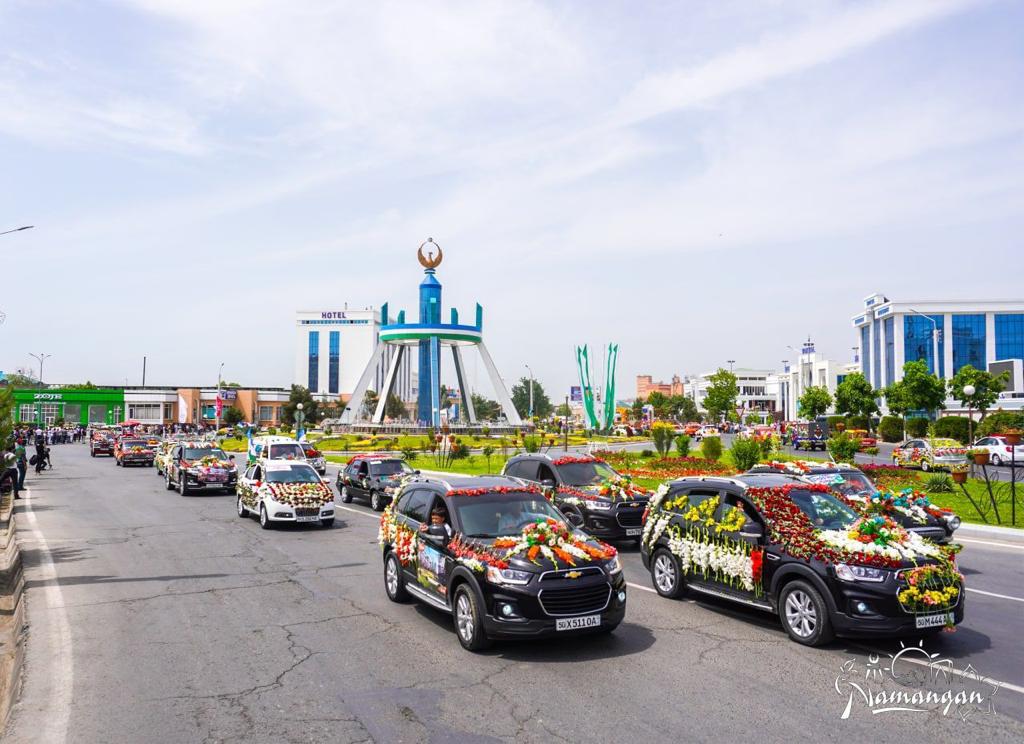
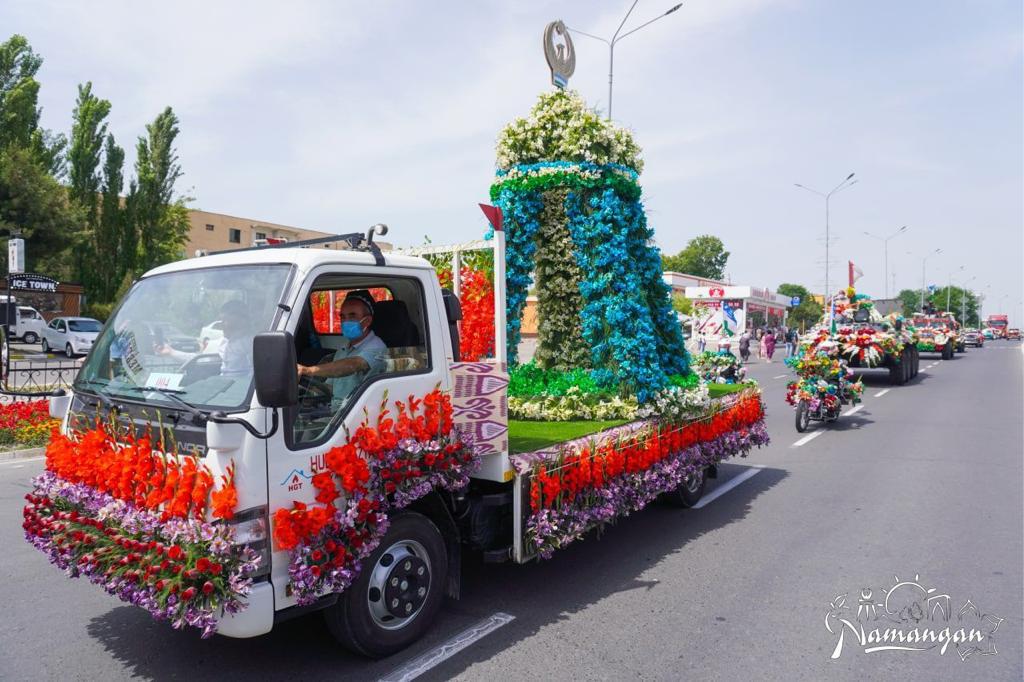
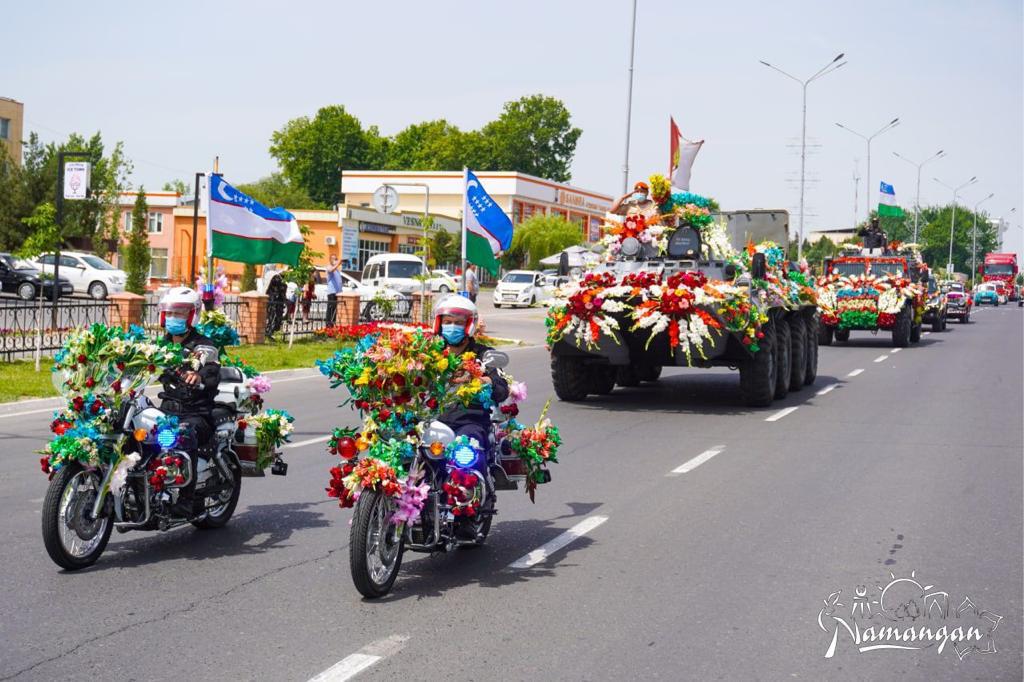
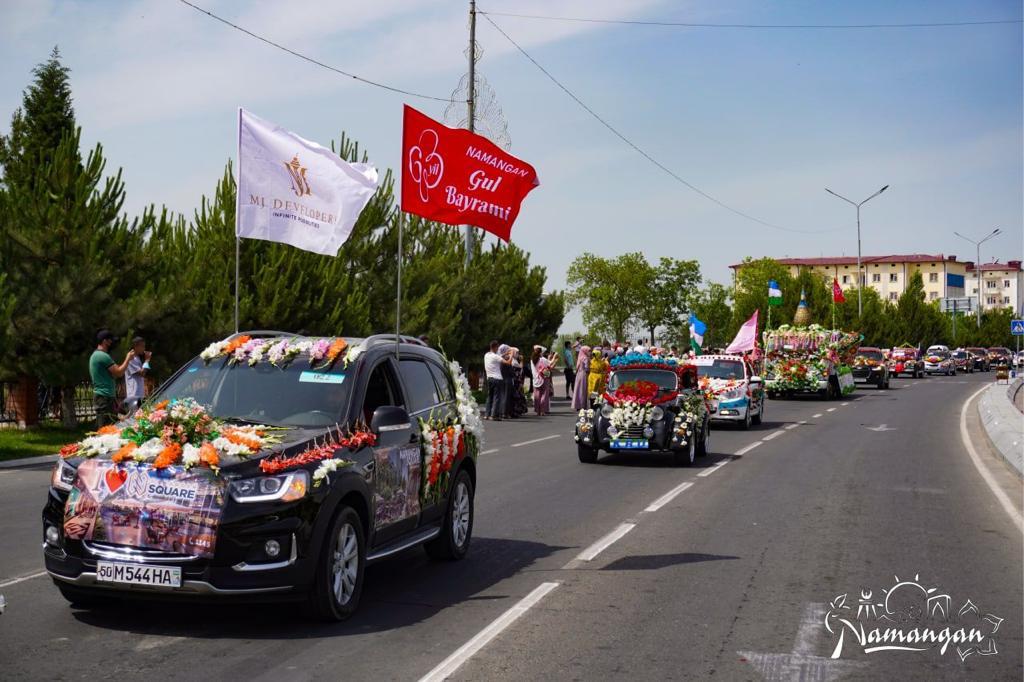
The flower holiday opens with a large-scale automobile parade: more than 150 vehicles, cars, and motorcycles, decorated with colorful flowers in the form of ornaments, will ride through the streets of Namangan to the delight of residents and guests of the festival.
The route usually goes to the central Babur park, which was established in 1884, where the official opening ceremony of the festival starts.
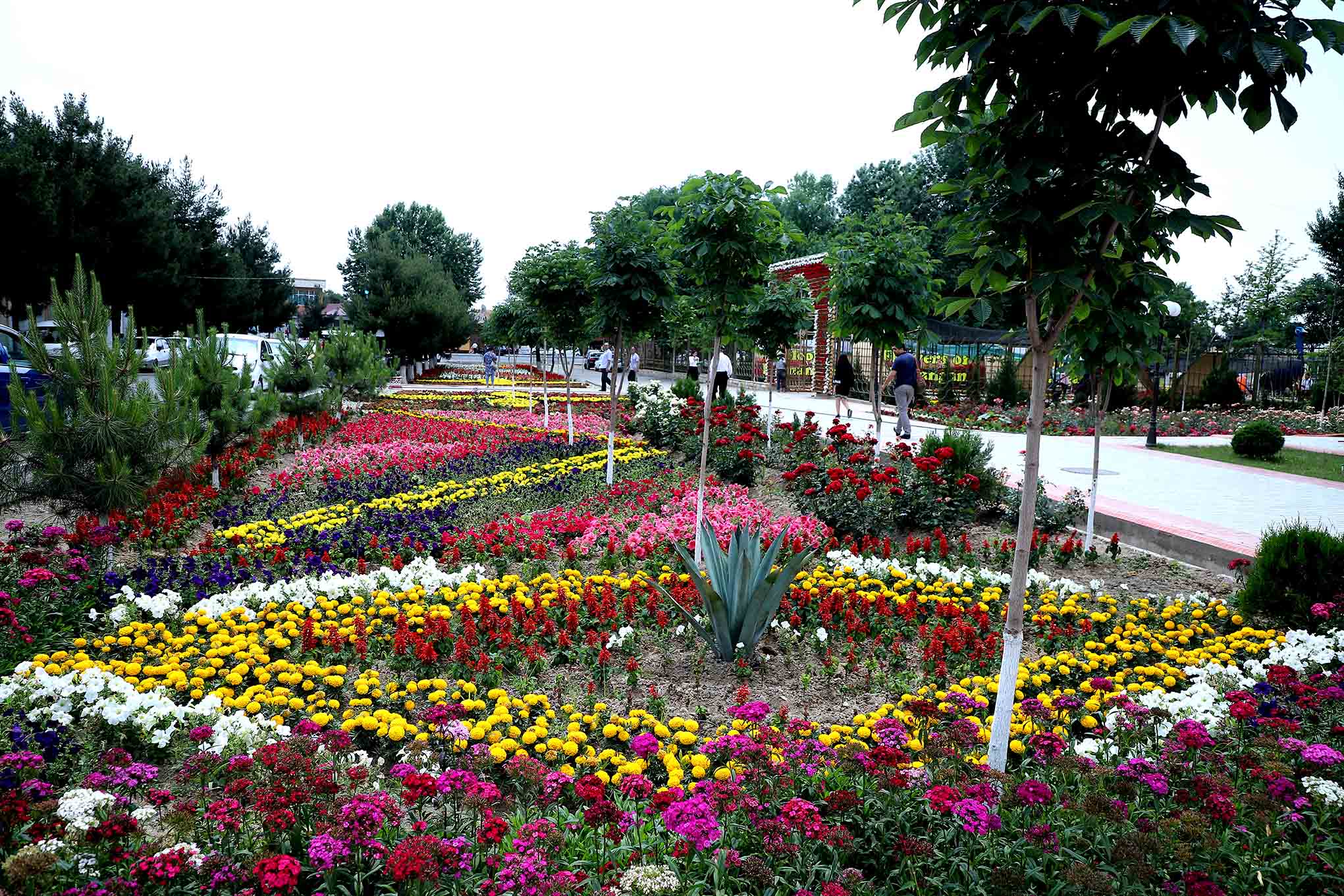
The Flower Festival is always held at a high international level.
Guests from South Korea, Russia, Turkey, the Netherlands, and neighboring countries such as Kyrgyzstan, Tajikistan, Kazakhstan, and Turkmenistan are invited to participate in the festival.
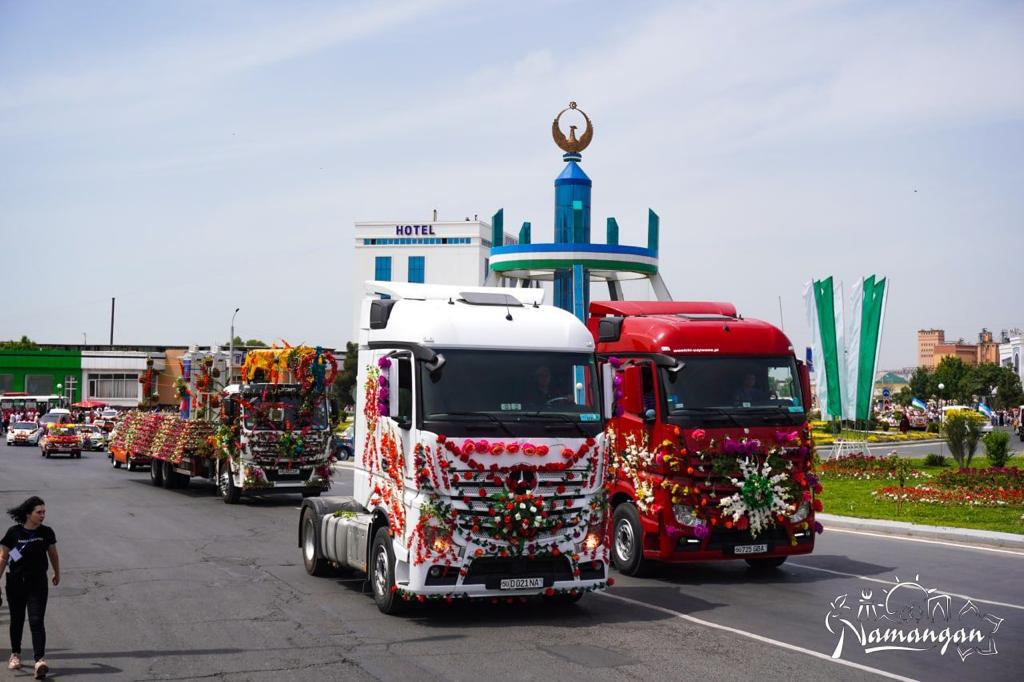
At the parade, you can see cars, trucks, harvesters, truck cranes, and even military equipment produced in the country, on which the country’s flag flies.
Also, to cover the event, representatives of domestic and foreign media are always expected to participate, including from Russia, China, Turkey, Iran, India, and Central Asian countries.
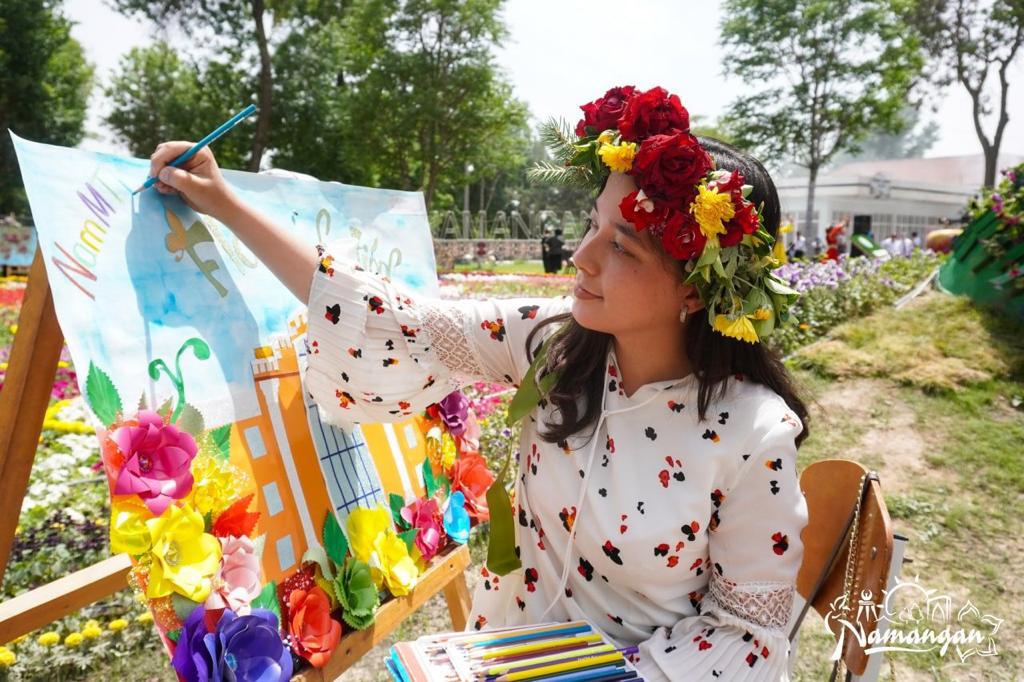
For ten days, master classes on growing flowers and landscape design, as well as exhibitions of works of national handicrafts and applied arts were held.
It is no longer news that now the cities of the Fergana Valley can be reached by train. Not so long ago, a railway was laid here in the direction of Tashkent-Pap, passing through the Kamchik mountain pass.
Arriving in the city of Pap, you can go to Chust in the Namangan region. What do we know about this city? Chust has been famous since ancient times for its craft workshops for the manufacture of knives. In the very center of the city, there is a quarter of suzangars – blacksmiths who make knives, which is considered the heart of Chust.
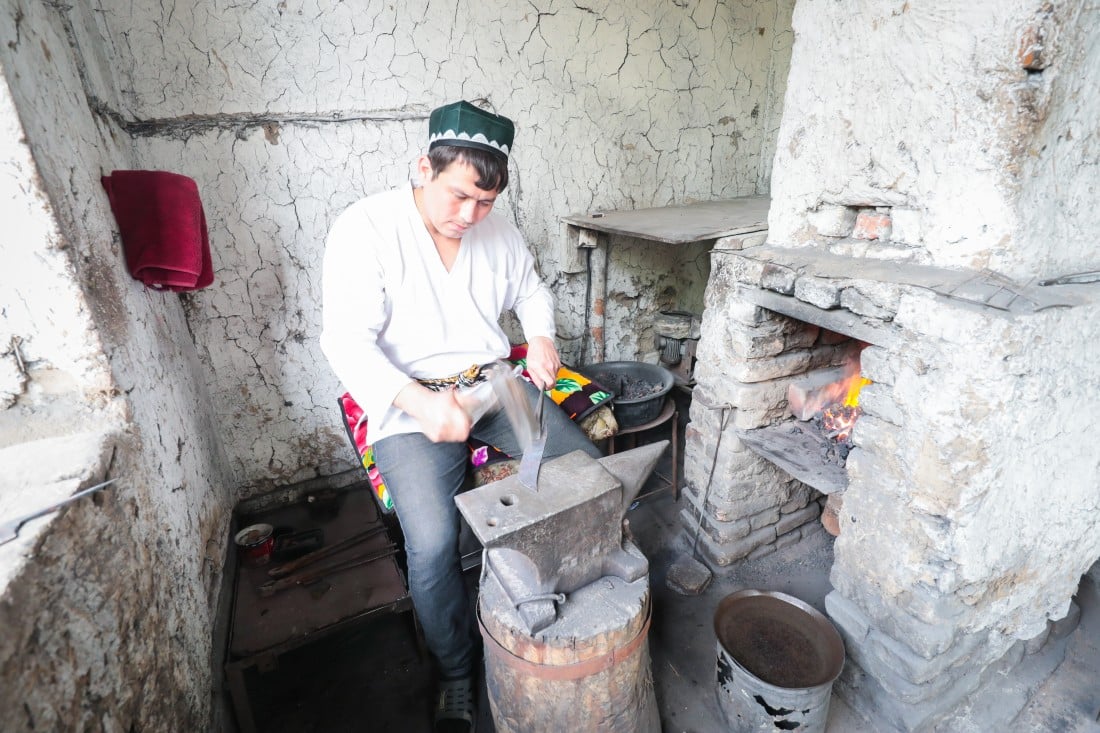
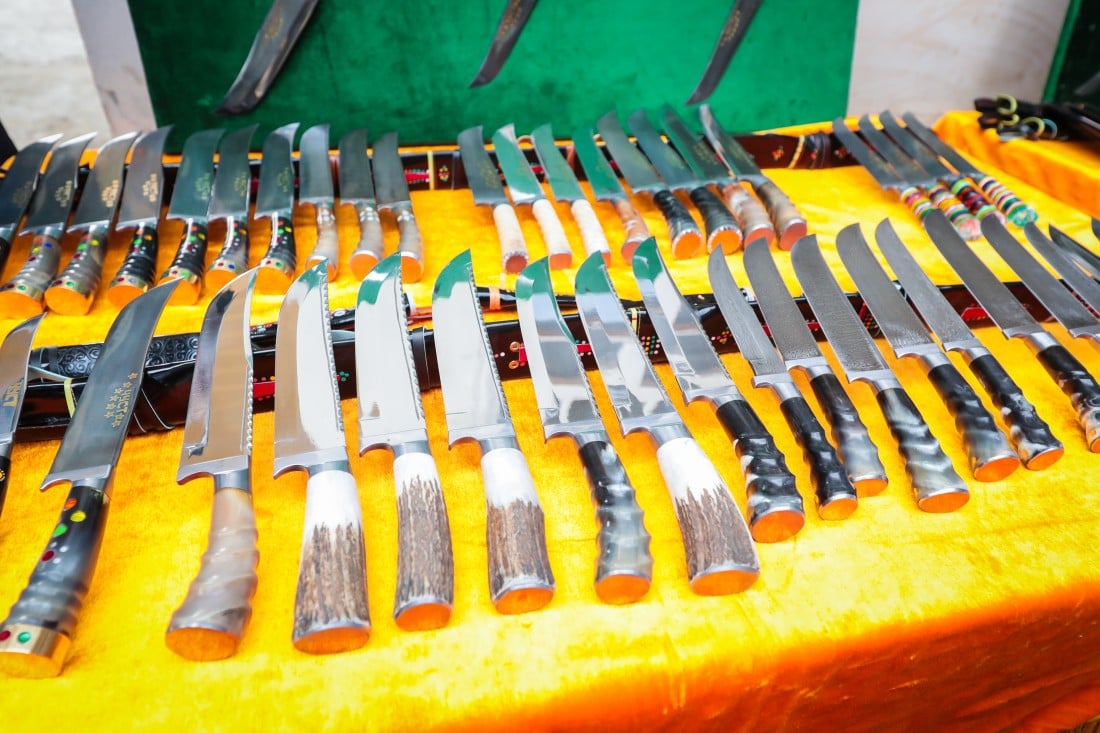
In small forges, hereditary suzangars manually make the pichaks – Uzbek knives. Each of the pichaks has its own purpose.
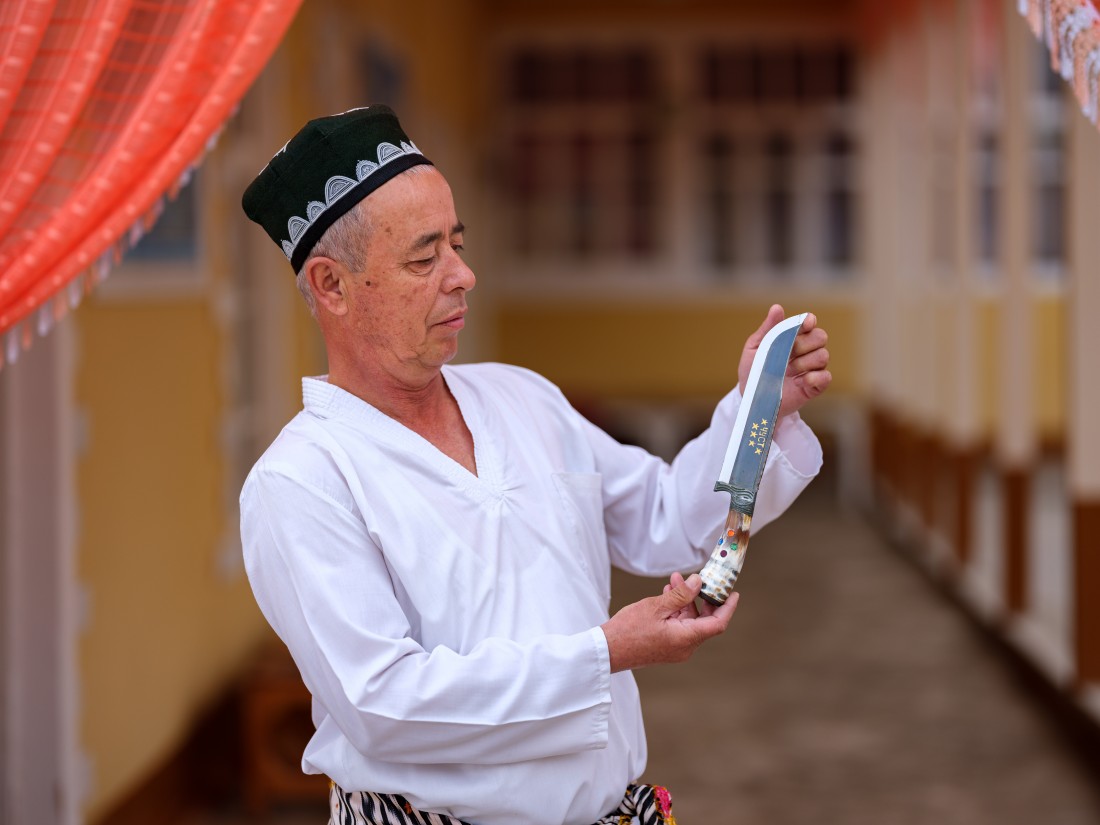
Chust knives are incredibly sharp and beautiful. Their blade will serve its owner for a long time and will remain sharp.
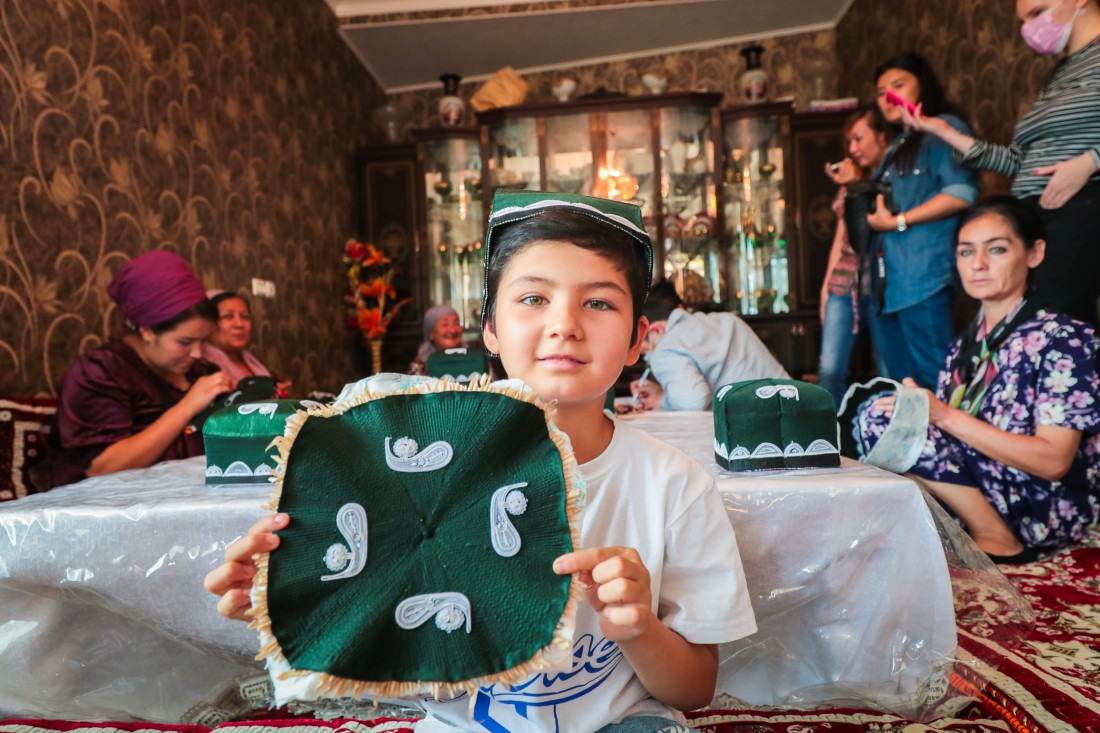
The city is also famous for its skullcaps. They have original patterns and ornaments.
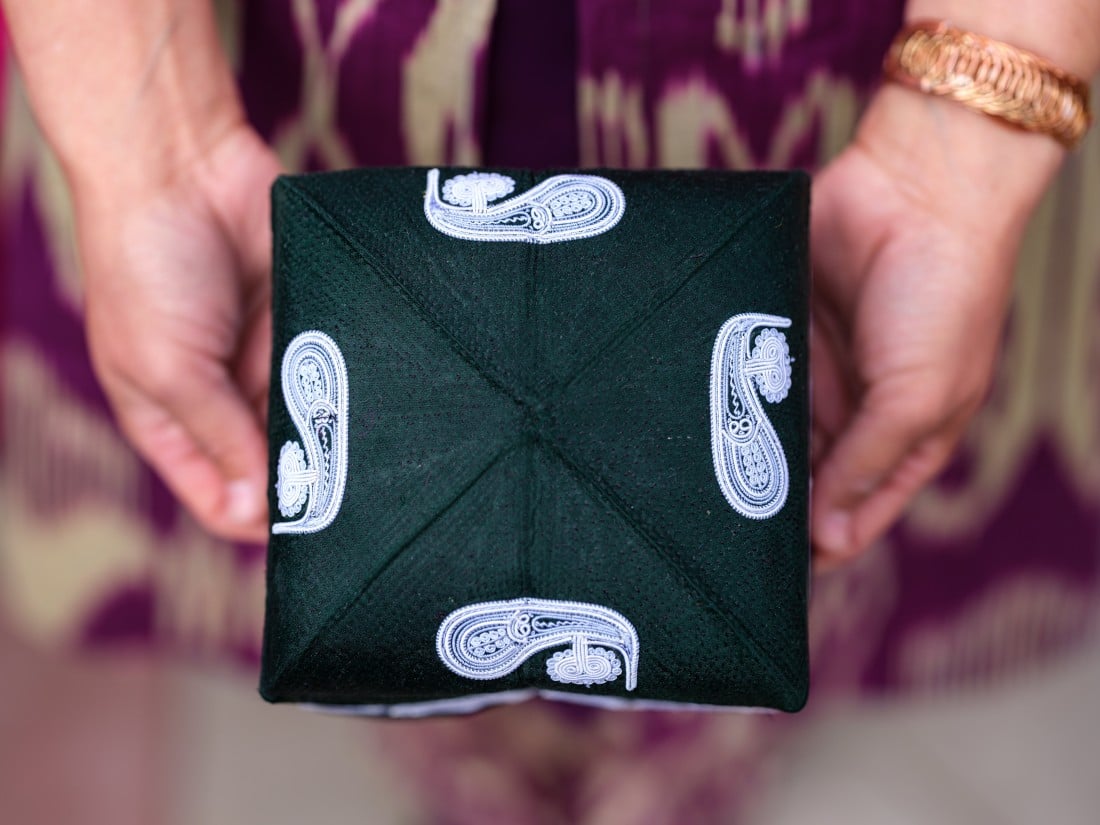
Craftsmen sew skullcaps by hand, adding unique details to them.
The names and life stories of many famous people are associated with the Namangan region. In the city of Chust, you can visit the house-museum of Muhammad Sharif Sufizoda, a prominent Uzbek educator, poet, and prose writer. Muhammad Sharif Sufizoda was one of the famous literary figures of the Fergana Valley at the beginning of the 20th century, who continued the literary traditions. In 1893-1898 he lived in Kokand and, with the assistance of the writers Mukimi and Furkat, wrote satirical works under the pseudonym “Vakhshiy”. For services to the Uzbek literature, in February 1926, he was awarded the title “People’s Poet of Uzbekistan” together with Hamza Hakimzade Niyazi.
Goibnazar Kozi madrasah, unique in its structure, is located in the center of Turakurgan, a few kilometers from Namangan. The mosque was built in the 19th century by the respected and enlightened kazi Gaibnazar Kozi. The famous architect of the Fergana Valley, Mullo Kirghiz, took part in the construction of the mosque.
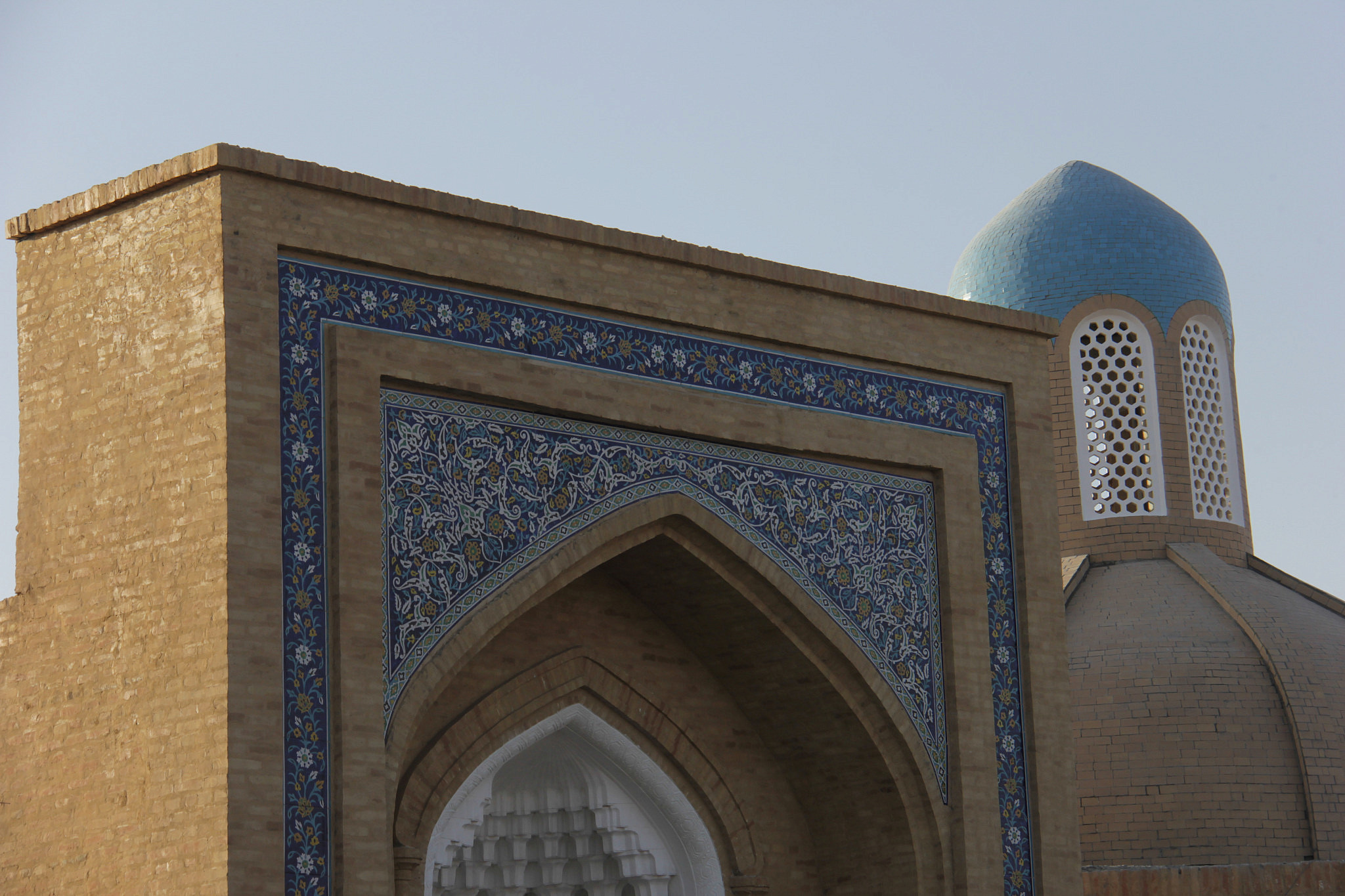
Also in this area is the unique Ishokkhon Ibrat memorial complex. Iskhokhon Ibrat was one of the first printers in Uzbekistan. At the beginning of the 20th century, he bought a lithographic machine in Orenburg and opened the Iskhokia printing house in his house in the Turakurgan region. His printing house operated until the 1960s.
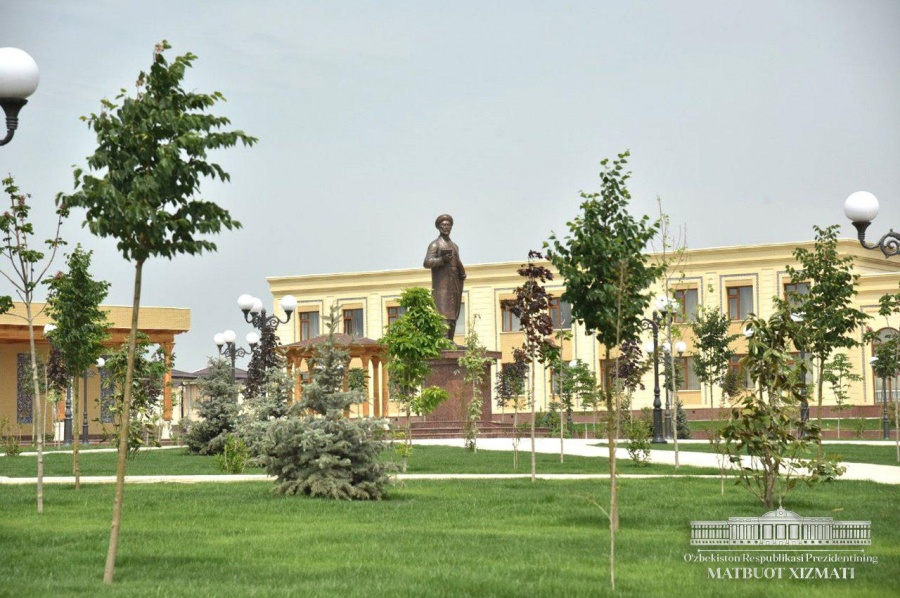
Now the historic building houses a museum. Through the efforts of local activists, a garden was planted here, in the center of which a monument to Ishokhon Ibrat was erected. The complex also includes a terrace in the national style, a printing house, a musical fountain, and a specialized boarding school for 400 places to study foreign languages.
Ethnic tourism is gaining more and more popularity in the modern world. People from different parts of the world are eager to get acquainted with the traditions and way of life of other countries. The village of Nov, located in the Yangikurgan district of the Namangan region, can be included in the list of ethnotourist villages in the country.
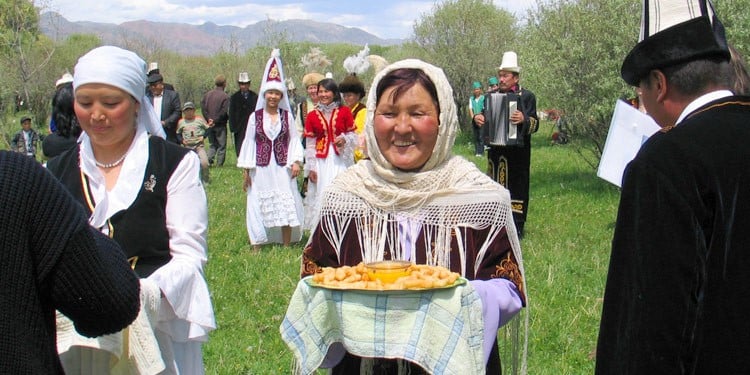
Despite the fact that the Nov village is one of the oldest villages in the Yangikurgan district, it still remains the most densely populated area of the Uzbek-Kyrgyz people, preserving the past history and identity of the people.
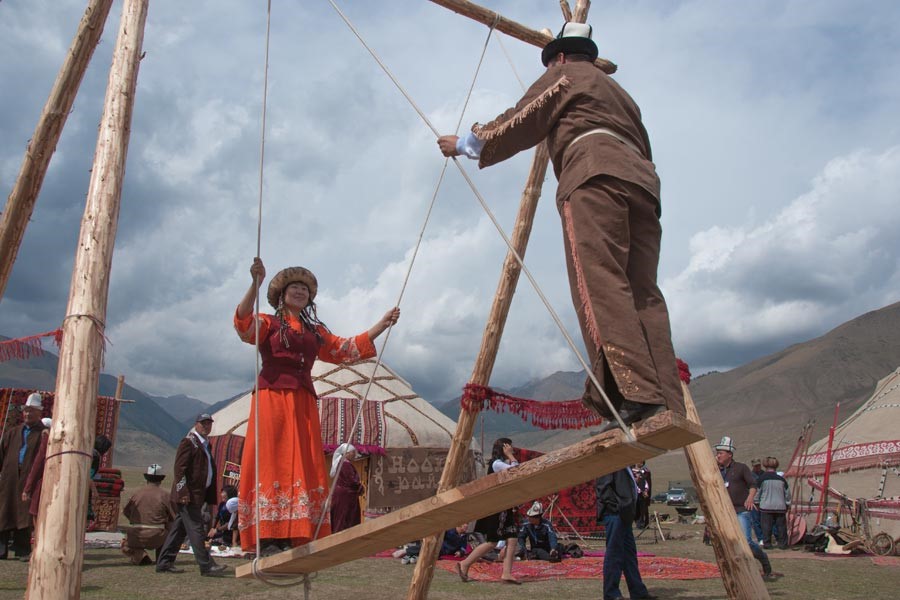
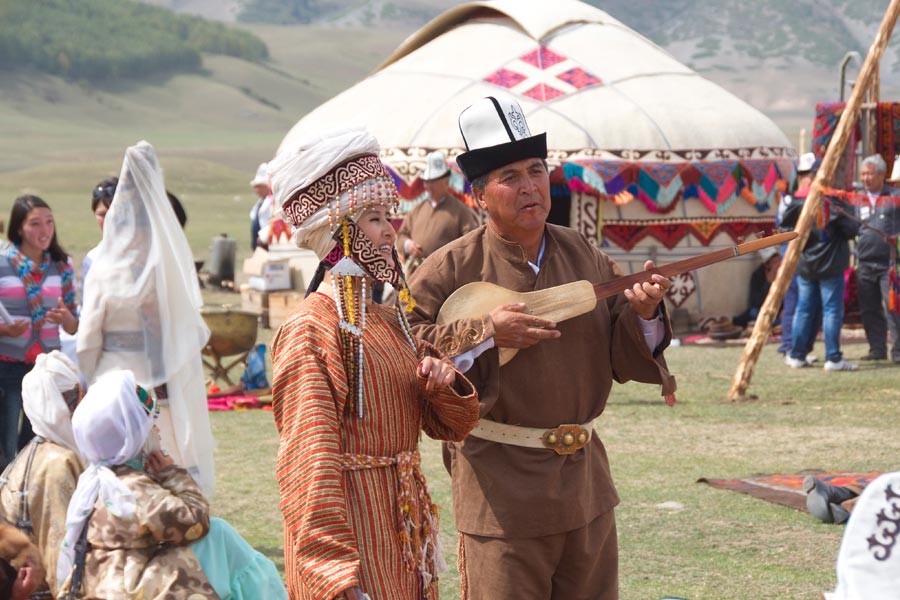
In the 1990s, a women’s folklore ensemble headed by Zaloikho Ashuralieva was created in the village of Nov. Today the ensemble actively participates in the rituals and events of the village.
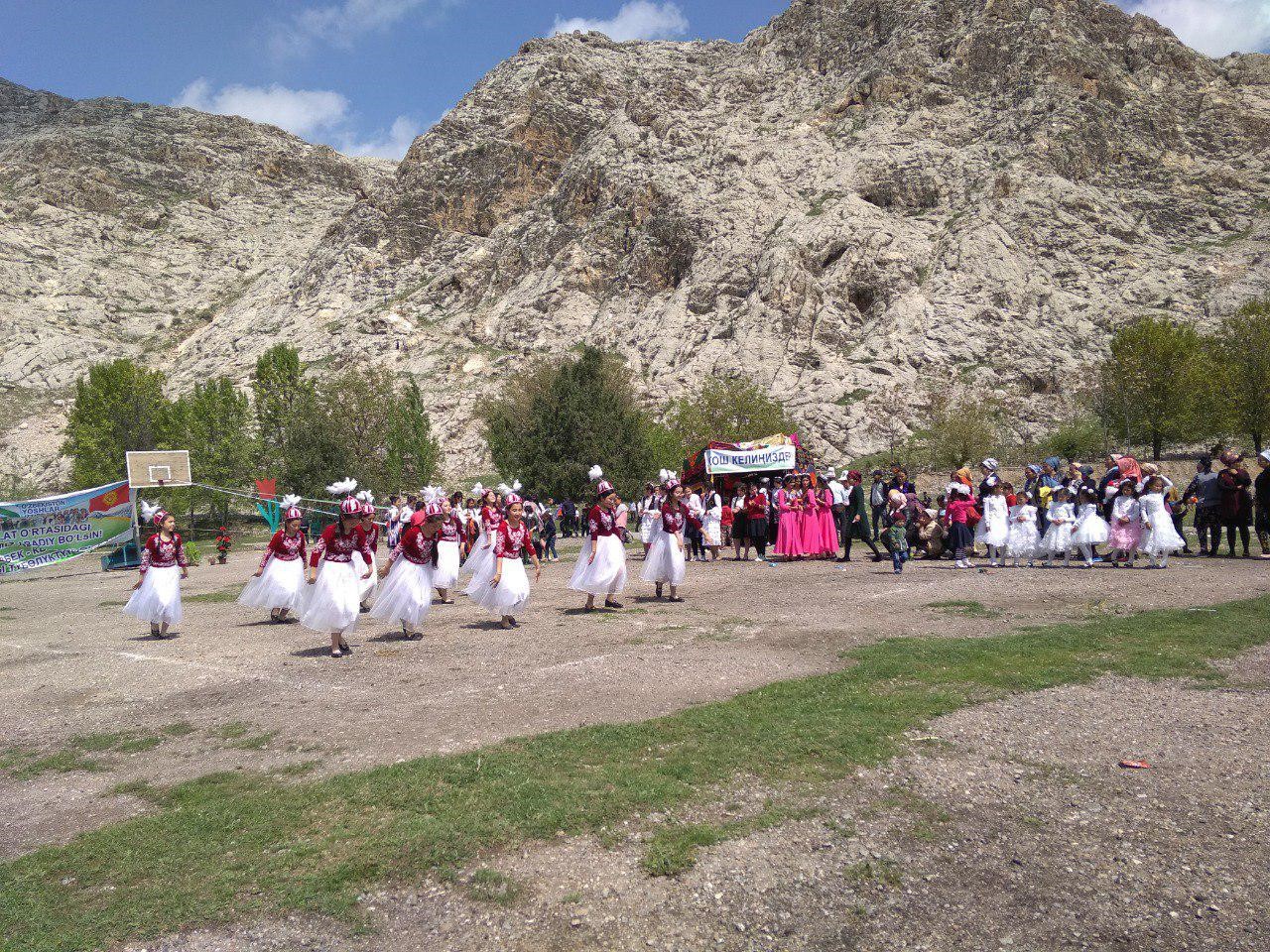
The village is bordered by the Kyrgyz Republic in the north and the Zangiabad mahalla in the Chortak region in the east.
Famous poets of their time, such as Murodtillo and Nematjon Abdullaev, lived in the village of Nov.
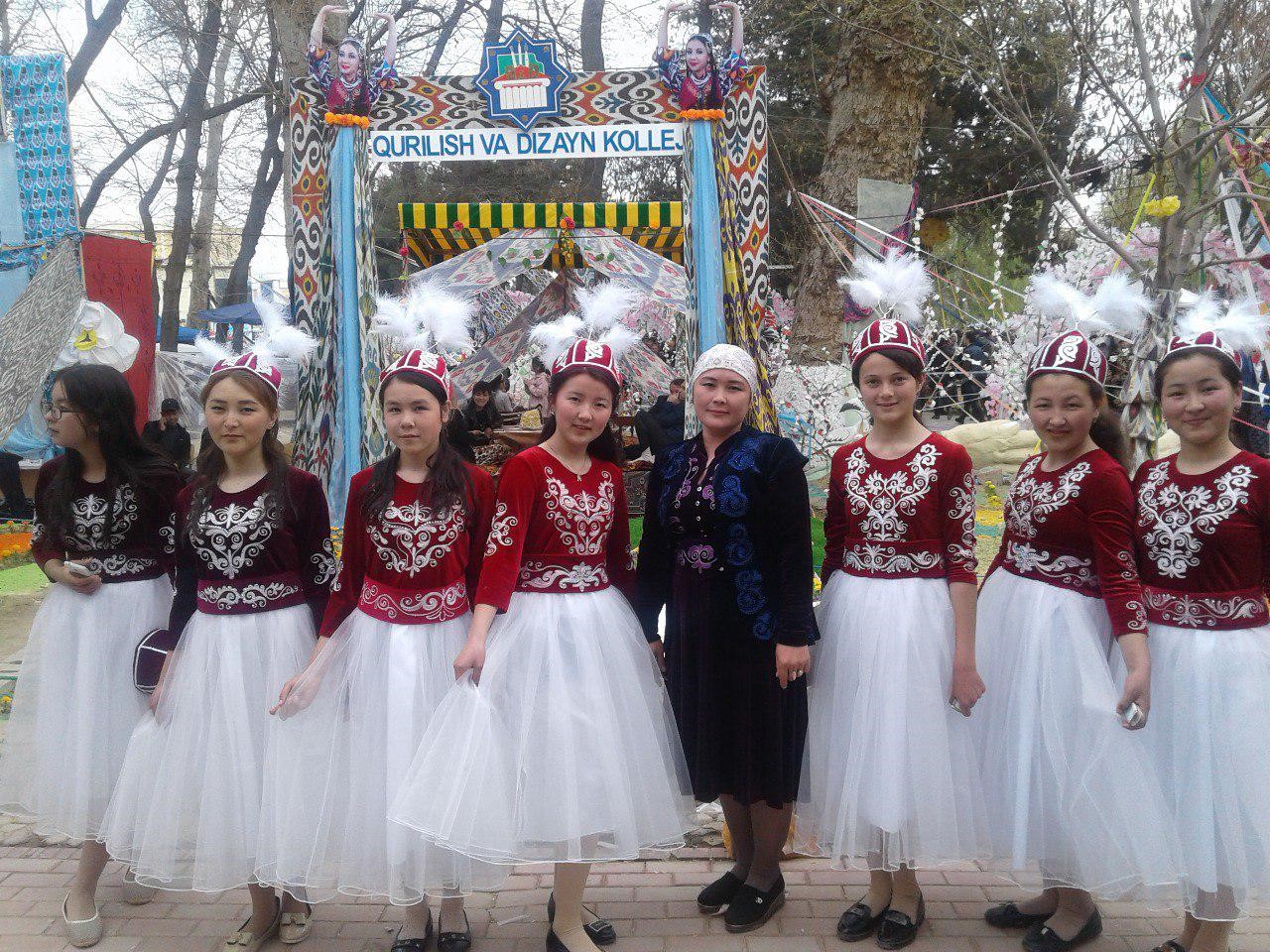
The traditions and customs of the inhabitants of the village of Nov are the same as the customs of the Kyrgyz people.
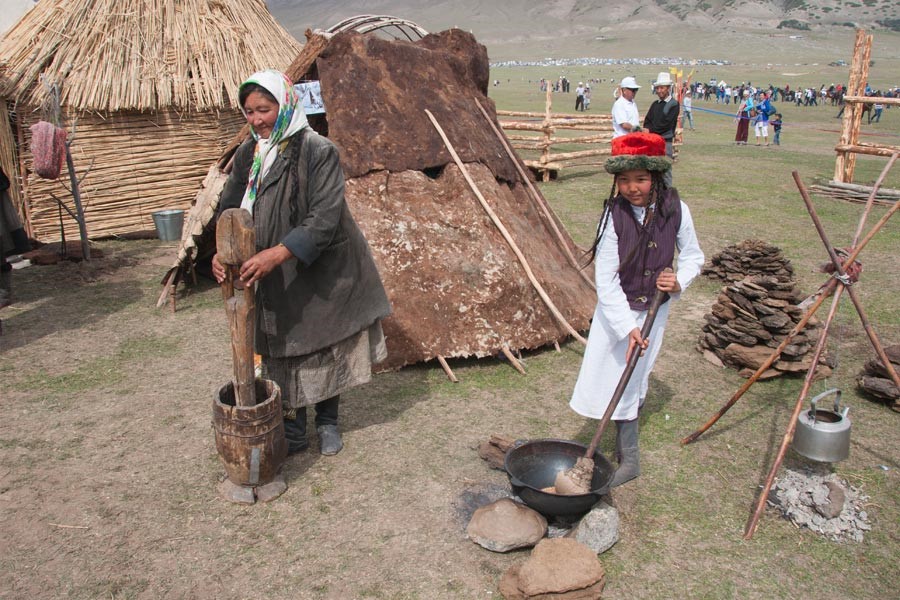
Weddings and other ceremonies are held combining Kyrgyz and Uzbek traditions.
The national cuisine of the village of Nov consists mainly of pastries. Among them, the most popular dish is beshbarmak, made from dough and horse meat.
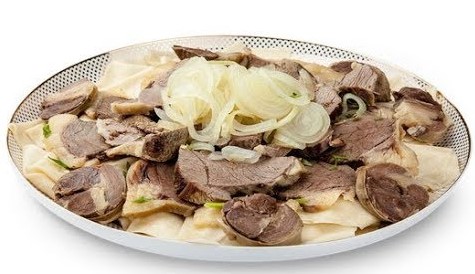
The national cuisine of the village of Nov consists mainly of pastries. Among them, the most popular dish is beshbarmak, made from dough and horse meat.
Before serving beshbarmak, bread made from wheat flour is placed on the table, and then salads and flat cakes appear on the table. The traditions of hospitality and respect have been adopted here.