Arab Citizens Reached Out. Will Israel’s Leaders Reach Back?
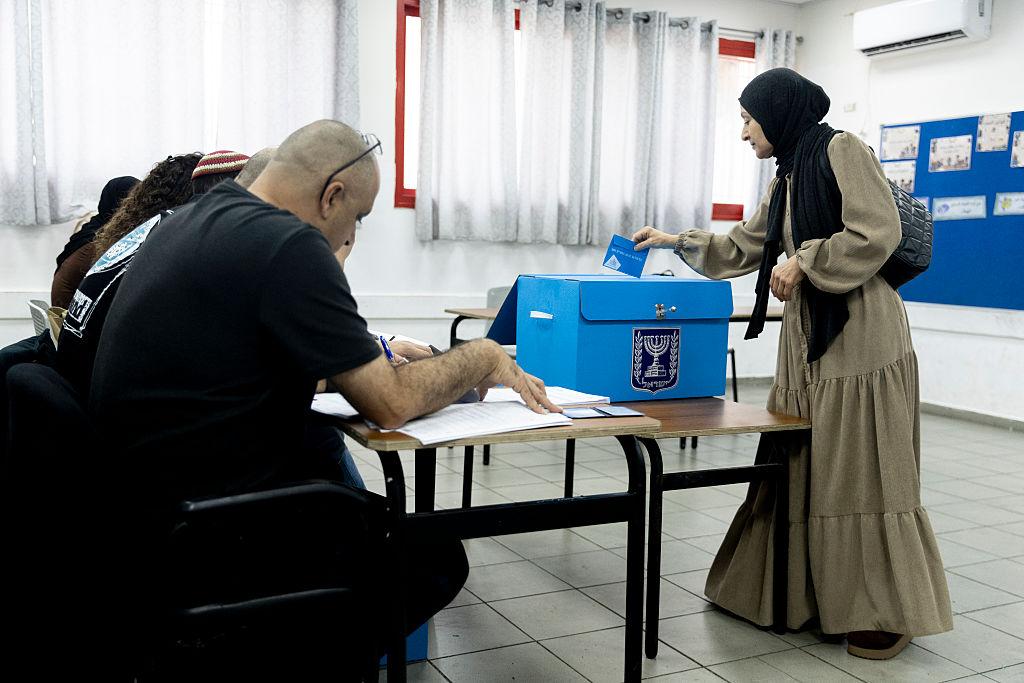
In these elections, Arab society reached out for true partnership, with voter turnout over 80 percent, nearly 3 percent higher than the national average. After four years of a government that persecuted them, destroyed homes, halted budgets, and showed indifference – some would even say worse – toward crime and violence on the streets of Arab communities, the Arab citizens said loudly, “We are part of this state, and we want to be part of the decision-making process as well.”
Now the ball is primarily in Gadi Eisenkot’s and President Isaac Herzog’s hands. It’s not enough to talk about “liberalism”; we need to act according to liberal values, foremost the value of equality. We need to give the citizens of Nazareth and the citizens of Rahat the feeling that their voices have power and influence, just like the voices of the citizens of Kfar Saba and Dimona. The ability to influence the state and its direction is not reserved for Jews alone, but for all citizens of the State of Israel.
One can hide behind demands for loyalty, on the verge of demanding Zionism. Still, one can understand the simple truth: a large public that comes out en masse to influence the state’s future does not want its destruction but its construction in a way that will also benefit them.
I don’t have many expectations of Avigdor Lieberman, who is trapped by his various commitments and disqualifications, or of Naftali Bennett, who carries the scar of the “breach of promise” that led him to the Prime Minister’s office. The responsibility primarily lies on the shoulders of the leader of the camp, Eisenkot – do not let Netanyahu frame his largest parliamentary loss ever as a victory; remind the entire public and your coalition partners that a large majority of Israeli citizens demanded in these elections that a different, sane, equal, central government be established here. Remind the Jewish public that their neighbors in Haifa, Jaffa, and Nazareth Illit, their doctors, nurses, and lecturers in universities, are part of Israeli society. Citizens who, in these elections, stood up and said, “We demand equality; we demand change.”
And we must hear one more voice: President Herzog. Incitement against the Arab community, which on election day itself flowed uncontrollably from Netanyahu and his partners, must not go unanswered by the Israeli president. Herzog is not only the president of Jewish citizens, but also the president of all citizens of Israel, including Arabs, who are entitled to his protection and support.
In 2021, Herzog took an important step by arriving in Kfar Qassem to participate in the memorial ceremony for the victims of the 1956 massacre: “I bow my head in memory of the forty-nine killed …” “And on my behalf and on behalf of the State of Israel, I ask for forgiveness,” Herzog said then, in an important step of expressing a desire to contribute to healing the wounds and strengthening the connection of the Arab society in Israel to the state. Now, in the face of the incitement of hatred and racism and the attempt to delegitimize the voices of Arab citizens, he must return to act and clarify that all citizens of Israel are equal in their rights and in their voices.
Instead of demanding a “unity government” excluding the Arabs, Herzog should act to fulfill the people’s will. This will, as expressed in the 67 mandates, be the case if the opponents of Netanyahu’s government received is a government without Likud, without the Kahanists and the messianists, and with the elected representatives of the Arab public who said loudly: I am here, I belong, and I want to take part in leading the state.
Eisenkot and Herzog do not support boycotts, do not succumb to incitement and hatred, and do everything to ensure that the large public that brought about Netanyahu’s biggest defeat since 1999 gets the government they came out to vote for.