
Are We Abraham’s Children?
What does a person who has everything want?
This week’s parashah is transitional. Its two major stories involve the passing of the mantle from one generation to another. Sarah dies, and Avraham buys land for her burial. As he ages, he turns his attention to Yitzhak and instructs his servant to find him a suitable wife. The story takes up the lion’s share of this parashah, totalling sixty-seven verses! However, it starts, with an unusual opening:
וְאַבְרָהָ֣ם זָקֵ֔ן בָּ֖א בַּיָּמִ֑ים וַֽה’ בֵּרַ֥ךְ אֶת־אַבְרָהָ֖ם בַּכֹּֽל: (בראשית כד:א)
Avraham was old, advanced in days, and Hashem had blessed Avraham with everything. (Bereishit 24:1)
Various commentators explain why this comes as an introduction to the story of finding Yitzhak’s future wife. Rashi explains that the word “בכל-everything” hints at the fact that Avraham was blessed with a son. Rashi makes a subtle point here. If the Torah wanted to say that Avraham had been blessed with a son, it would have said so explicitly. Referring to his son in this particularly oblique way teaches us something: a son might not be everything, but for Avraham, his son was his everything. He spent his life praying that he would not be childless. His life was dedicated to kindness and bringing awareness of God into society. It was a lonely task. Nobody else was doing it, and nobody is immortal. His son would carry on where he left off. Avraham’s final job was to ensure that Yitzhak would also have successors. Thus, this verse is a fitting introduction to the story that follows it.
This theme is expanded upon in a peculiar way in the Midrash (Bereishit Raba 39:11) and the Gemara (Bava Kamma 97a):
ואיזהו מטבע של אברהם אבינו? זקן וזקינה מצד אחד, ובחור ובתולה מצד אחר
What is the coin of our forefather Avraham? An elderly man and woman on one side, and a young man and woman on the other.
The tells us far more than some trivia about coin minting; it teaches us a very profound idea. Coins carry value, they are are stamped with insignia or a picture of someone, either to demonstrate authority or to kindle memory. Pictures of kings were minted on coins to show their economic authority. Commemorative coins are made to remember special individuals or dates. Rashi (Ibid), tellingly, adds that the elderly couple were Avraham and Sarah, and the young couple were Yitzhak and Rivka. Avraham’s coin, in a symbolic sense, was his legacy. What mattered to him most was what he would leave behind. Even if Avraham and Sarah aged and eventually departed this world, there was a younger couple on the other side of the coin who could replace them. Yitzhak and Rivka would ensure that Avraham and Sarah would not be a fleeting dream from the past but a permanent vision for the future. A younger couple would always be there to take over the mission of the elder.
This same theme carries through into the next parashah, Toldot. Avraham has passed away, Yitzhak is supposed to take centre stage, and yet we are told:
וְאֵ֛לֶּה תּוֹלְדֹ֥ת יִצְחָ֖ק בֶּן־אַבְרָהָ֑ם אַבְרָהָ֖ם הוֹלִ֥יד אֶת־יִצְחָֽק (בראשית כה:ט)
These are the generations of Yitzhak son of Avraham; Avraham fathered Yitzhak. (Bereishit 25:19)
The repetition here is not only superfluous; it is also out of place. When describing the generations that come from someone, we detail their descendants, those who came after them, not those who came before. Many commentators explain that Yitzhak closely resembled Avraham. He was not just his son, it was also evident to everyone that Avraham was his father. Radak (Ibid) offers an additional explanation:
For he (Yitzhak) was straight and faithful; he pursued good ways and was loving to people, like his father, to the extent that everyone said: “Avraham gave birth to Yitzhak.”
Yitzhak’s conduct resembled Avraham’s. In this way, he ensured that Avraham was not just part of his past but also his present and his future.
There is a popular Jewish song called “Avraham,” which, within its chorus, poses a challenging question: “Avraham, are we the children that you dreamed of? Are we the shining stars you saw at night?” When I first heard this song, I did not interpret it rhetorically and found myself wondering: If Avraham were alive nowadays, would he recognise us? Are we the children he dreamt of?
We are very different. We didn’t find God alone as young wandering children. We do not live in tents and spend no time stargazing. What does the modern Jew know of digging wells and planting trees? What have we ever done similar to the war of the four kings and five kings, or Akeidat Yitzhak? So much time has passed. Almost everything about anything has changed. Would Avraham even recognise us if he saw us today?
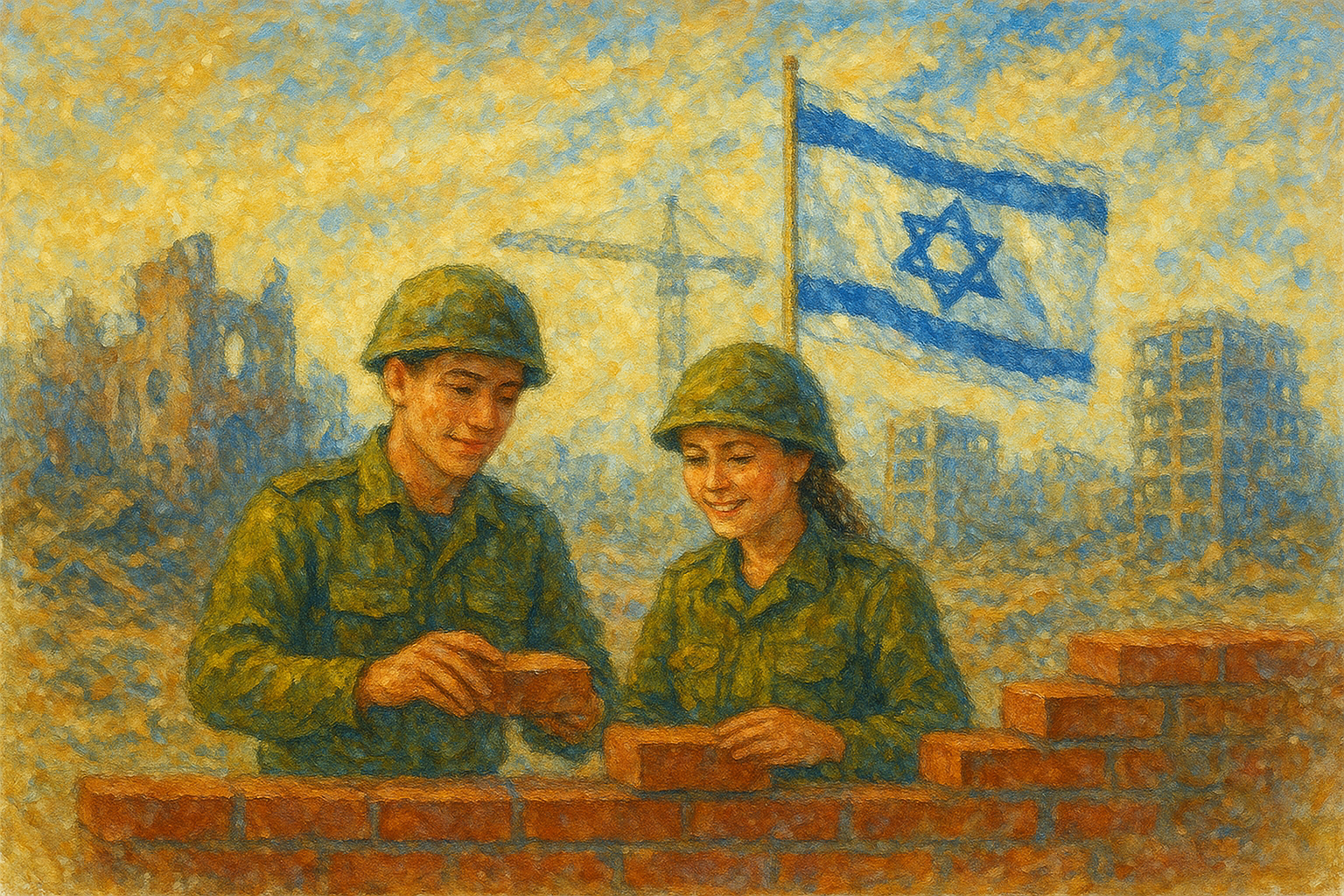
Then came Simchat Torah 5784, 7 October 2023, and we got a chance to take a closer look. The children of Avraham had been there all along. When their brothers and sisters, nieces and nephews are taken captive, they put on their uniforms and go off to war. They feed strangers and open their homes. They bury those who will never know them, and comfort those they never knew. They flock to a distant promised land, somehow ever more attracted to it, the more hazardous it becomes. They pray for the childless and adopt the parentless. They walk before God, even when the way ahead is dark, perilous, or unclear, knowing that if the path they tread is honest, noble, and true, God will follow them.
In their more tranquil times, they never rest. They wander, question, and discover. They teach anyone who will listen and study anything worth learning about. They desalinate water and try to make deserts bloom. And still, the legacy each of them hopes for most is that one day they will be an old couple, and on the other side of their coin, there will be a young couple ready to take their place. Yes, we’re a little rough around the edges, but Avraham’s coin is still in circulation. We may even be the shining stars he saw at night.