
"I'm the spokesman for the OK Boomer generation"
Are You a True Believer?
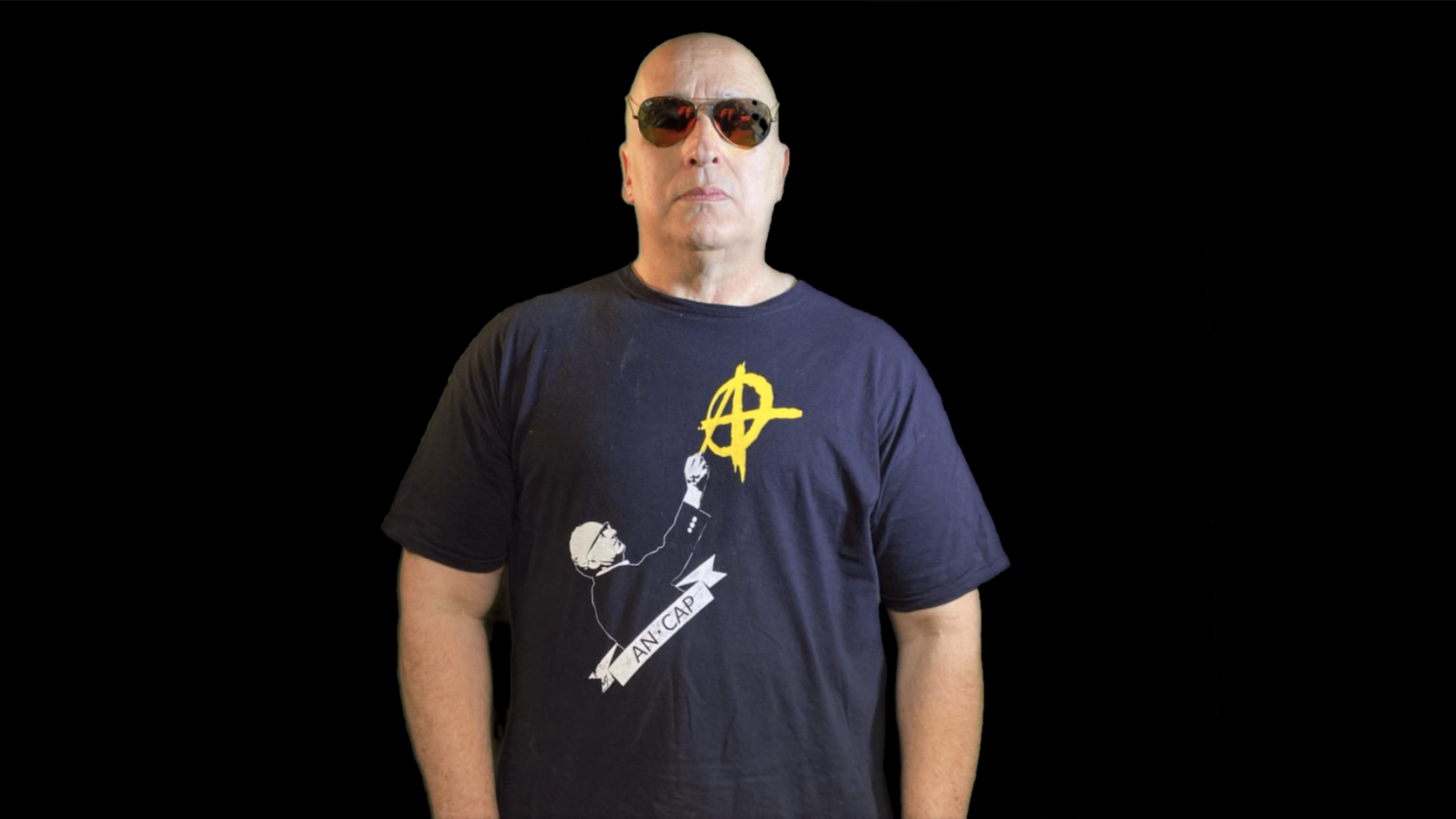
Photo: Tony Senatore: all rights reserved
I’ve been posting in various internet groups about libertarianism, objectivism, anarcho-capitalism, and figures such as Ayn Rand, Murray Rothbard, and William F. Buckley. I’ve encountered varying degrees of hostility from friends and strangers, largely because I refuse to “bend the knee” completely to any of these ideologies. For some people, questioning even one fundamental assumption seems to be interpreted as betrayal.
I recently discovered Eric Hoffer’s classic book The True Believer, and I’ve been thinking about it ever since. Hoffer examined the psychology of mass movements and the true believer: someone who becomes so completely identified with a cause, ideology, religion, or political movement that criticism of the belief feels almost like a personal attack. The true believer doesn’t merely hold an idea; the idea becomes part of his identity. As a result, evidence that contradicts the ideology can be dismissed, rationalized, or reinterpreted rather than causing the person to reconsider the ideology itself.
That helps explain something I’ve encountered repeatedly. Whether the ideology is libertarianism, objectivism, anarcho-capitalism, socialism, nationalism, or something else, some people start with a comprehensive theory of how the world ought to work and then try to force reality into it. Human beings become abstractions. Institutions become either inherently good or inherently evil. Historical evidence is selectively accepted depending upon whether it supports the doctrine. The ideology becomes the lens through which everything must be interpreted.
I take the opposite approach. I start with the world as it actually exists: imperfect human beings, imperfect institutions, conflicting interests, incentives, traditions, unintended consequences, and society’s enormous complexity. Then I use reality to test my beliefs rather than using my beliefs to explain away reality.
That doesn’t mean I reject the thinkers I’ve mentioned—quite the opposite. I’ve learned something from Ayn Rand, Rothbard, Buckley, Hoffer, and many others. I can appreciate an insight without accepting an entire intellectual package. I can agree with someone on one issue and strongly disagree with them on another. I can take an idea that survives contact with reality and discard one that doesn’t.
A prime real-world example of someone being excommunicated from an ideology over a single disagreement over Israel is the case of my friend, anarcho-capitalist Walter Block.
The treatment of Walter Block by the Mises Institute, Ron Paul Institute, Future of Freedom Foundation, Libertarian Institute, and Antiwar.com can be viewed as a striking example of what Eric Hoffer described in The True Believer: the tendency of ideological movements to demand conformity and to turn disagreement among fellow believers into a struggle over orthodoxy. Block did not abandon libertarianism as a whole; rather, he took a sharply different position from many of his libertarian colleagues on Israel and the war in Gaza, arguing that Israel had a right to defend itself and that his position could be reconciled with libertarian principles. Yet his disagreement became, for some of these organizations, a test of ideological loyalty: the Mises Institute revoked his Senior Fellow status. At the same time, critics at the Libertarian Institute and elsewhere portrayed his position as fundamentally incompatible with libertarianism. Hoffer observed that movements built around a shared cause can become intolerant of dissent because maintaining unity becomes more important than preserving individual judgment; indeed, he warned that once a movement becomes dominated by the fanatic, former allies can become enemies when no longer a common external foe exists. Whatever one thinks of Block’s position on Israel, his experience illustrates Hoffer’s broader warning: an ideology that proclaims individual liberty can itself develop an orthodoxy in which one disagreement over a highly charged issue is enough to transform a longtime ally into a heretic.
My philosophy is not to find an ideological tribe and defend it at all costs. It is to remain intellectually independent enough to change my mind when reality gives me a reason to do so.
I would rather have a collection of imperfect beliefs that I am willing to continually test than a perfectly consistent ideology that requires me to ignore the world around me.
That is the difference between using ideas and being used by them.
Related Topics