
Are You a Zionist? A question dividing our people
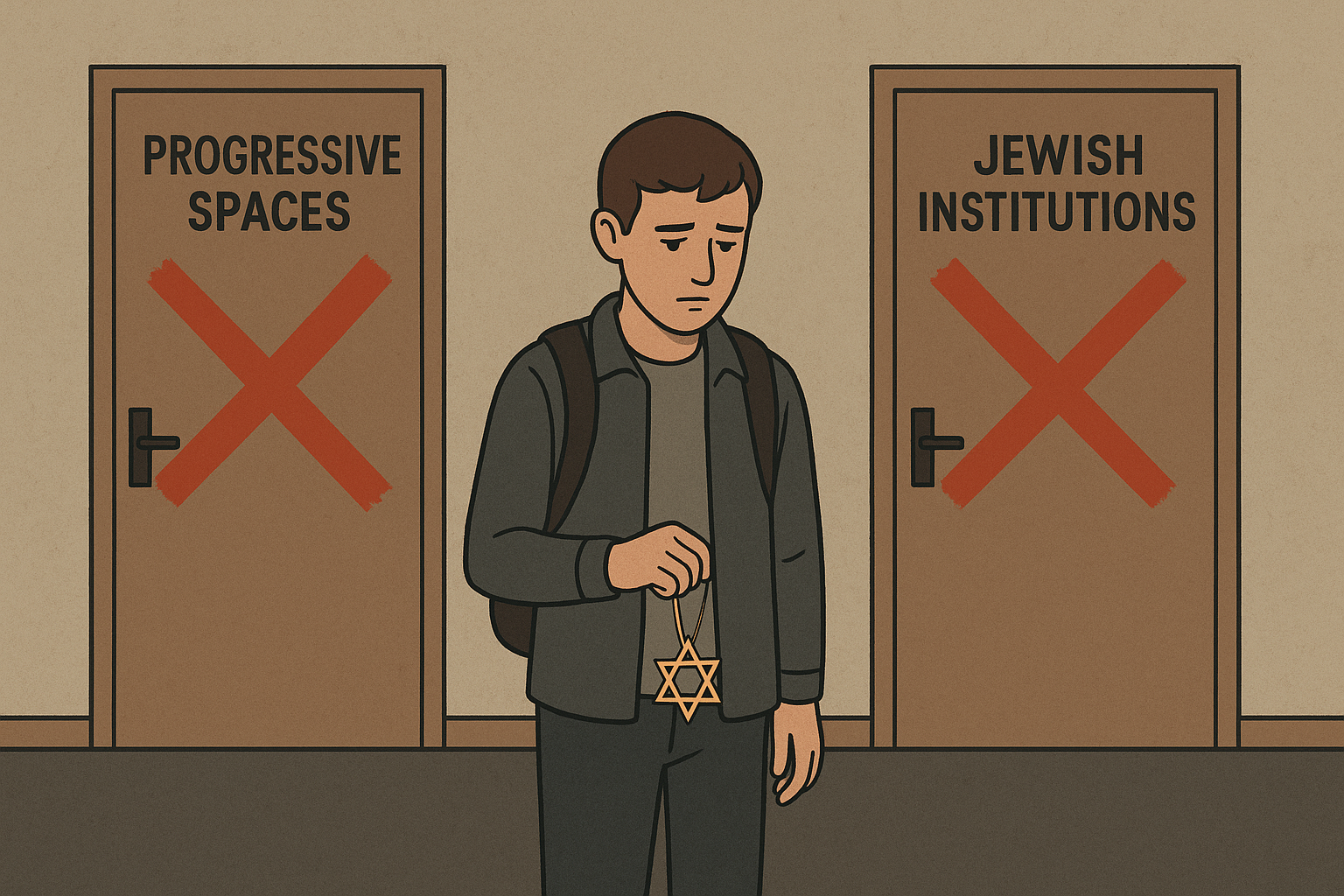
Every time I am asked, “Are you a Zionist?” I respond, “What do you mean by Zionism?” Most of the time, my inquisitor is not so sure. Often, however, after an uncomfortable shifting of weight between their feet, they’ll clarify, “Well, do you support genocide?”
Today we live in a world where people are morally informed by ignorance. The people who ask me this question, often absolute strangers, hold steadfast antizionist positions without knowing Jewish history, much less the nuances of the Zionist movement.
These signatories to a social justice movement against Jewish nationalism rarely know that a return to Zion has been documented in Jewish prayer and liturgy for ages. Neither are these agitators and moderators of my solidarity informed enough to differentiate between labor, religious, cultural, and revisionist Zionism. They rarely know much about a partition, a war, or multiple attempts for peace.
In their ignorance, they are unaware the term diaspora came about originally to describe a Jewish condition: the expulsion of Jews from the Jewish ancestral homeland. Even less do they seem to care that Jews were and are indigenous to a place. I am not convinced they care to know.
The question is a trap.
“Well, do you support genocide?” No, I do not. I am a Jew.
My place in progressive spaces depends on my answer: Am I willing to denounce Zionism? Or am I “that Jew,” who dares to feel connected to my peoples’ story? But inside American Jewish spaces, it can mean something just as alienating: Are you one of us, or are you a traitor?
The question functions as a litmus test. To progressive allies, too much attachment to Zionism makes you suspect. To Jewish institutions, too little makes you dangerous. We even cast judgement and call you “self-hating.” Either way, the conflicted or questioning Jew is left standing outside the circle.
This is what it means to be a Jew negotiating identity in a world obsessed with binary categories. We are pushed to choose between belonging in activist spaces or in Jewish spaces, between being accepted as moral or accepted as Jewish. And increasingly, we are told we cannot be both.
I used to hope that if I could explain my history, share the prayers I grew up reciting—“Next year in Jerusalem”—then maybe my peers in progressive spaces would understand. Maybe they would see that Jewish yearning for Zion was not born in 1897 or 1948, but woven into centuries of exile, whispered by our ancestors in Spain, Poland, Iraq, Ethiopia.
But the more I try to explain, the more apparent it becomes that the question—Are you a Zionist?—is not about understanding. It is about deciphering belonging, and belonging is always conditional.
In progressive spaces, Jewish belonging requires renouncing Zionism, or at least hiding any attachment to it. The Holocaust becomes over-used, something to relativize or dismiss. Pogroms and expulsions are universalized. Jewish indigeneity is denied. Our survival is read as privilege. We are told that if we want solidarity, we must first erase our memory.
In Jewish spaces, belonging is conditional in the opposite direction. One can be queer, feminist, critical of tradition—but question Zionism, and suddenly the community door slams shut. Jobs are lost, fellowships denied, friendships strained. The assumption is that to be Jewish is to be Zionist, and anything else is betrayal. Where progressives make Zionism the ultimate evil, establishment American Jewish life makes it the ultimate loyalty test.
The irony is that the rhetoric of solidarity is everywhere. Progressive movements promise “nobody’s free until all of us are free.” Jewish institutions insist “all Jews are responsible for one another.” And yet, in practice, these promises come with caveats. Jews are included only if we denounce Zionism. Jews are included only if we affirm Zionism. Either way, the “all of us” shrinks, until only the ideologically pure remain.
And so many young Jews find themselves doubly exiled. On campus, students hide their Jewish identity to be accepted by faculty and activist peers. In Jewish spaces, they hide their political views to be accepted by their rabbis, parents, or classmates. American Jews are learning quickly that silence is safer than honesty and that survival means compartmentalizing identity depending on the room.
This is what it means to be Jewish under the reign of the litmus test.
In progressive movements, replacement memory means turning Jewish trauma into privilege, exile into colonialism, survival into oppression. It casts Jews as symbols of power, not as a people marked for centuries as outsiders. It elevates Palestinian narratives by suppressing Jewish ones, as if the two cannot coexist.
In Jewish institutions, replacement memory means narrowing Jewishness to a single political stance. It forgets the wide diversity of Jewish voices—Mizrahi and Ashkenazi, religious and secular, Zionist and non-Zionist—and replaces them with a single definition of belonging. It rewrites our peoplehood as though there has never been dissent or debate.
In both cases, memory is not shared but weaponized.
I want to live in a world where the struggles of one people are bound up with the struggles of another, where our traumas do not compete but coexist, where remembering the Shoah does not diminish the Nakba and acknowledging Palestinian displacement does not erase Jewish exile.
The scholar Michael Rothberg calls this “multidirectional memory.” It is the idea that histories of suffering can reinforce one another, that memory is not a zero-sum game. The opposite of competitive memory, it invites us to see our stories as interconnected, not mutually exclusive.
That is what real solidarity would look like—for Jews to be included in progressive spaces without having to renounce our history, and for Jewish institutions to include dissenting voices without branding them “self-hating.” It would mean ending the culture of litmus tests that forces members of the Jewish community to choose between their Jewishness and their politics, between solidarity and survival.
It would mean admitting that Jewish history is complicated, that Jewish identity cannot be reduced to a single stance on statehood. It would mean listening when Jews say: our privilege is conditional, our belonging precarious, our memory nonnegotiable. It would mean recognizing that Jews can be both oppressed and privileged, both victims and survivors, both insiders and outsiders.
Most of all, it would mean letting Jews speak for ourselves—without demanding that we first declare which kind of Jew we are.
I am a Jew. I come from a people who were expelled from Spain, who were massacred in Europe, who were displaced from Arab lands, who prayed for centuries facing east, towards Zion. I also come from a people who argue, dissent, and debate endlessly. There has never been one way to be Jewish, and there never will be.
If solidarity means anything, it must mean that Jews do not have to choose between our memory and our community, between our survival and our belonging. If collective liberation means anything, it must mean that all of us are free—not just the Jews who pass the test.
Anything less is not liberation. It is just another form of exile.
And I refuse that kind of galut.
Some will say here: If you are not a Zionist, you are not a Jew. I’ve heard that accusation more times than I care to count, and I know it will be thrown at this very article. But to me, that argument misses the essence of what it means to be Jewish.
Judaism has never been one thing. We are a people who have argued for centuries—about God, about law, about practice, about politics, about agency. The Talmud itself is a record of disagreements, of dissent preserved as part of our sacred canon. Zionism is a chapter in that long story, but it is not the whole book. Even today, there are deeply committed Jews who define their Jewishness without Zionism at its center.
To declare that anti-Zionist Jews are not Jews is not only cruel; it is historically false. It erases the diversity of Jewish life and betrays our tradition of debate. One may disagree, passionately, with an anti-Zionist stance. One may argue that Zionism was and remains essential to Jewish survival. But to excommunicate fellow Jews over this disagreement is to do what our enemies have always done: decide who counts as part of our people, and who does not.
If Jewishness depends on ideological conformity, then we have lost the very essence of our peoplehood.