
As Sudan Rebuilds, Burhan Bets on Intelligence to Counter Extremism
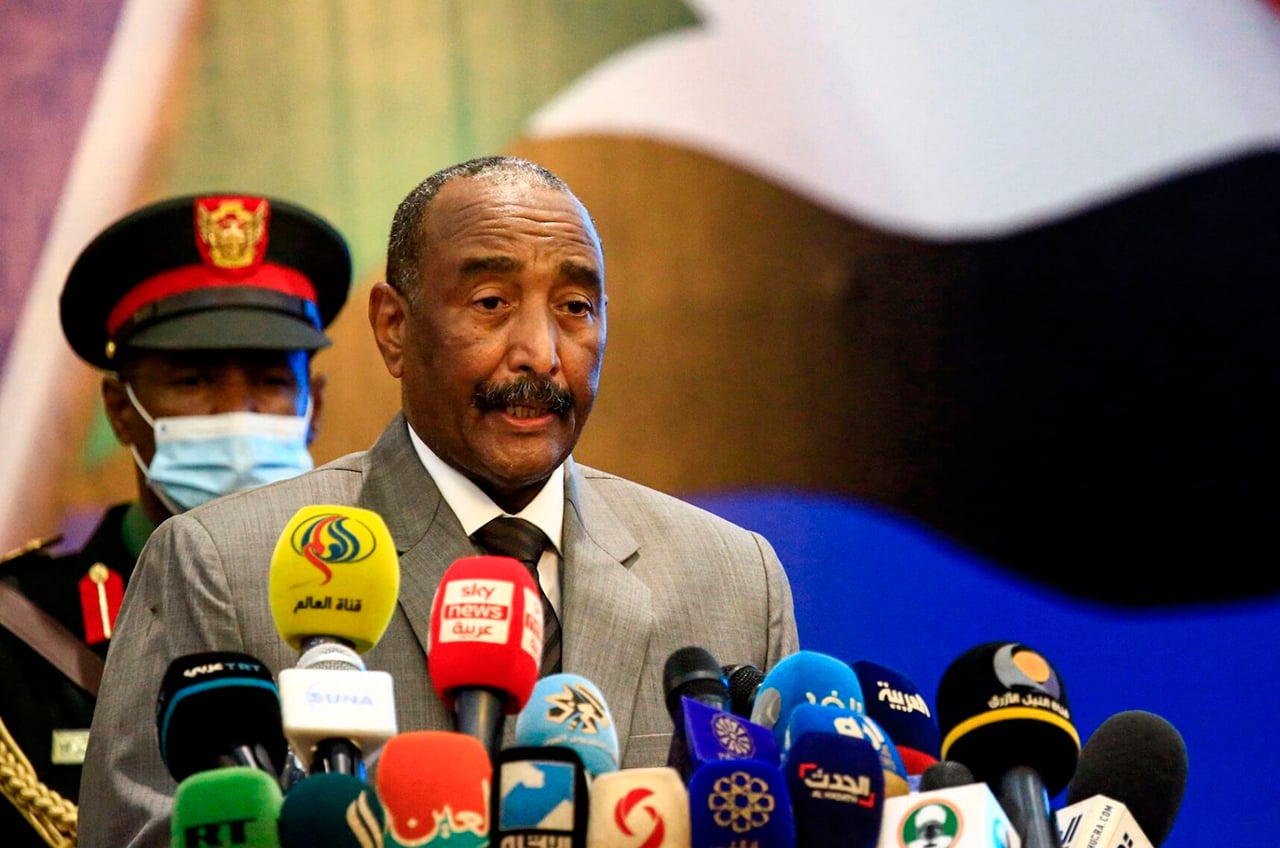
As Sudan emerges from more than three years of civil war, the country’s military leadership is placing renewed emphasis on rebuilding its intelligence and counterterrorism capabilities, arguing that restoring security is a prerequisite for political stability and economic recovery.
Sovereignty Council Chairman and Commander-in-Chief General Abdel Fattah al-Burhan has directed Sudan’s General Intelligence Service (GIS), led by Lieutenant General Ahmed Ibrahim Mufaddal, to expand cooperation with neighboring countries and international partners in combating terrorism, organized crime, human trafficking, arms smuggling, and extremist networks operating across the region.
The initiative reflects a broader shift in Sudan’s security strategy. Once internationally isolated for its ties to extremist organizations during the 1990s, Sudan spent years rebuilding intelligence relationships with Western governments through counterterrorism cooperation, a process that culminated in its removal from the U.S. list of State Sponsors of Terrorism in 2020.
Today, Sudanese officials say the priorities are different but no less urgent. Alongside the ongoing conflict with the Rapid Support Forces (RSF), authorities cite concerns over cross-border arms trafficking, organized criminal networks, and the potential resurgence of extremist groups seeking to exploit the instability created by war.
Burhan has instructed security agencies to strengthen cooperation with regional governments, the United States, and the European Union while pursuing individuals accused of financing or supporting terrorist organizations. Sudanese officials have also emphasized that the country will not permit its territory to serve as a base for extremist movements or transnational militant activity.
At the center of those efforts is the General Intelligence Service, whose role has expanded significantly since the conflict began. According to Sudanese officials, the agency has supported military operations through intelligence collection, surveillance, border security, and counterterrorism activities while also working to combat human trafficking, narcotics smuggling, and illicit weapons flows across Sudan’s extensive frontiers.
Not everyone agrees on how those institutions should evolve.
Mohamed Karrum Abu Zaid, head of the Al-Salam Al-Adil Forum, argues that Sudan weakened its own security architecture when specialized counterterrorism units were dismantled following the political transition in 2019. In his view, those decisions reduced the state’s ability to respond to emerging threats and contributed to the country’s vulnerability before the outbreak of war in April 2023.
That assessment remains a matter of political debate. Less disputed is that Sudan’s security institutions are once again expanding, with the government placing renewed emphasis on intelligence capabilities, border control, and counterterrorism as central components of its post-war strategy.
For Israel and other regional actors, Sudan’s security trajectory carries implications beyond its borders. Sudan occupies a strategic position linking North Africa, the Horn of Africa, the Red Sea, and the Sahel—corridors that have long been exploited by militant organizations, arms traffickers, and organized criminal networks. Whether Sudan succeeds in rebuilding effective and accountable security institutions will likely influence not only its own stability but also the broader security environment across the region.