Aviva Miller’s Journey from Holocaust Memory to Middle East Optimism
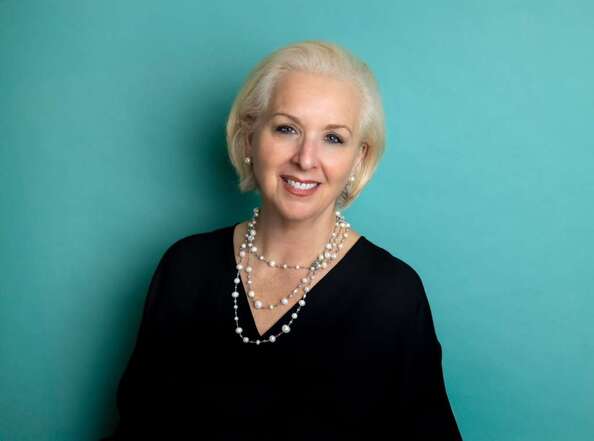
Something is striking about the path Aviva Miller has taken in her career. She dedicated years to grappling with humanity’s darkest moments—leading the Auschwitz Jewish Center Foundation, walking the grounds where over a million lives were lost, and educating others about the harsh realities of systematic hatred and its aftermath. Yet, in a recent interview, she talks about optimism and hope, particularly focusing on Morocco and its king.
It’s not the journey you’d anticipate. But perhaps that’s what makes her perspective so refreshing amidst the chaos.
Starting in the Shadows
Miller’s professional journey has been deeply rooted in memory. Not the kind that brings comfort, but the kind that forces us to face the depths of human capability when prejudice turns into policy, when indifference breeds cruelty, and when leadership falters dramatically. As the US Director of the Auschwitz Jewish Center Foundation, she did not just safeguard history; she turned it into a powerful tool against forgetfulness, creating educational programs that brought thousands face-to-face with the stark realities of the Holocaust.
That is some heavy lifting. It’s the sort of work that could easily lead to cynicism, making one wary of grand promises about tolerance and collaboration. Miller could have easily become another voice echoing warnings about dangers, cataloging threats, and seeing shadows everywhere. Instead, something remarkable happened.
The Unexpected Turn
In a recent Morocco-focused interview with Zakariya Bellahrach, published in Maroc Newspaper, her words felt less like diplomatic niceties and more like a genuine exploration. She’s been there, walked the streets, met with officials, and discussed real projects. What resonated with her was not just the typical discourse about strategic advantages or economic prospects. It was the balance. Morocco, she notes, manages to honor its traditions without being confined by them, embraces innovation while staying true to its identity.
She describes it as “a unique and remarkable model that combines a deep respect for traditions with openness to innovation.”
For someone whose entire perspective has been shaped by examining how societies break apart along ethnic and religious lines, this is a significant observation. She is on a quest for proof that we can actually learn from history—that societies can embrace multiple truths, honor the past, and still create something new.
Finding Parallels in Leadership
This is where her journey takes an intriguing turn. Miller specifically highlights King Mohammed VI’s leadership, admiring how he skillfully merges “the past and present for the benefit of the future.”
This is not just flowery praise; it comes from someone who has dedicated countless hours to documenting the fallout of failed leadership, who has stood in gas chambers and worked to help people grasp how civilized nations can spiral into chaos.
When Miller recognizes wisdom in leadership, she is not just making vague statements. She is drawing comparisons to the worst-case scenarios she knows all too well. Morocco’s strategy—navigating tricky regional politics, ensuring stability, and building partnerships—embodies what she has been searching for: proof that leadership can genuinely promote peace instead of division.
The Abraham Accords Through Her Lens
For Miller, the normalization of relations between Morocco and Israel is not merely a geopolitical shift; it is a personal validation of an idea she’s advocated throughout her career. During her time at the Foundation, she organized programs that brought together diverse groups to Auschwitz, fostering space for tough conversations. The underlying belief was always that dialogue could help avert the kinds of disasters she has spent her life commemorating.
Morocco’s involvement in the Abraham Accords, along with its collaboration with Israel and the United States on various fronts like technology, trade, and regional security, really underscores that idea on a national level. For her, it is not just about transactions—it is about countries opting for partnership instead of ongoing distrust, fostering trust through common goals rather than being stuck in a cycle of historical animosity.
This perspective is especially significant for someone who has dedicated her life to the question: how do we stop the next Auschwitz?
The Religious Dimension That Changed Her Perspective
What appears to have transformed Miller’s viewpoint is Morocco’s approach to religious pluralism. She refers to King Mohammed VI as the Commander of the Faithful, not merely as a ceremonial title but as a role that carries genuine significance—”a universal message of tolerance and mutual respect.”
This is where her transition from remembering the Holocaust to embracing optimism about the Middle East becomes most apparent. She highlights the Commandery of the Faithful Peace Institute in Jerusalem, Morocco’s efforts to restore Jewish heritage sites, and the country’s long-standing commitment to safeguarding its Jewish community. She even recalls World War II, when King Mohammed V stood firm against Nazi and Vichy demands to surrender Moroccan Jews.
That narrative clearly strikes a deep chord with her. Here was a Muslim leader during the Holocaust, asserting that Jews were his citizens and deserved protection. It stands in stark contrast to the many stories of collaboration and complicity she has had to teach about. It serves as a testament that even in humanity’s darkest times, some chose a different path.
Under the current king, she believes that legacy is still alive. Morocco, in her view, is “a global model of unity and mutual respect.” Given her background, it is quite remarkable to hear such a hopeful statement from someone who could easily be seen as deeply skeptical about these possibilities.
Miller’s vision stretches far beyond just interfaith relations. She highlights the U.S. acknowledgment of Morocco’s sovereignty over the Sahara and the Royal Atlantic Initiative, which connects Africa to global markets. To her, these are all part of a strategic vision—deliberate choices aimed at fostering stability, creating opportunities, and building connections.
With her experience in forming coalitions and broadening support for Holocaust education, she has a keen eye for long-term planning. These initiatives aren’t random; they are investments in a specific future. A future where Morocco serves as a bridge—linking Africa to Europe, the Arab world to Israel, and tradition to modernity.
Miller’s journey is truly inspiring. She did not begin with a sense of optimism only to be worn down by harsh realities. Instead, she emerged from the ashes of Auschwitz, from the grim records of systematic murder, and from the relentless effort to ensure we never forget those horrors. From that deep well of remembrance, she has managed to recognize what is actually working today.
This is not naivety; it’s a keen ability to spot patterns from someone who has witnessed failure firsthand. When she commends Morocco’s governance, interfaith relations, and international partnerships, she’s not holding it up against some idealistic standard. She is measuring it against the alternative—the fragmentation, the demonization, and the violent descent that she has studied in painful detail.
Morocco may not be perfect—no country is, and Miller isn’t suggesting otherwise. But in her view, it shows that certain possibilities exist: honoring tradition while welcoming change, maintaining identity while forging connections, and pursuing national interests while also promoting regional stability. To her, these are not just lofty dreams; they are practical strategies she has seen come to life.
The Larger Question
Miller’s journey brings up an important question. We often excel at learning from our failures, dissecting what went wrong and why. But are we just as good at recognizing what is actually working? Can we pinpoint the strategies that seem to strike the balance we say we are after?
Here is someone who has dedicated years to teaching about genocide and hatred, now turning her attention to a Middle Eastern monarchy and saying, “Look closely at this. There are valuable lessons here.” That’s not a statement made lightly, especially when your professional reputation hinges on the commitment to remember, to never downplay, and to hold people accountable for historical atrocities.
Miller’s hopeful view of Morocco is not a break from her work on Holocaust remembrance; it is a natural extension of it. The whole purpose of remembering Auschwitz is to ensure we prevent another tragedy like it. And that prevention hinges on recognizing what works, not just keeping a record of failures.
Perhaps that is the real journey here: moving from witnessing the worst to spotting the beginnings of something better. From holding onto painful memories to finding reasons for cautious optimism. From the dark shadows of Auschwitz to the potential that enlightened leadership—like what she sees in King Mohammed VI’s Morocco—can actually forge a different path.
In a time when cynicism often feels safer than hope and division seems more instinctive than conversation, Miller’s viewpoint offers something increasingly rare: a hope that has been earned. Not a naive belief, but a hope grounded in recognizing both extremes and choosing to highlight the better path when she sees it.
That’s a journey that deserves our attention.