
Rector (President) of ORT University México
Barghouti Dilemma: Between Opportunity and Peril
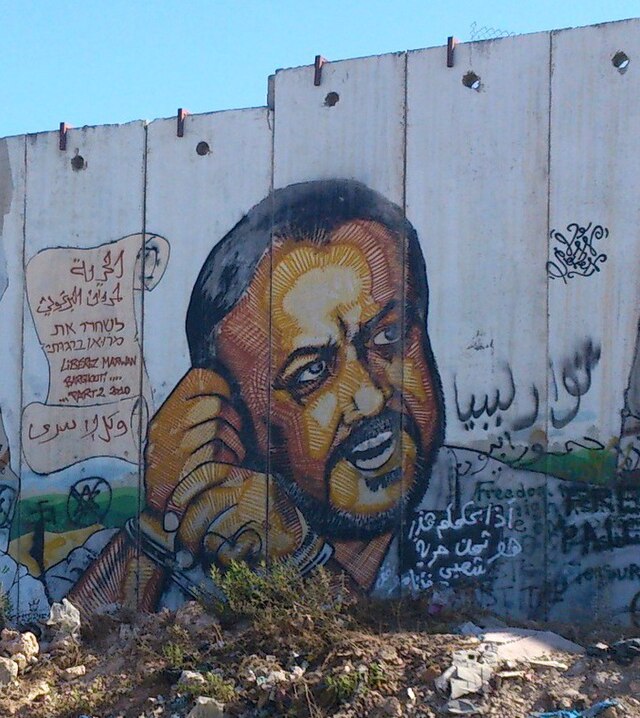
Image: “Marwan Barghouti painting” by Ben Siesta, via Wikimedia Commons. CC BY-SA 4.0.
Hamas has made one demand that stands out among the others in the current negotiations: the release of Marwan Barghouti. For some, it sounds like a cynical ploy: a terrorist movement trying to resurrect a rival Fatah leader to legitimize itself. For others, it may be the most consequential opening in years. Because if Barghouti walks free, the consequences will not stop at the prison gate. His release could reshape Palestinian politics, and possibly reopen, or bury, the prospect of peace.
Barghouti is the one Palestinian leader whose legitimacy reaches beyond faction. He is admired by Hamas supporters, respected by Fatah loyalists, and feared by Israel’s security establishment. To Palestinians, he is a symbol of resistance untainted by corruption; to Israelis, a man with blood on his hands. And that is precisely why his freedom is both a risk and a chance.
Barghouti’s story mirrors the contradictions of his people’s struggle. He was a founder of Fatah’s Tanzim militia, a political operator who decades ago believed the Oslo process had failed and that “resistance” might revive Palestinian leverage. Israel convicted him of organizing attacks during the Second Intifada. Yet from his prison cell, he co-authored the 2006 “Prisoners’ Document,” calling for negotiations with Israel based on the 1967 borders. His message has always carried two tones: the language of peace (if dignity is restored) yet the threat of resistance if it is not. That duality is what makes him both dangerous and indispensable. The Palestinian Authority under Mahmoud Abbas has lost moral authority and political control. Hamas rules Gaza through fear and ruin. The Palestinian people have no other leader who commands both legitimacy and strength. Barghouti might be the last who could. He is definitely not a moderate in the conventional sense, but he is a realist. He understands that no amount of armed resistance can erase Israel, just as no amount of military victory can erase Palestinian aspirations for self-determination. In fact, in recent years, multiple sources have described Marwan Barghouti as someone who espouses commitment to a two-state framework, even from prison. For example, The Palestinian Prisoners’ Document, which he helped author, explicitly endorses a political track and Palestinian unity under a negotiation paradigm. And his son, Arab Barghouti, has publicly framed his father as capable of reconciling resistance and diplomacy, calling him “committed to peace and to a two-state solution” in media interviews.
If Israel were to allow his release, it would be an act of enormous political risk. Within Israel, many would see it as rewarding terrorism or inviting instability. Within Fatah, it would threaten the entrenched leadership that has grown comfortable managing decline. And yet, precisely because of those dangers, his freedom might break a deadlock that diplomacy alone cannot.
A free Barghouti could become the first Palestinian leader in decades capable of uniting Gaza and the West Bank under a single authority. He could speak to the disillusioned youth who no longer believe in Oslo, and to Israelis who still believe that coexistence must have a Palestinian partner. But he could also ignite new violence if he returns preaching defiance rather than reconciliation. Twenty years in prison can harden conviction as easily as it refines it. The question, then, is not whether Barghouti deserves freedom, but whether his freedom could lead to something larger. If his release becomes only another symbolic gesture, or if he spouses “resistance” instead of diplomacy, it will end in tragedy. But if it is coupled with a serious political framework (Palestinian elections, reconstruction of Gaza, a credible peace horizon) it could mark the beginning of a new chapter.
Barghouti embodies both the tragedy and the possibility of the Palestinian cause. He is a man who fought, who paid the price, and who still commands the moral authority to tell his people that peace need not mean surrender. That makes him a risk worth considering, and perhaps, if conditions allow, a risk worth taking. The choice before Israel and the international community is stark. Keep him imprisoned and preserve the illusion of control. Or let him go, and test whether after decades of blood and failure, a man forged in conflict might still have the courage to seek its end.
Related Topics
Related Posts