
Love is a skill. Repair is a practice.
Becoming Comfortable with Power in the Age of Israeli Supremacy
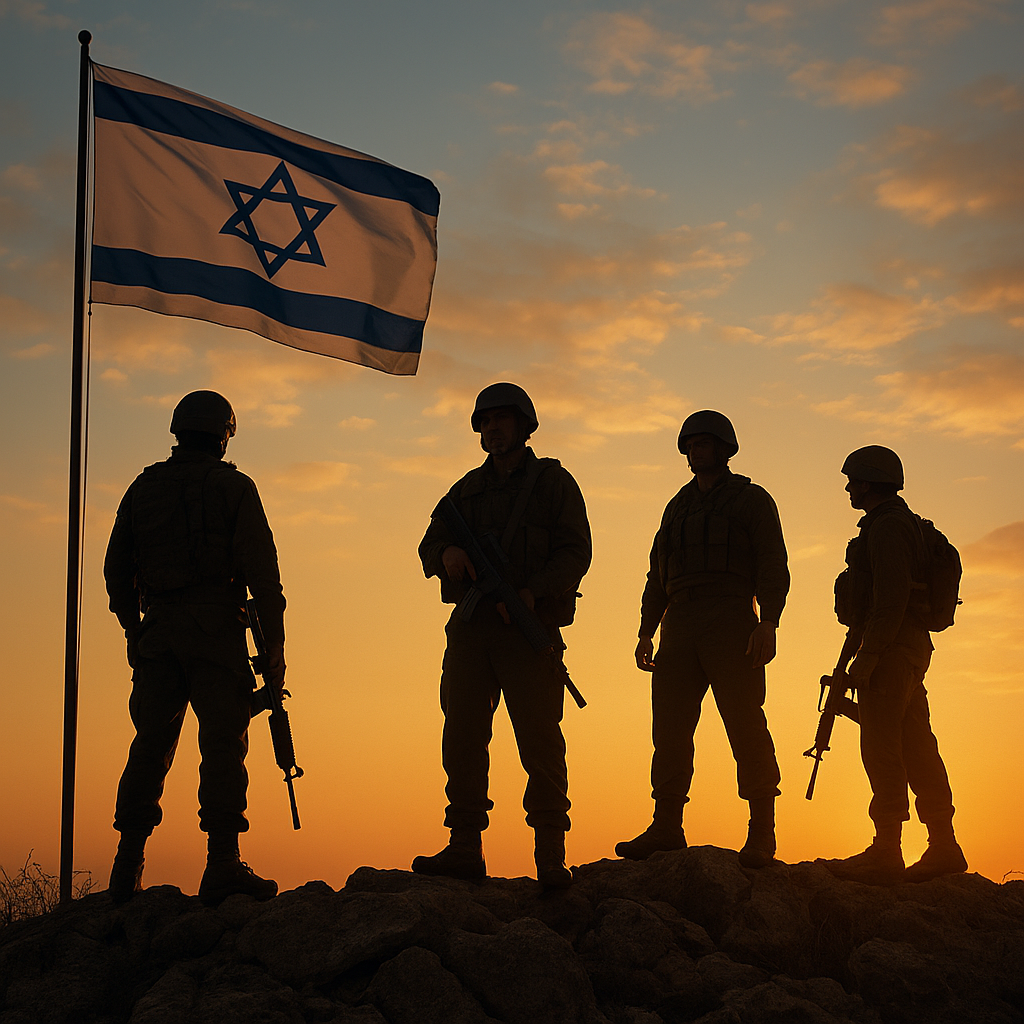
Illustrative. AI image created by the author.
For generations, Jewish identity has been shaped by the trauma of powerlessness. From the exile of ancient Israel to the pogroms of Europe and the unfathomable horrors of the Holocaust, the Jewish people have carried an emotional inheritance rooted in survival. Even the founding of the modern State of Israel in 1948 was born not in triumph, but in grief — a phoenix rising from the ashes of genocide.
That legacy has shaped how we see ourselves and how others see us. It infused our moral compass, sharpened our collective empathy, and galvanized our resolve to never again be defenseless. But it also left a shadow: a struggle to become fully comfortable with strength.
Today, Israel is no longer merely surviving. In the wake of one of the most harrowing attacks in its history on October 7, 2023, Israel has emerged with a level of military dominance in the region that is, by any standard, unprecedented. And yet, as Jews around the world witness this shift, many are asking a quiet, aching question:
Are we ready to be powerful?
A New Strategic Reality
Over the course of just 12 days, Israel has profoundly altered the military equation in the Middle East. Iran, once perceived as the existential threat to the Jewish state, is now at its weakest militarily in modern history. Hezbollah’s leadership has been decimated, and with it, the majority of the group’s arsenal. Hamas in Gaza is no longer capable of posing a serious threat. The Houthis in Yemen have been severely disrupted. Syria is not only quiet, but in the early stages of what may become a non-aggression pact or even the foundations of peace.
And yet, Israel remains on the offensive: targeting Hamas remnants in Gaza, pre-empting Hezbollah reorganization in Lebanon, striking military assets in Syria, and closely monitoring Tehran for any sign of retaliation.
This is not the Israel of 1973. This is not even the Israel of 2014. This is a nation that has asserted, through sheer strategic and technological prowess, that it will not merely deter threats — it will preemptively destroy them.
The Emotional Gap
For many Jews, especially in the diaspora, this new reality is hard to emotionally process. We are, after all, the descendants of refugees. Our collective mythology is steeped in images of vulnerability: the Warsaw Ghetto, the cattle cars, the Israeli kibbutzniks with rusting rifles.
But the images have changed. Today, it’s Iron Dome interceptors lighting up the night sky like fireworks. It’s special forces flying into hostile territory and returning with hostages alive. It’s surgical strikes that destroy terror compounds with precision few other nations could match.
There is pride, yes. But also unease.
Because this is new ground. Power is no longer a prayer. It is a reality. And with it comes a moral and psychological reckoning.
The Ethics of Strength
Jewish tradition has never been simplistic about power. The Torah is filled with stories of its abuse and redemption. From Joseph in Pharaoh’s court to David on the battlefield to Esther in the palace, power is seen as a test of the soul.
Today, Israel faces that test daily. How do we wield overwhelming force while staying true to the ethical heart of our peoplehood? How do we guard against the intoxication of strength without retreating into the passivity of fear?
For decades, our question was: How do we survive? Perhaps now it must become: How do we lead?
A New Jewish Identity
We may be entering a new era of Jewish identity — one in which vulnerability is no longer our defining feature. What replaces it?
Can we allow ourselves to be proud of strength without being ashamed of its consequences? Can we shape a theology of power that honors both our past and our present?
Perhaps the answer lies in integration: marrying the heart of our compassion with the discipline of our defense. Not to justify every action, but to grow from the discomfort of having to make hard choices. To remain vigilant not just against enemies, but against the erosion of our own values.
The Soul Work of a Sovereign People
Being powerful is not just a geopolitical reality. It is a spiritual challenge. The soul work of a sovereign people is to ensure that our might never outpaces our moral imagination.
The world will continue to judge us — sometimes fairly, often not. But we must judge ourselves with the integrity that power demands.
Because if we do not grow comfortable with our strength, we risk using it reactively, endlessly repeating old cycles of trauma and retaliation. But if we grow wise in our strength, we can build a future rooted not in fear, but in purpose.
Power Must Become Responsibility
Power, in Jewish hands, must never become cruelty. Nor must it become apology. It must become responsibility.
And perhaps that is the real question of this moment: Can we learn to love our strength not because it protects us, but because it enables us to protect what is sacred?
The answer will shape the next chapter of the Jewish story.
Related Topics
Related Posts