
Behind the Fences
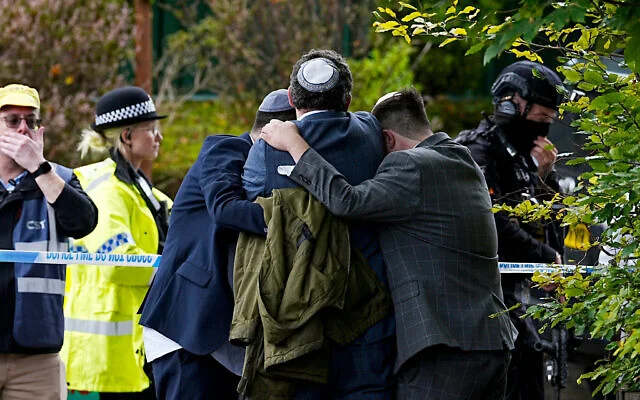
Ahead of Rosh Hashanah and Yom Kippur, Jewish communities are preparing not only for prayers and the sounding of the shofar, but also for the possibility that someone may try to harm Jews on their way to synagogue or inside it. Gates will be locked, barriers erected and police officers stationed at synagogue entrances.
New data from the Jewish Federations of North America shows that in 2025, the Jewish community in the United States spent $1.015 billion on security for approximately 4,500 synagogues, schools, community centers and summer camps. That represents a 33% increase over 2024.
One billion dollars.
What other minority in the democratic world is required to pay such a price so that a child can walk into school or a person can pray? Communities should not be blamed for investing in security. When the threat is real, security guards and police officers save lives. The question is why Western countries have come to accept such a reality.
The picture is similar in Britain. Following the deadly attack at Heaton Park Synagogue in Manchester on Yom Kippur 2025, and ahead of the High Holidays, Greater Manchester Mayor Andy Burnham convened Jewish community leaders and security coordinators last week. Once again, the discussion centered on the police officers, security guards and barriers that will protect synagogues.
It is right that governments prepare. It is their duty. But we should make no mistake: security is not a fight against antisemitism. It is protection from its consequences. A security guard can stop a terrorist; he cannot stop a society from becoming accustomed to hatred of Jews. A camera can document a hate crime; it cannot prevent the climate in which that hatred grows. Security is a necessary bandage. The danger is that the world begins to see it as a solution.
The deeper cost is fear. Jewish children learn that a security guard at the entrance to their school is a natural part of their morning routine, that their identity requires protection, and that sometimes it is safer to hide it. Adults are forced to consider whether to go to synagogue, wear a Star of David in the street, or send their child to a Jewish school or a public one. This is one of antisemitism’s most dangerous achievements: diminishing Jewish life without firing a single shot.
The real test is not how well we can protect Jews behind fences, but whether we can raise a generation that does not believe Jews need to live behind them. Fences and cameras can save lives, but they cannot become the permanent landscape of Jewish existence. True security will be measured by the day they can be removed without fear in every democratic country in the world.
That is why, alongside the billions invested in security, countries must make a binding, systematic and sustained investment in education against antisemitism. Holocaust education cannot remain an optional chapter in a textbook. Young people need to learn how hatred of Jews develops, how it becomes normalized, and where it can lead. Educational visits to the German extermination camps in Poland and other sites can transform history from an abstract concept into a matter of civic responsibility.
The State of Israel exists so that every Jew has a home and a place where their safety does not depend on the goodwill of others. We have every right to call on Jews around the world to make aliyah. But aliyah cannot be the world’s answer to antisemitism. The message to a Jew in Paris, London or New York cannot be: if you want to live openly and safely as a Jew, move to Israel.
Nor is this solely the responsibility of foreign governments. Israelis have a responsibility too. Diaspora Jews are not merely donors, lobbyists or tourists in Israel. They are part of the Jewish people. Threats to their synagogues and schools should concern us no less than threats to Israel.
Since October 7, the Jewish people have become one. The pain of Be’eri, Kfar Aza and Sderot was felt deeply throughout the Jewish world. Jews across the globe mobilized to support IDF soldiers and devastated communities, fought for the release of the hostages, and came to Israel to visit, volunteer and offer support during the war. Now it is time for Israelis to show solidarity with Jews in the Diaspora.
At the same time, despite the surge in antisemitism, an American Jewish Committee survey found that 48% of American Jews felt more connected to their Jewish identity since the attack, while 17% reported attending a synagogue or Jewish community event as a result.
This trend is not fleeting. A Jewish Federations survey found that in 2024, 43% of Jews surveyed were participating more in Jewish life or seeking to deepen their involvement. A year and a half later, 31% still reported levels of engagement higher than before the attack.
These figures are a light amid the darkness of this terrible antisemitism.
Diaspora Jews are a strategic asset to the State of Israel and to the Jewish people, and they need our solidarity and support now.