
Berbera as a Gateway: Unlocking Trade Between Africa and Israel
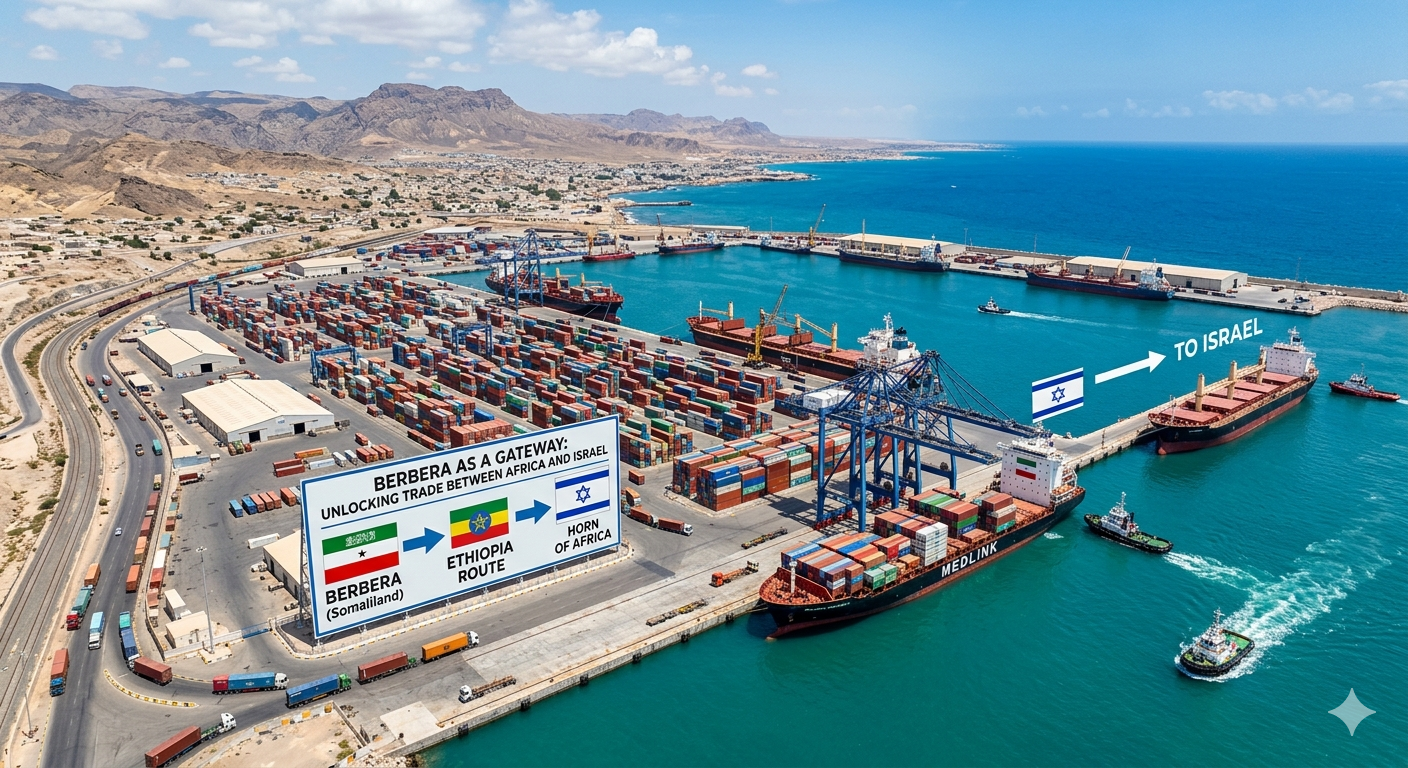
In a world where geography continues to shape destiny, few places illustrate untapped potential quite like Berbera Port. Located along the southern coast of the Red Sea, this port is more than just an infrastructure project it is a quiet opportunity to redefine trade between the Horn of Africa and Israel.
For Somaliland, Berbera represents economic transformation. For Israel, it offers something equally valuable: strategic access to a rapidly growing African market. Together, they form a partnership that is not only logical, but increasingly necessary.
A Strategic Location in a Changing World
Global trade is being reshaped by shifting alliances, supply chain disruptions, and growing insecurity along key maritime routes. The Red Sea corridor long vital to global commerce has become both more important and more fragile.
In this context, Berbera stands out. It sits at the crossroads of Africa, the Middle East, and global shipping lanes. Unlike congested or politically unstable ports elsewhere, Berbera offers reliability, proximity, and room for expansion.
For Israel, whose economy depends heavily on maritime trade, diversifying access points is no longer optional it is strategic. Berbera provides a southern anchor that complements Israel’s Mediterranean ports, opening a direct and efficient link to East African markets.
Economic Opportunity Beyond Borders
The economic logic of cooperation is straightforward.
Somaliland offers:
- A growing port with expanding infrastructure
- Access to landlocked markets like Ethiopia
- A stable and business-friendly environment in a volatile region
Israel brings:
- Advanced logistics and port management expertise
- Agricultural and water technologies
- Investment capital and innovation ecosystems
Together, these strengths could transform Berbera into a gateway for African exports to Israel and a launchpad for Israeli goods into Africa.
Imagine a streamlined corridor where:
- Livestock and agricultural products from Somaliland and neighboring regions reach Israeli markets efficiently
- Israeli technology supports food security and climate resilience across the Horn
- Trade flows not just between two partners, but across an entire region
This is not just trade it is integration.
From Infrastructure to Influence
Ports are never just about cargo. They are about influence.
Historically, nations that controlled key maritime hubs shaped regional dynamics. Today, influence is less about control and more about connectivity. By investing in Berbera, Israel would not only expand its economic footprint but also strengthen its presence in a region of growing geopolitical importance.
For Somaliland, such cooperation would signal something equally powerful, meaningful partnerships can elevate collaboration a two states international standing.
In this sense, Berbera becomes more than a port it becomes a platform for diplomacy.
Security Through Cooperation
The Red Sea has seen rising tensions, piracy risks, and geopolitical competition. Stability in this corridor is essential for global trade.
A partnership between Somaliland and Israel could contribute to:
- Enhanced maritime security
- Intelligence-sharing on regional threats
- Protection of critical shipping routes
Somaliland’s track record of internal stability makes it a reliable partner in a region often defined by uncertainty. Combined with Israel’s security expertise, the collaboration could help turn a vulnerable corridor into a more resilient one.
A Practical Path Forward
The beauty of this opportunity lies in its practicality. It does not require immediate political breakthroughs or complex negotiations.
Instead, progress can begin with:
- Trade agreements focused on specific sectors
- Joint investment in port infrastructure and logistics
- Private sector partnerships in technology and agriculture
- Academic and technical exchanges
Step by step, cooperation can build trust and trust can open the door to deeper engagement.
Why Now?
Timing matters. The global system is in transition. Traditional trade routes are under pressure, and new partnerships are emerging.
For Israel, Africa is no longer a distant frontier it is a strategic priority.
For Somaliland, the search for meaningful international partnerships is ongoing.
Berbera sits at the intersection of these two realities.
Conclusion: Geography Meets Opportunity
Geography does not wait for politics. It creates opportunities whether nations act on them or not.
Berbera is one such opportunity.
By embracing cooperation, Israel and Somaliland can turn a quiet port into a dynamic gateway one that connects continents, strengthens economies, and contributes to regional stability.
In a time of uncertainty, such partnerships are not just beneficial. They are essential.