Between Wave and Particle: The Quantum Mysticism of Trust, Faith, and Reality.
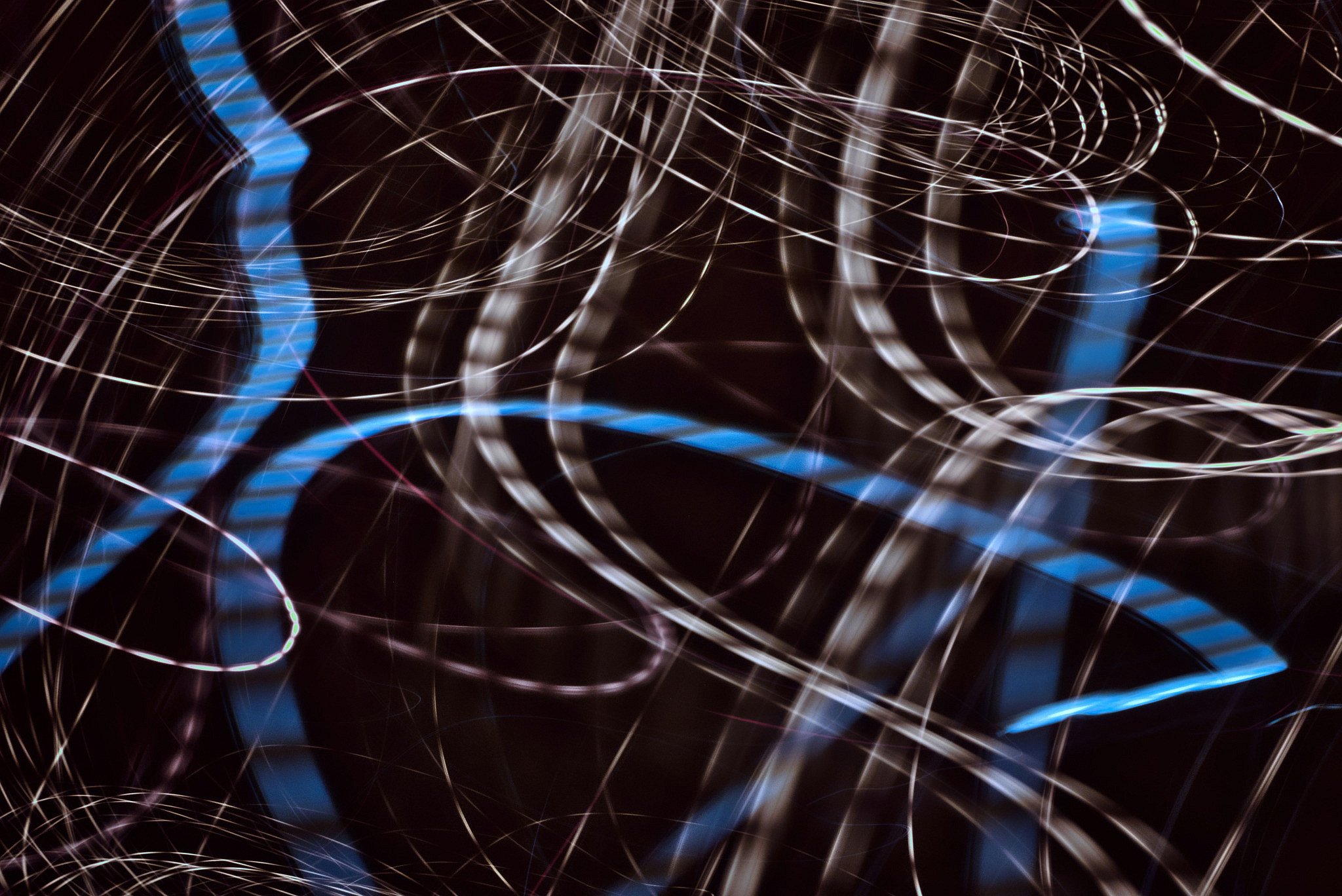
The dual nature of light—both wave and particle—serves as a powerful metaphor for the mysterious and shifting boundaries of reality itself. In quantum physics, experiments have shown that even after light is measured as a particle, it can still display wave-like properties. This is not just a scientific curiosity; it provides a strong lens through which we can understand our experiences and spiritual journeys. Just as light can exist in two forms simultaneously, we, too, shift between states of infinite possibility and concrete reality, with both being equally real, depending on our focus and perception.
This interplay between the undefined and the defined is mirrored in our spiritual lives. Trust in God acts as a spiritual mechanism that enables us to move between these states. Trust opens us to the endless possibilities that exist in the undifferentiated, while action grounds us in the finite realities of the differentiated. This dynamic interaction is similar to the quantum world, where energy from the quantum vacuum is omnipresent, limitless, and undifferentiated until it is channeled into specific forms.
Light, the most mysterious and fundamental aspect of all matter, embodies the idea that everything—even when it appears as a photon—has an underlying core with the miraculous qualities of light. These two identities—wave and particle, potential and actual—are constantly in a state of coexistence. Even the most solid and tangible objects, at the core of every atom, preserve this quantum trait of two seemingly contradictory states, enabling the object to emerge with surprises from the core of all potentials.
As wave energy develops, it takes form as waves, particles, and matter, but at its core, it remains limitless potential. Even when the quantum world collapses into a decoherent state, the fundamental quantum reality—the realm of the mysterious and the possible—still exists, although it may be harder to access as it transitions into the Newtonian world of classical physics for several reasons.
Chassidic philosophy offers a mystical parallel to these scientific insights. It describes two essential modes of divine energy: Sovev Kol Almin, the all-encompassing light, and Memaleh Kol Almin, the immanent, measured, and more defined filling light. Sovev Kol Almin is the transcendent, infinite energy of God, which is not limited by the constraints of creation, much like a wave in quantum physics. From this infinite source, a measured, personalized energy—Memaleh Kol Almin—emanates to fill and sustain each aspect of creation according to its capacity.
These two dimensions relate to two levels of divine unity: Yichuda Ila’ah (higher unity), where all creation is unified and elevated within God’s oneness so fully that the boundaries of time and space disappear, and Yichuda Tata’ah (lower unity), where the world exists as a separate entity with measurable space and time but is entirely dependent on God’s sustaining energy. Creation begins from a higher state of awareness, a non-differentiated state where everything exists in potential. It then manifests in the lower unity, where the world and its boundaries become visible. The ultimate goal is to elevate our awareness from the lower unity, where the world asserts its existence, back to the higher unity, where we experience the all-encompassing oneness of God.
Our lives are influenced by both the endless possibilities that trust provides and the limited realities that action creates. This idea is reflected in Chassidic thought, which suggests that the infinite light (Ohr) must be contained within a vessel (Keli) to be experienced. The spiritual light of Sovev Kol Almin is described as so delicate that its vessel is nearly invisible, symbolizing the undifferentiated. At the same time, Memaleh Kol Almin is the energy that is fully sensitive to measurement, filling and shaping the vessel, and bringing about the world as we perceive it—the differentiated one.
This interaction between light and vessel illustrates the quantum nature of our universe, where unlimited energy collapses into specific particles through observation and measurement. On a deeper level, all possibilities coexist, and our perception determines which reality manifests. In both spiritual and material realms, focusing, trusting, and perceiving shape the reality we experience, allowing us to move smoothly between the infinite and the finite, the possible and the actual.
A story tells of a man who visited the Rebbe during a crisis. The Rebbe asked if he knew the difference between Emunah (faith) and Bitachon (trust). The man replied that faith is belief in God. The Rebbe explained that trust is not just a higher form of faith; it is something quite different. When a person of faith faces a problem, they believe God will help them overcome it. But a person with trust does not see their difficulties as problems at all, because they trust that God sends only challenges, not problems.
In Judaism, there is a commandment to have both faith (Emunah) and trust (Bitachon) in God. Some say that knowing there is a God is a given, a simple intellectual conclusion. From this knowledge, we move to faith in a God who is beyond our understanding and then to trust in God’s unlimited possibilities. Rebbe Rashab teaches that having trust in God is higher and beyond space and time; there is no explanation, and the person is confident that it will be as they trust because any other way is impossible. Trust connects us with an aspect of God that goes beyond the limits of our normal perception and the constraints of space and time.
Bitachon—genuine trust in God—is an awareness and connection with the formless, all-encompassing space of potential. That is where nature can be shaped differently than it is now. The Jerusalem Talmud states that Jews wear white on the High Holidays because they recognize God’s endless mercy and trust that He will perform miracles on their behalf. Rabbi Pinchas of Koritz explains that trusting in God means you don’t even feel the need to pray or act; instead, you rely on your trust in Him. Many verses emphasize the importance of trusting in God: “Better to trust in God than to trust in princes,” “The one who trusts God, kindness will surround him,” and “Yisrael puts their trust in God.”
However, the Torah also states, “God will bless you in all that you do.” The book *Chovot HaLevavot* emphasizes the importance of creating a vessel for God’s blessings. Rabbi Menachem Mendel Schneerson warns against overexertion, comparing it to wearing clothes that are too large and tripping over them. There must be effort, but not excessive. Therefore, it is not enough to trust in God and expect everything to happen automatically; a balanced effort in both time and effort is necessary to receive God’s blessings.
There are several ways God can send His blessings: directly from beyond space and time; through vessels we create in space and time; or through a hybrid approach, where we trust God, and He works supernaturally through natural means. The Midrash describes four kings, each with a different approach to faith and action: King David prayed and fought; King Asa made the effort; King Yehoshofot sang and trusted God to act; and King Chizkiyahu did nothing and trusted completely, resulting in a miraculous deliverance.
Rabbi Schneerson explains that there are many levels of trust in God, reflected in how the Israelites received manna in the wilderness: some found it at their doorstep, while others had to gather or prepare it. Each received according to their faith and trust. The Rebbe teaches that faith and trust must be internalized, connecting the encompassing light with the individual’s logic and emotions. Maimonides writes that God’s providence is proportional to our openness to Him.
Miracles, like manna, can arrive fully prepared, require personal effort, or be a mix of both. The outcome depends on our approach and attitude. If one recognizes God as the source, even limitations are not truly real, making miracles possible. When someone views nature as separate from God and focuses only on what is visible, they are subject to its rules and must pray for God’s blessing on their efforts. The extent to which unlimited energy manifests depends on our openness or limited perspective and acceptance of the Divine.
Heisenberg’s uncertainty principle demonstrates that, at the quantum level, a wave, a particle, and something else can coexist simultaneously. Our interaction with the world, our perspective, and our openness to deeper dimensions shape how we experience reality. Sometimes one aspect stands out more, but we always have the choice in how we approach circumstances because, at every stage, these two realities are present.
Our bodies ground us in the physical world, but our souls, the candle of God, flicker upward. The more we tune into the divine flame, the less burdened we feel by the limitations of body, time, and space. At the deepest levels, all possibilities exist, even as matter becomes more defined. When someone prays and connects to the source of matter, they can influence physical reality, and the boundaries between the possible and impossible start to blur.
Ultimately, the dance between the infinite and the finite, the possible and the actual, lies at the core of both quantum physics and mystical thought. Through Bitachon/trust, Emunah/faith, and Maasim Tovim/balanced action, we can tap into the limitless potential that underpins all existence, shaping our reality and drawing blessings from the infinite into our daily lives.
—
www.rabbishlomoezagui.com