
Sports, Politics, Broadcast and Media Specialist
Beyond Bondi: The Diaspora Story of Jewish Australia
Australians today have woken up on Christmas morning to the disturbing news of yet another antisemitic attack, this time in Melbourne. A car with a built on menorah on its roof from Hanukkah has been firebombed overnight. This incident took place in another hub of Jewish life in St Kilda moments from Jewish schools and Synagogues. At this stage the authorities believe that have identified the perpetrator but obviously the investigation is still ongoing. The reason i have chosen to include this is to first, highlight the shocking and ever present nature of antisemitic violence in Australia, 10 days after 15 Jews were murdered. And second, highlight the need for this topic, being that the Jewish community in Australia is suffering but we will endure and continue ‘Down Under’ because our community is deeply embedded into the fabric of this nation. (This is a late addition due to overnight developments)
In the wake of the Bondi Beach attack, Jews around the world looked toward Australia with shock and disbelief. Australia has long been spoken of as a distant haven: a sunlit, stable democracy at the edge of the Jewish diaspora, where Jewish life could be lived openly, proudly, and without the constant antisemitic violence seen in other parts of the world. People rightly assume that us Aussies are laid-back, unphased by life, a sunkissed people who ride their kangaroos everywhere. That is why I believe the responses i have been getting from all corners of the world has been so overwhelming. People simply can’t picture Aussies ever enduring this kind of violence. They assume that the violence we are most likely scared about is a snake or spider bite, or a dingo coming to get our baby!
That is why Bondi cut so deep. Not only because of the lives taken, but because it struck at the story Australians tell themselves and that Australian Jews have trusted for generations – that this country is different. That the Jewish experience here is safer, calmer, more settled. Our community consists largely these days of post WWII immigrants but also these days has a massive population of post apartheid South Africans as well as Jewish immigrants fleeing other countries. The reason is often that if you think that Israel is too much to handle with the language barrier, military service and security concerns then Australia is perfect. What other Jewish community globally offers you this lifestyle with this level of safety? So let’s dive into Jewish Australia and how we got here.
Jewish Australia is not new. It is not temporary. It is not imported. It is as old as European settlement itself in Australia, threaded through the earliest years of the colony and carried forward through every era since: penal settlement, gold rushes, Federation, war, refuge, nation-building, multiculturalism, and the modern age.
From the Second Fleet onward, Jews have been here – building, serving, stitching together institutions, contributing far beyond their numbers, and doing what diaspora Jews have always done: integrating and assimilating into the culture around them while refusing to surrender their Jewish soul within. This is not a story of a large community. It is the story of a small one that consistently outperformed its size – quietly, steadily, and unmistakably. And after Bondi, it matters more than ever to tell it clearly: not only as history, but as inheritance.
The Second Fleet and the earliest Jewish foothold (1790–1820s)
When the Second Fleet arrived in 1790, it brought misery for many – overcrowding, disease, brutality. Among those transported were Jews, arriving into a world without synagogues, rabbis, kosher food, or communal institutions, and without certainty that Jewish life could survive on a continent so distant from every Jewish centre that had ever existed. And yet Jews remained, determined to rebuild.
Australia’s earliest Jewish presence is often associated with the First Fleet, but the Second Fleet in 1788 is the first real confirmed arrival of Jewish life in Australia. They were part of the colony’s human fabric as it hardened into permanence. Many were convicts – people who arrived with almost nothing, survived harsh conditions, earned emancipation, and began to form livelihoods as tailors, traders, and small merchants.
Jewish identity in this era was largely private, practised in fragments and memory, sustained by stubbornness more than structure. What emerges is not a romantic portrait, but a recognisably Jewish one – the insistence that Jewish life is not a luxury of comfort. It is something a people carries with them, even into exile, even into hardship, even into a new world. Just like Moses.
Belonging, and the first communal structures (1817–1830s)
Every diaspora community learns the same lesson early – you can live without much, but you cannot live without a way to bury your dead. In Sydney, Jews began gathering for burials from 1817, and by 1832 a Jewish section of the Devonshire Street Cemetery was consecrated on the land where Sydney’s Central Station now stands. The first durable Jewish institution in Australia was not a synagogue. It was a burial site. Jews were brought into this earth as Jews and therefore they must leave this earth as Jews.
This period also marked the emergence of formal leadership. Phillip Joseph Cohen, who arrived as a free immigrant in 1828, convened regular Jewish services in his George Street home in Sydney and was authorised to conduct Jewish marriages – an essential act of continuity in a colony where Jewish life could easily have dissolved into assimilation by necessity. By the early 1830s, figures such as Joseph Barrow Montefiore helped formalise communal organisation and his family including his cousin Sir Moses Montefiore has become a namesake for many community sites. Synagogue life began to move from private rooms into public space. The message was unmistakable: Jews were not merely surviving in Australia. They were planning to stay.
The colonial century: merchants, civic participation, and early leadership (1840s–1850s)
As Australia expanded beyond a penal settlement, Jewish life moved from fragility to structure. Free Jewish settlers arrived primarily from Britain, bringing capital, literacy, and commercial experience. Synagogues were established in Sydney and Hobart. Jewish traders became prominent in retail, shipping, and finance, helping stabilise a growing colonial economy. Jews participated fully in civic life, serving on councils, chambers of commerce, and philanthropic boards, while maintaining religious practice in an overwhelmingly Christian society.
This dual commitment became a defining Australian Jewish trait: public contribution paired with private continuity. Australia was and primarily is a Christian nation however due to the small but mighty Jewish community of the time Judeochristian values were interwoven into the fabric of the developing nation. By mid-century, Australia’s Jewish population numbered in the low thousands. Small, but already influential, it was a community learning how to be both at home and distinct.
The Gold rush in Australia and the expansion of Jewish life (1850s–1880s)
The gold rushes transformed Australia, and Jewish Australia expanded with it. Jewish migrants from Britain, Germany, and Central Europe followed the rushes not only to mine but to supply, trade, finance, and organise. Many became storekeepers, wholesalers, and community leaders in rapidly growing towns. Melbourne emerged as a Jewish centre of gravity. Synagogues, schools, charities, and burial sites flourished. Jewish communal life matured from improvised gathering into institutional permanence.
This era also produced remarkable Jewish civic figures:
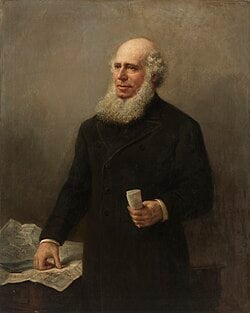
- In New South Wales, Sir Saul Samuel became the first Jewish legislator in the colony and later served as Agent-General in London, representing NSW’s interests at the heart of empire.
- In South Australia, the Solomon family left an indelible mark. Emanuel Solomon, a transported convict turned merchant, helped found the Adelaide Hebrew Congregation and shaped early Adelaide’s commercial life.
- Solomon’s nephew, Judah Moss Solomon, became Mayor of Adelaide and a parliamentarian – one of the clearest examples of Jewish integration into Australian public leadership.
By Federation in 1901, Australia was home to more than 15,000 Jews, a community already woven into the nation’s civic and economic fabric.
Federation, patriotism, and the idea of Jewish Australians (1901–1918)
Federation posed a question: what does it mean to be Australian? Jewish Australians answered it by participating fully and embracing the Aussie way of life. Always keeping their Jewish beliefsl, identies and culture and simply embracing the new Aussie culture. Jews voted, debated, served, and fought. In World War I, Jewish enlistment rates matched or exceeded national averages.
Synagogues prayed for the King and the Commonwealth (still practiced to this day). Jewish newspapers debated Zionism and the possibility of a Jewish state, alongside Australian politics. During this era WWI commenced as Australia as a newly formed country followed their Commonwealth compatriots into battle. During that war Australian troops were even stationed in Be’er Sheva. However as the old story goes it was in Gallipoli that Australia found its true identity – mate-ship, dignity, respect, humility and courage.
The era’s defining figure was Sir John Monash, the Melbourne-born son of German Jewish immigrants. An engineer by training, Monash rose to command the Australian Corps and is widely regarded as one of the greatest military leaders in Australian history. His strategic innovations helped secure Allied victory in 1918. Monash embodied something profound: Jewish identity did not diminish Australian loyalty. In his case, it produced one of the nation’s finest minds and leaders. To this day, universities, hospitals, roads and institutions still carry his name, as an everlasting tribute to arguably the greatest Jewish Australian.
Between wars: law, leadership, and civic prominence (1919–1930s)
Between the wars, Jewish Australia matured. Jews were prominent in law, academia, medicine, commerce, and journalism. The community remained small but increasingly confident and visible.
A towering figure of the era was Sir Isaac Isaacs – jurist, politician, High Court justice, Chief Justice, and ultimately Governor-General from 1931 to 1936. Isaacs was the first Australian-born Governor-General and the first Jew to hold the office. His appointment marked a national turning point – Australia asserted its independence by choosing a local figure of immense intellect and legitimacy and that figure happened to be Jewish and we can all understand why. This mattered. It demonstrated that, at its best, Australia recognised Jews not as guests, but as equals, here to stay, ready to serve and with the moral fibre and intellect to grow this nation.
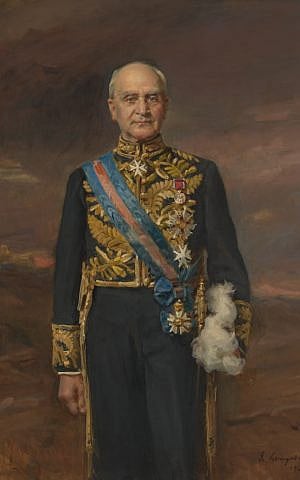
1936 – Oil on canvas
At the Historic Memorials Collection, Parliament House Art Collection
Refuge, survival, and reinvention (1933–1950s)
No history of Jewish Australia can be told honestly without this era, because it changed everything. As Nazism rose, Jews sought refuge wherever doors remained open. Australia’s response was uneven and often hesitant to begin with, but thousands arrived nonetheless. German and Austrian Jews brought education, culture, and professional skills. Holocaust survivors followed later, carrying trauma that defies language and resilience that reshaped everything it touched.
My family took that incredible voyage across the globe. They looked for the furthest place they could get from the antisemitism and atrocities they had witnessed. They were scarred, poor but deeply resilient. However they like all other survivors that arrived him did something that deeply enriched this country forever. They decided that because Australia granted them a new lease on life they would work, adapt and help build this country for as long as they lived and forever remained grateful to this nation.
By 1939, Australia’s Jewish population stood at roughly 33,000, rising sharply in the post-war years. In Victoria alone, Jewish numbers more than doubled between 1933 and 1954.These new arrivals did not merely join existing institutions – they transformed them. They expanded Jewish education, deepened synagogue life, strengthened welfare services, and infused Australian Jewish culture with European traditions, languages, and intellectual seriousness. From devastation came renewal. From exile came continuity and gratitude. Even with broken English and thick accents they would tell you just how Aussie they were. Their new and forever home.
Israel, Zionism, and a confident diaspora (1950s–1980s)
The establishment of the State of Israel resonated deeply with Australian Jews. Zionism became a central pillar of communal identity – expressed through fundraising, advocacy, youth movements, and aliyah, but loyalty to Australia remained unwavering. Israel was the culmination of a dream held for thousands of years by their ancestors. A place that was now theirs. A place that if anything like WWII ever happened again they could go to and without hesitation be welcomed with open arms.
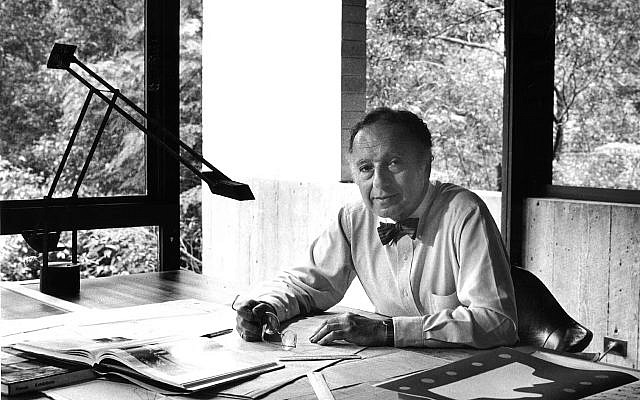
Communal roof bodies also strengthened, most notably the Executive Council of Australian Jewry, which emerged as a key advocate for Jewish interests and a vital interlocutor with government. This era also produced influential cultural figures such as Harry Seidler, the Austrian Jewish refugee who reshaped Australia’s architectural landscape. Seidler’s work modernised Australian cities and stands as a reminder that Jewish contribution often reshapes the very environment in which it settles.
By the late 20th century, Australian Jewry had become one of the most institutionally robust small Jewish communities in the world and one of the largest global hubs of holocaust survivors per capita.
Modern Jewish Australia: influence beyond numbers (1990s–present)
Today, Australian Jewry is roughly 120,000 people, concentrated primarily in Melbourne and Sydney. It represents less than half of one percent of the national population. However, its influence is vastly disproportionate. Jewish Australians are overrepresented in medicine, law, business, academia, the arts, and philanthropy.
Figures such as Sir Frank Lowy, a Holocaust survivor who co-founded Westfield and became one of Australia’s most significant philanthropists, exemplify a recurring theme – starting with little, building enormously, and giving back generously. If you look online at some of the most influential modern Jewish Australian figures you will find an incredibly long and diverse list of extrodinary individuals who not only represent the best of us but who have and actively do shape modern Australia.
Each year when the government announces its highest honours, being the Australian Medal (AM) and Order of Australia (OAM) the list of Jews included is astounding. A community that makes up less that half of one percent outperforms itself to an extent that many would find hard to believe. But that’s the story of Am Yisrael.
Jewish life remains deeply alive ‘down under’, through schools, synagogues, festivals, youth movements, welfare organisations, and an enduring connection to Israel. Assimilation has not meant erasure and integration has not meant disappearance. We are simply put, proud and patriotic Australian Jews.
Assimilation without surrender
Australian Jewry achieved something fairly rare in diaspora history: it integrated without dissolving. Jews here became Australians in accent, culture, and civic commitment – while maintaining Jewish rituals and traditions of Shabbat, festivals, education, memory, and Zionism. Australian Jews range from reform to ultra-orthodox and everything in between.
This balance was not accidental. It was built deliberately, generation by generation.
The result is a community both open and cohesive, modern and traditional, Australian and Jewish.
After Bondi: why this history matters now
The Bondi atrocity forces Australia to confront its present. But it should also prompt Jews globally to look again at Australian Jewry. This is not a community that arrived recently or accidentally. It was present from the colony’s earliest years, in courtrooms, in institutions, on goldfields, in parliaments, on battlefields and in universities, in shopfronts and skylines and so much more.
For a community so small, it has consistently produced figures of national consequence – Monash in war, Isaacs in law and civic leadership, Seidler in architecture, Lowy in commerce and philanthropy – alongside tens of thousands of ordinary Jewish Australians who built businesses, educated children, healed patients, defended clients, and kept Jewish life alive at the end of the earth.
Small, mighty, enduring
Australian Jewry is not among the world’s largest Jewish communities. It did/does not shape Jewish destiny by sheer scale. Yet it has done something extraordinary: it has consistently outperformed for its size. It built institutions that punch above their weight. It welcomed survivors and turned trauma into renewal. It contributed to Australia’s prosperity while preserving Jewish continuity. It proved that even at the far edge of the Jewish world, Jewish life can flourish with dignity, creativity, and strength.
After Bondi, the world may look at Australian Jews with new concern. It should also look with renewed respect. Because this is not a community that drifted into history. It is one that made history – quietly, steadily, and with a determination that feels, in retrospect, like the most Jewish thing of all.
Small in number.
Deep in roots.
Unmistakable in impact.
That is Jewish Australia—beneath the Southern Cross, still here, still building, still unbroken.
Related Topics
Related Posts