
Examining Extremism, Identity, and Influence
Beyond Borders: India’s Iron Man Sardar Patel and His Global Legacy
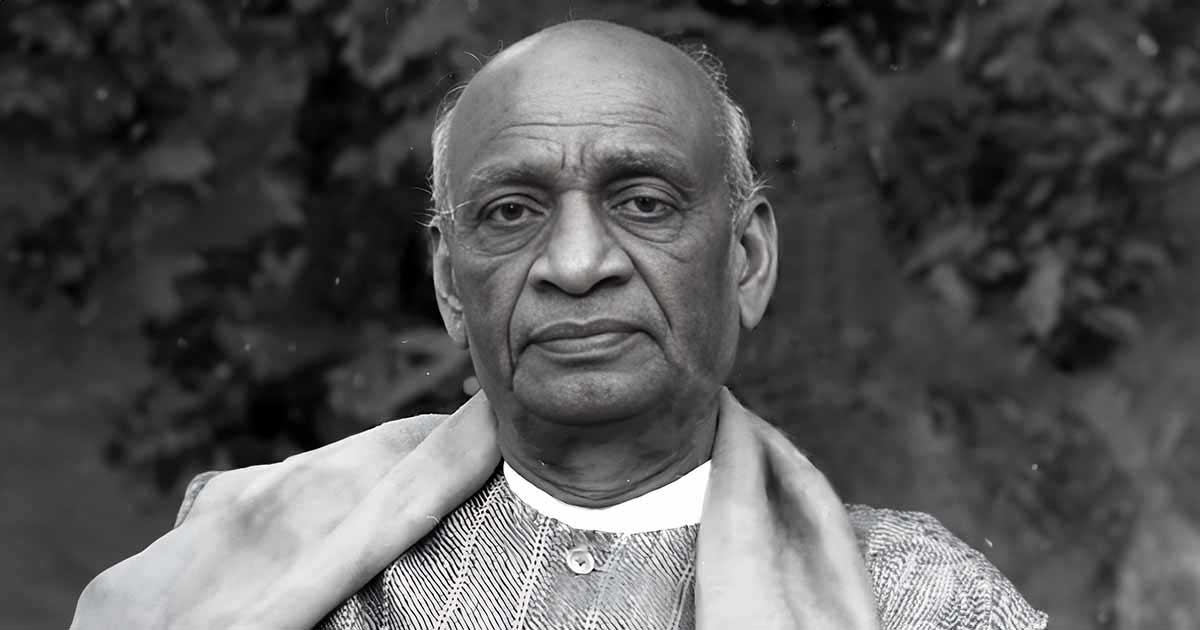
Photo Credits: www.LittleAuthors.in
The analogy is clear: leaders who can see beyond division and bring diverse polities under one banner leave a legacy of unity.
I first encountered the story of Golda Meir over eight years ago, while I was living in Saudi Arabia. I was genuinely surprised to discover how a woman who began her adult life as a regular housewife in New York came to be regarded as the “Iron Lady” of Israel — a testament to courage, determination and vision. Her example serves as a vivid reminder of what leadership can achieve in difficult times.
Today, as we approach Ekta Diwas (National Unity Day) in 2025, I believe we would do well to reflect on the parallel legacy of another remarkable leader from the Indian subcontinent: Sardar Vallabhbhai Patel.
His leadership and vision laid the foundation for a united India — a union of many cultures, languages and traditions — and his life offers critical lessons for our era.
The Architect of Unity
Sardar Patel, as India’s first Deputy Prime Minister and Home Minister from August 1947 onwards, assumed office at a time when the newly free country faced the daunting task of integrating hundreds of princely states into a coherent national whole.
The official record recounts that more than 560 princely states had to be persuaded — and in some cases compelled — into joining the Indian Union.
According to former Prime Minister Morarji Desai, “The integration of the states could be termed as the crowning achievement of Vallabhbhai Patel’s life.” But for Patel, this may not have been achieved easily or quickly.
Beyond simple territorial consolidation, he recognised that building a united India required creating a sense of shared purpose. As one of his better-known quotes goes: “Manpower without unity is not a strength unless it is harmonized and united properly; then it becomes a spiritual power.”
Equally pointed was his reminder: “It is the prime responsibility of every citizen to feel that his country is free and to defend its freedom is his duty.”
It is here that we find a similarity with Golda Meir – both emerged from humble or non-political beginnings into roles of historic consequence, centrally identified with the survival and integrity of their nations, standing in moments of existential challenge. Where Meir defended Israel’s existence, Patel defended India’s unity.
In both cases, leadership was as much moral as it was organisational.
Meir once stated, “Above all, this country is our own. Nobody has to get up in the morning and worry what his neighbors think of him.” The sense of belonging, of collective identity, echoes Patel’s belief in the unifying spirit of sovereign citizenship.
Learning from Arabia: Unification Beyond Borders
If we step beyond India for a moment, we can turn to the Arabian Peninsula. The leadership of King Abdulaziz bin Abdul Rahman Al Saud in unifying the disparate tribes and regions into the Kingdom of Saudi Arabia reminds us that the project of union transcends geography or culture.
From a modest clay house in Riyadh, he began a journey that would, over three decades, bring together Nejd, al-Hasa, Hejaz, Asir, and other regions through a combination of diplomacy, vision, and resolve. Between 1902 and 1932, this long process of consolidation gave birth to the modern Kingdom of Saudi Arabia — a union forged not by conquest alone but by an appeal to shared identity, faith, and purpose.
In India’s case, Patel similarly faced the integration of states like Hyderabad, Junagadh, and others whose accession was uncertain. The analogy is clear: leaders who can see beyond division and bring diverse polities under one banner leave a legacy of unity.
Diversity as Strength, Institutions as Foundation
In celebrating Ekta Diwas, one cannot stress enough that India’s true strength comes from its diversity — cultural, linguistic, religious, and traditional. Patel’s vision implicitly affirmed this: he did not seek a forced assimilation, but a mosaic within the unity of the Indian state.
His governance and integration efforts laid the material and institutional foundations upon which that diversity could flourish under one flag. For example, the process of political integration also involved the creation of the All India Services — the administrative framework often called India’s “steel frame.”
In his address to India’s newly formed civil services on April 21, 1947, Sardar Patel issued a timeless warning: “A civil servant cannot afford to, and must not, take part in politics. Nor must he involve himself in communal disputes. To stray from the path of rectitude in either respect is to debase public service and diminish its dignity.”
These institutional safeguards were the binding glue of India’s unity. Patel’s words continue to resonate: “In a domestic Government, unity and co-operation are essential requisites.” He knew that without the rule of law, without credible institutions, the aspiration of unity would collapse.
Modern India’s strong system of law enforcement, its Central Armed Police Forces (CAPFs) and state police, trace their lineage to this foundational vision. He recognised that unity is not simply geography, but stability, order and belonging.
Renewing Patel’s Vision in Modern India
Under the guiding vision of Indian Prime Minister Narendra Modi, India has transformed Sardar Patel’s legacy into an active national agenda. Monumental initiatives such as the Statue of Unity, the institutionalisation of National Unity Day (October 31), and cultural showcases like the Ekta Parade place the idea of unity visibly at the centre of India’s civic life.
At the same time, programmes like ‘Ek Bharat — Shreshtha Bharat’ and governance reforms aim to carry Patel’s ideals — discipline, inclusivity, and administrative integrity — into the framework of modern governance.
These initiatives demonstrate that Patel’s philosophy of national cohesion continues to inform India’s democratic journey, turning remembrance into living practice.
Why This Matters in 2025
Why should we evoke Sardar Patel now? Because the challenges India faces in 2025 mirror, in different guise, the challenges of 1947–50: internal diversity, security threats, social fissures, cultural alienation, and governance deficits.
If we understand Patel’s example as more than historical — if we understand it as a blueprint — then Ekta Diwas becomes not just a memory but a call to keep working. His leadership reminds us that unity is not about uniformity but about enabling diverse peoples to belong. It reminds us that institutions — strong yet respectful of local identity — are the scaffolding of peace.
As Indian scholar Sanchari Pal wrote, “The indomitable man who integrated 562 princely states with the Union of India and prevented the Balkanisation of the newly-independent country.”
And Patel himself cautioned, “Faith is of no avail in absence of strength. Faith and strength, both are essential to accomplish any great work.”
That remains the lesson of our time: identity needs structure; aspiration needs discipline.
Closing Reflections
Golda Meir’s rise from an ordinary housewife in New York to Israel’s iron-willed leader remains a testament to what conviction can achieve in the face of uncertainty. That same steel defined Sardar Vallabhbhai Patel, whose calm resolve and unyielding integrity held together a new and fragile India when disunity seemed inevitable.
Patel’s legacy endures because it is universal. Like King Abdulaziz Al Saud in Arabia and Sheikh Zayed bin Sultan Al Nahyan in the Emirates, he understood that nations are not built by force, but by faith — by giving people a shared sense of belonging greater than their divisions.
As Ekta Diwas 2025 approaches, let us remember him not only as the Iron Man of India, but as one of humanity’s great unifiers — a leader who proved that strength, when tempered with vision and compassion, can turn a divided land into a lasting home.
Related Topics
Related Posts