
Beyond Election Day
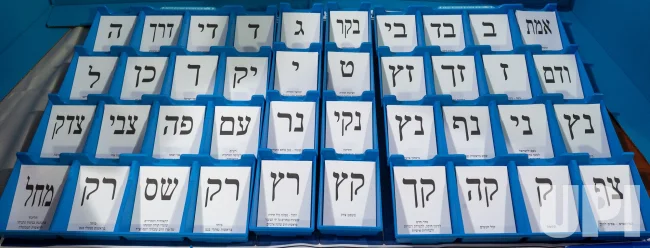
Israelis will vote tomorrow in a general election that was frequently described as a referendum about Benjamin Netanyahu: whether he will remain in power, and whether he should be held responsible for the failures surrounding the October 7, 2023, attacks and the wars that followed in Gaza, Lebanon, Syria, and Iran as well a myriad other issues plaguing Israel throughout his premiership. Indeed, this political judgement matters enormously not only to Israelis but also to others across the Middle East and beyond.
However, this would be not seeing the forest for the trees. As consequential as this election truly is, it is not the same as deciding what kind of society Israel is becoming and will eventually shape up to be. Even if the opposition forms the next government, and Netanyahu is ousted, the deeper political and social shifts point toward a more right-wing, nationalist and religious electorate, and toward a body politics increasingly animated by radical Messianic ideas about land, sovereignty, power, and redemption.
The distinction is crucial. A government can possibly change overnight; a society’s political core moves more slowly. Netanyahu is not solely responsible for Israel’s rightward turn, and his departure would not reverse it overnight either. The coalition that brought Netanyahu to office, and kept him there over the last four years, depended on the support of religious and extremist far-right figures such as Bezalel Smotrich and Itamar Ben-Gvir, but the ideas these influential figures represent have spread and taken roots well beyond the boundaries of any single coalition. The ongoing debates over military service, Palestinian statehood, religion and state, Arab-Jewish relations, and the legitimacy of the left, and the dominance of the far-right in the public discourse, show that these are not marginal questions. They are central tests of political identity and future.
The election’s outcome may be close, and coalition arithmetic could produce a government led by the opposition. The polls consistently show that the opposing blocs struggle to reach the 61 seats needed for a majority, leaving open the prospect of difficult negotiations or deadlock. The Arab parties have already expressed their commitment to removing Netanyahu from office and toppling his coalition government but the legitimacy of them joining the next coalition is still contested, including by some from inside the anti-Netanyahu bloc. That uncertainty makes an opposition victory both vital and limited. Vital, because a government without hardline religious and nationalist parties could restrain the most immediate threats to democratic institutions and civil equality. Limited, because replacing Netanyahu does not instantly dissolve the corrosive forces that made his governing coalition possible.
A new government, especially one that includes Arab parties, could matter in concrete ways. It could protect judicial independence, insist that public power be exercised within legal constraints, and resist the effort to turn the state into an instrument of one faction’s religious or national vision. It could also address the deep divisions over conscription and the relationship between religious communities and the state. A collaborative Arab-Jewish coalition can also validate the voices of Israel’s the non-Jewish citizens in the political as well as the public spheres. Such choices would not be symbolic. In a parliamentary system where coalition partners can wield outsized influence, who governs (and with whom) can shape the rules and norms that survive long after a particular prime minister leaves office.
But it would be a mistake to confuse electoral defeat for Netanyahu with defeat for Netanyahuism (or Bibism). The post-Netanyahu era may not be a return to the old center. A successor could be more polished, more pragmatic, or less personally polarizing, while facing much of the same debilitating political setting: an expanded role for religious parties, a harder national identity, and less willingness to contemplate Palestinian self-determination, or the inclusion of non-Jews as part of the multiethnic Israeli story. The rhetoric and policies of the far right could become less theatrical without becoming less influential.
That is where the word “messianic” matters. It describes more than personal piety or religious observance. In politics, it signals a conviction that territorial claims are sacred, compromise is betrayal, and national destiny overrides the ordinary limits of law and democratic accountability. Such a worldview can shape policy even when its most explicit proponents do not lead the government. Once it becomes a source of legitimacy, it narrows the space for dissent but increases the opportunities for exclusion: opponents are treated not merely as wrong, but as obstacles to a historic mission that must be quashed.
Israel’s vibrant democracy is therefore not guaranteed by a change at the top, or by a single opposition victory tomorrow. Israel’s democracy depends on more than holding elections every four years. It requires an independent judiciary, participatory citizenship, political pluralism, and a willingness to accept that no coalition owns the state and it can do everything it wants if it has the majority in parliament. These principles can be weakened gradually, through appointments, legislation, political intimidation, and the normalization of unequal rights. A government that calls itself moderate can still leave those pressures intact if it is too fragile and cautious to confront them.
The opposition’s task, should it form the next government, is thus twofold: govern competently, and defend the democratic conditions that allow future governments to be chosen freely, and the entire Israeli society to thrive. That means resisting the temptation to treat coalition survival as the only measure of success. It means building broad civic alliances, protecting minority rights, and making a credible case that security and democracy are not contradictory principles. It also means facing the electorate as it is; not as a temporary aberration that will return to an imagined center once Netanyahu is gone.
The general election tomorrow can decide who holds power next. It cannot, by itself, decide the direction of Israel’s political culture. An opposition government would be an essential opening move in the right direction, but certainly not the end of the fight over Israel’s democratic soul. The larger struggle will be over whether Israel remains an imperfect yet aspiring pluralist state whose laws constrain power, or becomes a more exclusionary, religious-nationalist polity in which political authority is increasingly justified by Jewish supremacy. That struggle will continue well into the post-Netanyahu era, but it must be won one democratic battle at a time.