A Call to the Moral Debate the World Refuses to Face — A Black Jewish Voice Speaks for Israel and Global Jewry
Beyond Gaza: Africa’s Silent Crises
By Dr. Shmuel Legesse reported by Jonathan Takele
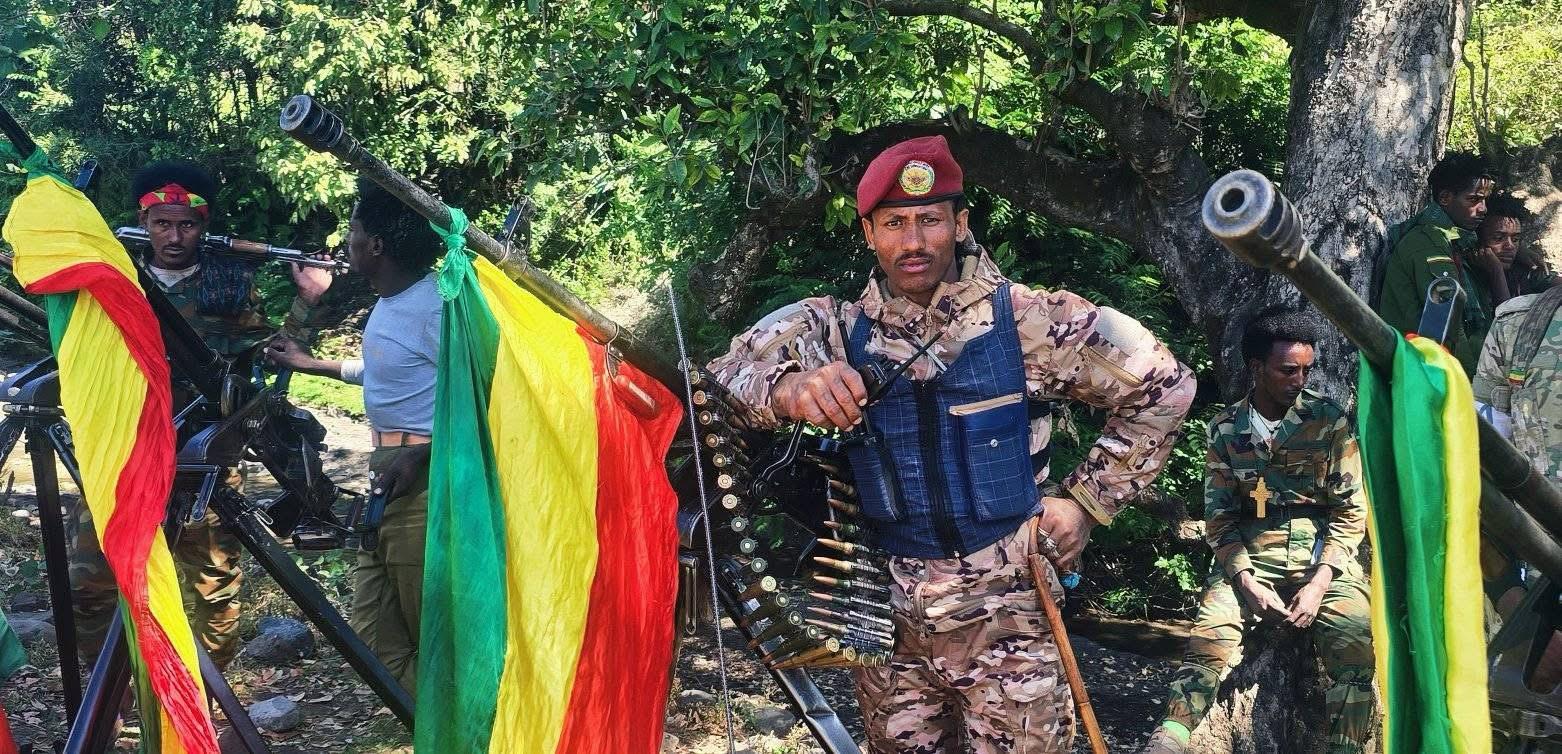
While global attention converges on Israel and Gaza, two deeply destructive conflicts in Africa continue largely out of view. In Ethiopia, the war once centered in Tigray has shifted into Amhara and elsewhere. In Sudan, a brutal fight between army and paramilitaries is claiming lives by the tens of thousands. If human rights, humanitarian law, and moral consistency still mean anything, the world must refuse to look away.
In northern Ethiopia, the Tigray war (November 2020–November 2022) left a devastating trail. Peer-reviewed research placed at least 102,000 excess deaths in Tigray region and 305,000 in Amhara region over and above normal mortality, during that period. PMC A separate diaspora survey estimated 5,325 direct conflict deaths (including 3,151 civilians) from violence alone. BioMed Central But those figures understate the lethal impact of hunger, disease, and the collapse of health systems. Numerous sources—including Ghent University, human rights groups, and media reports—have posited total death tolls ranging from 300,000 up to 600,000 in Tigray alone. EL PAÍS English+4Martin Plaut+4Financial Times+4 In some analyses, up to 800,000 lives are considered within the plausible upper bound. ScienceDirect
These mass losses deeply harmed Ethiopia’s social, economic, and political fabric. The World Bank’s damage assessments in conflict zones projected losses in infrastructure, livelihoods, and public services equivalent to 5–6 percent of national GDP in the worst-hit areas. (Even partial reconstruction among war-damaged districts carries multi-billion-dollar price tags.) Meanwhile, the healthcare collapse triggered rising maternal and child mortality, vaccine disruptions, and the breeding ground for epidemics. Human Rights Watch+1
Now the conflict’s echo ripples into Amhara, where reports of mass arbitrary detentions, extrajudicial killings, and attacks on civilians are mounting. Human rights monitors assert that war crimes have reappeared—despite formal truce agreements. Vision of Humanity While precise death tallies are scarce, an Addis Ababa ombudsman recently acknowledged 351 hunger deaths in Tigray and 44 in Amhara over a recent six-month span. AP News Given incomplete reporting and blockade constraints, the true toll could be far higher.
Sudan, meanwhile, has erupted into one of the world’s greatest humanitarian catastrophes. Since conflict began in April 2023 between the Sudanese Armed Forces and the Rapid Support Forces, estimates suggest 40,000+ killed, 12 million internally displaced, and 24 million people facing severe food insecurity. Some projections place the death toll (including indirect deaths) as high as 150,000 or more, with mass famine declared in parts of Darfur. In Khartoum state alone, over 61,000 deaths have been attributed directly to violence. Refugee flows dwarf capacity—with more than 3.5 million fleeing the country, and many millions displaced internally. Economically, Sudan’s formal economy is collapsing; public services are vanishing, agriculture is disrupted, and entire regions risk long-term destabilization.
Yet while Israeli and Palestinian lives dominate news cycles, few global institutions match that urgency in Ethiopia or Sudan. The African Union has convened talking sessions and occasional peace summits, but enforcement is thin and follow-through minimal. In Sudan, the AU has pushed for ceasefires and mediation, but without binding teeth. The contrast is telling: South Africa is suing Israel at the International Court of Justice over alleged genocide—filing parallel claims under the Genocide Convention. 2Chatham House+2 Meanwhile, discussions around Ethiopian abuses rarely reach that level of legal mobilization.
France and other nations press U.N. resolutions on Gaza, demanding occupation prohibitions and post-war governance frameworks. In the same time frame, Ethiopia’s mass abuses often elude impactful Security Council action. Why the disparity? Because attention, influence, and geopolitical priorities remain skewed.
If international law truly has any force, it must apply impartially. Ethiopia’s government must allow unfettered access for independent investigators; Sudan’s warring parties must comply with humanitarian law. The U.N. should consider appointing high commissioners or special rapporteurs with full mandates for Ethiopia’s Amhara and Oromia, mirroring what many demand for Gaza. African states and regional bodies should translate statements into consequences: sanctions, travel bans, targeted referral measures. Donor nations should condition aid—not to political expediency but to accountability and civilian protection. Media and civil society must insist that African lives matter just as much as Middle Eastern ones.
The counterargument will always be resource scarcity, risk, or diplomatic fatigue. But unchecked, these wars metastasize. Ethiopia is the Horn of Africa’s anchor; its collapse risks famine, refugee flows, and regional destabilization. Sudan is the Sahel’s hinge—its implosion spreads conflict through Central and Eastern Africa.
I write this as someone who straddles multiple worlds: Ethiopian heritage, Israeli citizen, and global Jewish advocate. The same moral language we deploy for Gaza—justice, dignity, rights—should apply across continents. If we believe that civilian lives are sacred, sieges intolerable, starvation not a tactic, then those truths must hold in Gondar and Darfur, not only Gaza.
The docket is open. The data are clear. The question is whether the world will widen its gaze before another million futures quietly vanish.
The above is coauthored by Dr. Shmuel Legesse and Jonathan Takele. Dr. Shmuel Legesse is an Ethiopian Israeli social activist, educator, and international diplomacy expert. He holds a doctorate in educational leadership from Yeshiva University and has represented the Israeli Knesset in global public affairs. Jonathan Takele is a community activist and son of an Ethiopian Jew who was killed by communists for his Zionist activity in Ethiopia. He currently works in the Israeli Knesset in the Human Resources Department.
Related Topics
Related Posts