
Beyond Incitement: Why Democratic Reform Matters
With the hostage issue in Gaza approaching a critical juncture and the Trump administration signaling a transition to Phase Two of its 20-point peace plan, a serious discussion is needed about who will replace Hamas — and under what conditions — in order to establish long-term peace and security in the region.
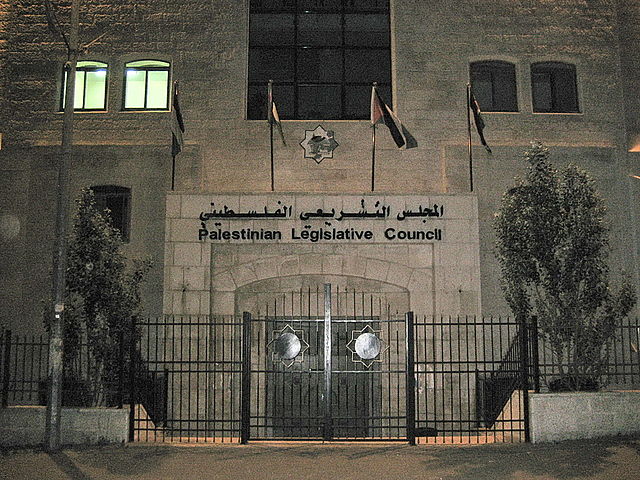
Any alternative governing authority capable of stabilizing the Gaza Strip must be able to unify Palestinians, maintain internal order, and possess the institutional capacity to govern and provide basic services. Despite its serious flaws — and notwithstanding the current Israeli government’s opposition — the Palestinian Authority (PA) remains the only existing Palestinian body that could plausibly meet these criteria.
That reality, however, does not mean the PA is ready to rule Gaza in its current form. Meaningful reforms will be required before it can ensure both Palestinian welfare and Israeli security. Much of the public discussion around PA reform has focused on two well-documented problems: incitement in educational materials and the so-called “pay-for-slay” policy, which has tied financial benefits to attacks against Israelis.
While these issues are serious and must be addressed, they are insufficient on their own. Even as the PA has partially shifted toward a welfare system based on socioeconomic need rather than rewards for violence, such changes remain incomplete if they are not accompanied by broader structural reforms. For the PA to become a credible, legitimate, and sustainable alternative to Hamas, reform must be approached holistically — beginning with democratic governance itself.
Democratic reform is necessary not only to make the PA more representative and legitimate for Palestinians in both the West Bank and Gaza, but also because democratic deficits are structurally linked to other obstacles to peace and security with Israel — most notably education and public discourse.
One way to understand this connection is through the role historical narratives play in shaping political culture. I was reminded of this while reading Side By Side: Parallel Histories of Israel–Palestine by Palestinian professor Sami Adwan and Israeli professors Eyal Naveh and the late Dan Bar-On. The book presents Israeli and Palestinian historical narratives literally side by side, offering a model for how educational curricula might foster empathy and mutual understanding.
While both narratives reflect lived experiences and neither society is monolithic, the contrast is striking. The Israeli excerpts tend to display a higher degree of self-critique, acknowledging Israeli mistakes, Palestinian suffering, and the necessity of compromise. The Palestinian excerpts, by contrast, contain far less internal critique. Acts of violence carried out by Palestinian militias and neighboring Arab states are frequently framed as justified, with limited acknowledgment of Israeli trauma or the need for reciprocal concessions.
The promotion of such one-dimensional narratives helps explain why many Israelis remain skeptical that a PA-ruled Gaza would ensure their security. A discourse that romanticizes violence as resistance, denies Israel’s legitimacy, and minimizes Jewish historical ties to the land does not prepare the public for the painful compromises any sustainable peace agreement will require.
To be sure, some of this discrepancy reflects the asymmetry of power. As the authors in Side By Side note, Israeli society has developed for decades as a sovereign state, while Palestinians have lived under military occupation — conditions that make self-critique and concession psychologically and politically more difficult. Research in social psychology similarly suggests that weaker parties in asymmetric conflicts often avoid dialogue for fear of entrenching existing power imbalances.
Yet, power asymmetry is not the whole story. Another critical factor shaping differences in self-critique, narrative pluralism, and willingness to compromise is the disparity in democratic culture itself.
Democracy is not only about elections; it also encompasses freedoms that shape public discourse, including free expression, the ability to challenge dominant narratives, and openness to rival perspectives. According to the Freedom House, Israel within the Green Line is categorized as “free,” with a score of 73 out of 100. By contrast, Gaza under Hamas and the PA in the West Bank are both classified as “not free,” with scores of 2 and 22, respectively.
While part of the West Bank’s low score reflects Israeli restrictions under military occupation, much of it stems from the PA’s own repressive practices, including limits on speech, the absence of genuine political competition, and lack of transparency. These democratic deficits may help explain the relative absence of self-critique within Palestinian public discourse and sustain exclusionary narratives that delegitimize Israel and Jewish historical ties to the land — making the PA a less reliable partner to govern Gaza.
The connection between democracy, education, and security is not merely theoretical. A recent joint study by the Israel Policy Forum and the Ramallah-based Horizon Center similarly concludes that without far-reaching democratic reforms, the PA will lack the legitimacy and institutional capacity required to govern Gaza, reform its educational system, and credibly guarantee security for Israel. Addressing concerns over incitement in textbooks, the report notes that “Palestinian national narratives that negate the legitimacy of the State of Israel…are problematic and not geared toward cultivating a societal mindset conducive toward peaceful coexistence with Israel.”
The report outlines a comprehensive blueprint for reform, including increasing youth representation, expanding political pluralism, decoupling overlapping institutions, codifying power transitions, and preparing for elections. Such reforms are not merely essential for internal Palestinian stability; they are prerequisites for reshaping public discourse, fostering pluralism, and building the institutional foundations necessary for lasting peace and security. The United States, regional actors, and other international stakeholders should take note as they prepare for a sustainable post-war future for Gaza and the broader region.