
A recovering politician who prizes citizen empowerment
Beyond the Boos: Four Lessons for Jewish Advocates
Gemini_Generated_Image_4o0nf84o0nf84o0n
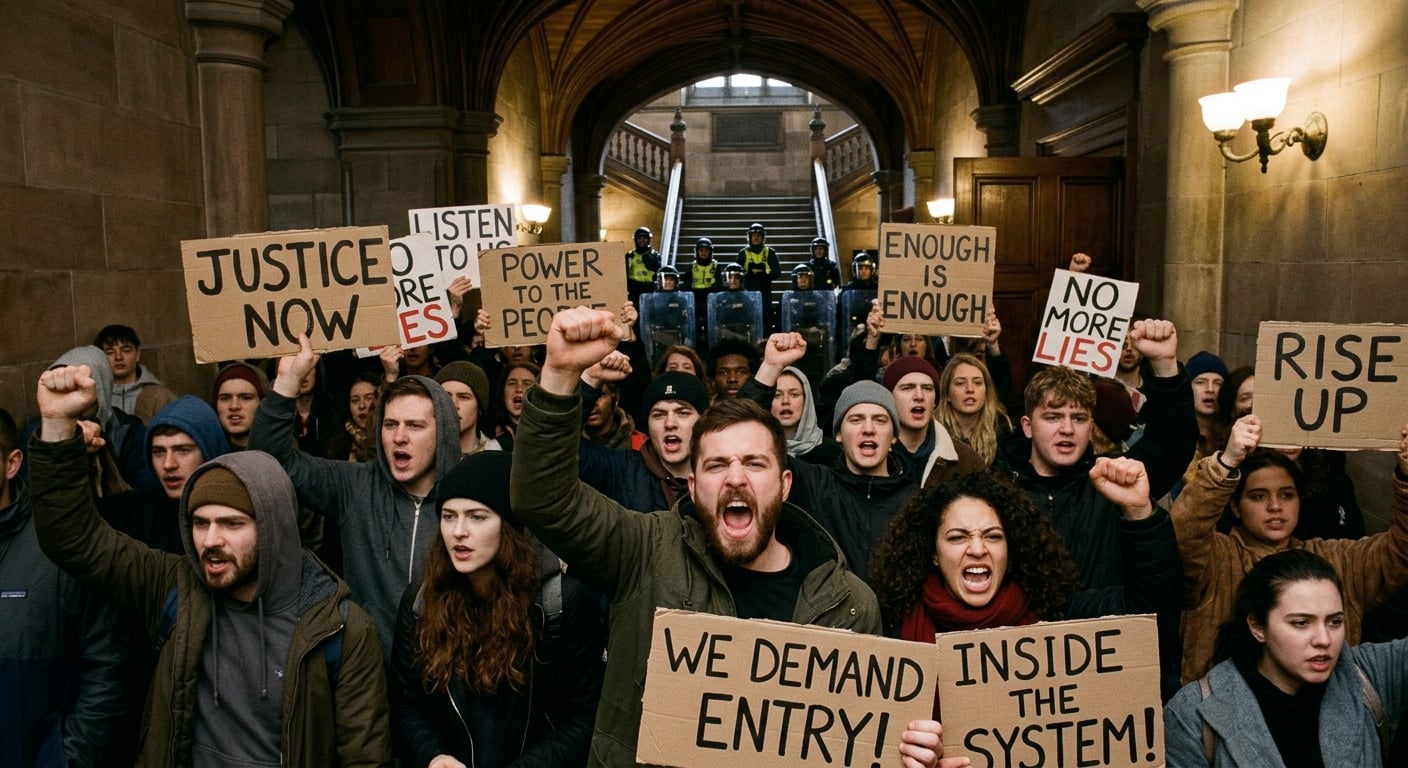
The boos came thick and fast. People screamed at me. They called me stupid, fascist, and crooked. They waved signs depicting me as a bobblehead. In the parking lot, someone slashed my tires.
Just another day at the office.
During my years as a local, county, and state official in New Jersey, I lost count of the public hearings that turned ugly. Emotional outbursts erupted over issues ranging from hot-button topics, like childhood vaccination, to seemingly innocuous ones, like the choice of turf for a sports field. The vitriol I described in the first paragraph was triggered by…garbage disposal.
But it’s one thing for a seasoned public official to face down a hostile crowd, quite another for a citizen who rarely attends public meetings. Such encounters have never been easy, but since October 7, Jewish advocates have increasingly found themselves under attack. As movingly described in a recent Times of Israel post, such experiences can be seriously traumatic.
What citizens may not realize is that the view from the dais differs sharply from the view in the audience. Understanding that difference can be valuable—not necessarily because it will lessen the pain, but because it can help speakers prepare for and respond to hostility.
Here are four things local officials know—and what Jewish advocates can learn from their perspective.
1. Their power is limited.
Before October 7, some of the most common sources of anger directed at Jews involved neighborhood opposition to the proposed construction or expansion of a religious institution. In a typical example, town officials in Jackson, New Jersey, faced angry residents seeking to block a new Orthodox school.
At least these protests concerned matters the governing body had the authority to address. Zoning rules could be changed, permits denied, and traffic regulations amended.
Today, the intensity of hostility at local meetings can seem inversely proportional to officials’ ability to address its underlying cause. That is especially true when speakers focus on Israel. No local politician in America can compel another sovereign government to do—or stop doing—anything.
Of course, a town council or county commission can pass a resolution or proclamation declaring something like “Israel must stop all killing in Gaza.” Too many have done so. Politicians may applaud the crowd or deliberately inflame tensions to score political points.
But proclamations carry no independent legal force. Local Boycott, Divestment, and Sanctions (BDS) ordinances, like the recent one moving ahead in Somerville, Massachusetts, may be technically enforceable but have mostly symbolic impact. And officials know it.
Local governing bodies have communities to administer and responsibilities to fulfill. They cannot devote substantial time and resources to every demand made in rage or self-righteousness, particularly when those demands concern matters beyond their sphere of control.
Keep that in mind: A traveling contingent of belligerents won’t change much. It will move on soon enough—and you should, too. Look ahead and seek other opportunities for constructive dialogue.
2. Histrionics don’t help.
For those with even minimal experience in public office, props have long since lost shock value. They’ve seen too many picket signs, heard too many bullhorns, and become accustomed to shouts and taunts. They know that people can be whipped into a frenzy over issues as uninspiring as garbage.
Some theatrical gestures can backfire. I remember heated debates in which parents urged young children to approach the microphone and read statements the children could barely pronounce and clearly didn’t understand. The little ones often cried; those of us on the dais could only cringe.
What makes an impression? Simplicity. Clarity. Dignity. The courage to stand firm in the face of angry opponents—and the judgment to walk away when standing firm could put you in physical danger.
3. Residency makes a difference.
There’s a reason public bodies routinely require speakers to state their names and addresses before taking the microphone. Officials know that when an issue extends beyond their communities—foreign policy and civil rights, for example—public meetings are likely to attract people from elsewhere, including academics, advocacy groups, and, yes, traveling troublemakers.
But nonresidents don’t vote in local elections. They have no direct stake in the community. Professional disrupters leave behind little more than scattered leaflets and ill will.
Legitimate outside experts can contribute meaningfully to a debate. Still, local officials want to hear from the people who will be affected by their decisions. Make sure they know that you and your supporters are constituents with roots in the community—and that the issues at hand matter to your neighbors, too.
4. Follow-up is essential.
Local lawmakers have difficult jobs. Every day brings new administrative demands and political challenges.
And like everyone else, they have limited bandwidth. Deluged by reports, requests, complaints, and legal obligations, they may forget by the next morning what you said the night before. Faced with competing priorities, they may put off addressing your concerns indefinitely.
So don’t treat a public hearing as an end in itself, whether or not it goes your way.
Always follow up. If you know in advance that you’ll be speaking, bring written copies of your statement to leave with officials. If you have to speak off the cuff, do your best in the moment and email your key points the next day. Whatever the circumstances, request an in-person meeting with key decision-makers as soon as possible—not only to reiterate your position, but also to establish yourself as an engaged constituent who cares about the community.
Most important, prepare for a public hearing with more than talking points. In your head or with a helper, role-play different scenarios. If an official asks a difficult question, how will you answer? If an opponent hurls insults, how will you respond? And if the meeting becomes threatening, when will you decide that it’s time to leave?
When I felt frustrated or discouraged by the rancor at a public hearing, it helped to remind myself that democracy is a gift. In an authoritarian regime, there would be no public hearings. Without free elections, citizens would have no voice.
That gift comes with a responsibility: to keep showing up for the democracy that makes our voices count. Democracy does not promise that we will be heard politely, or that we will prevail. It does promise that we can keep speaking—and that is a right worth defending.
Related Topics
Related Posts