I’m an ultra-Orthodox woman whose Jewish experience changed on October 7
I’m an ultra-Orthodox woman. I was raised in a large ultra-Orthodox family and community in the US. I’ve been a Zionist all my life and travel to Israel as often as I can. I read stories like those of Jews who are public figures, like Ellie Zeiler, Omar Adam, Sacha Baron Cohen, Gal Gadot, Bill Ackman, Josh Shapiro and so many others; my coreligionists awe me. They made changes in their personal lives, spoke up in their public lives and increased their commitments to Judaism and Israel. I’d already spent a gap year in Israel with annual visits following. I’m a proud ultra-Orthodox woman. I don’t have social media or a platform. How did the horror and destruction change me?
On October 7, 2023, I was celebrating Simchas Torah at home with my family. We had good food, went to synagogue and spent time together. We were walking back from a visit to my great-aunt when we first heard the rumors. There was no way it was true, we were sure. It must be an exaggeration. Still, my grandparents had made aliyah in July 2023. My little sister was at her gap-year program in Jerusalem. My uncle and his family had traveled to spend Sukkos with my grandparents. But they were all in Jerusalem; they must be safe in Central Israel. We tried our best to enjoy the rest of the day.
As soon as the holiday was over, we went diving for phones and computers. The truth was horrifying. It was impossible to comprehend the chaos and destruction. We started learning the names of hostages: Emily and Hersh and Omer and Lira and Mia and Ran. We didn’t know we’d live with them for 843 days. We heard tales of bravery, self-sacrifice. We also saw horrible images and learned terrible stories. We mourned our dead. And as Jews do, we continued with life.
That’s when I became an October 8 Jew. I went back to nursing school and learned about the hatred and ignorance around me. I’d never felt anything but safe, proud, and patriotic as an American Jew, but I suddenly found out how many people would support murderers and rapists over innocent women and children. I listened to blame of Israel for the terror around it. And I adapted. I avoided talking about Judaism at school or the hospital.
My Jewish classmates had whispered conversations about who were the Palestinian activists of our small Catholic school. I didn’t discuss politics or current events with anyone. I listened quietly to my French classmate laud their gun control policy and low violence while thinking about stabbings and brute force attacks, the vast increase of antisemitism in his own home city.
Security increased in my community. I didn’t share anytwhing about my winter break trip to Israel with anyone, in those post-vacation “what did you do” conversations. But it was just an undercurrent, not a rush, nothing overwhelming.
I changed, sure. I added prayers for the lost, the fallen, the fighting and their families. My winter break trip included a daily goal of one small act to support the soldiers, the families they left behind and the refugees. I baked challah and packed sandwiches. I visited the graves of the fallen at Mount Herzl. I came home with a dog tag to remember every day what being there felt like. But I mostly left it tucked in my shirt in school and at clinicals – it was for me, not an identifier to the outside world.
Maybe I should say I’m a March 14 Jew.
March 13 was a regular school day. After class, I met up with a classmate for our community health project. Our role was to attend a town hall meeting in our chosen community. With a poverty rate of 20 percent, a violent crime rate well above average, food desert status, high rates of chronic conditions, the agenda was bound to include a discussion of social determinants of health. Perhaps the absence of a grocery store, the obesity rate, the high number of homeless individuals?
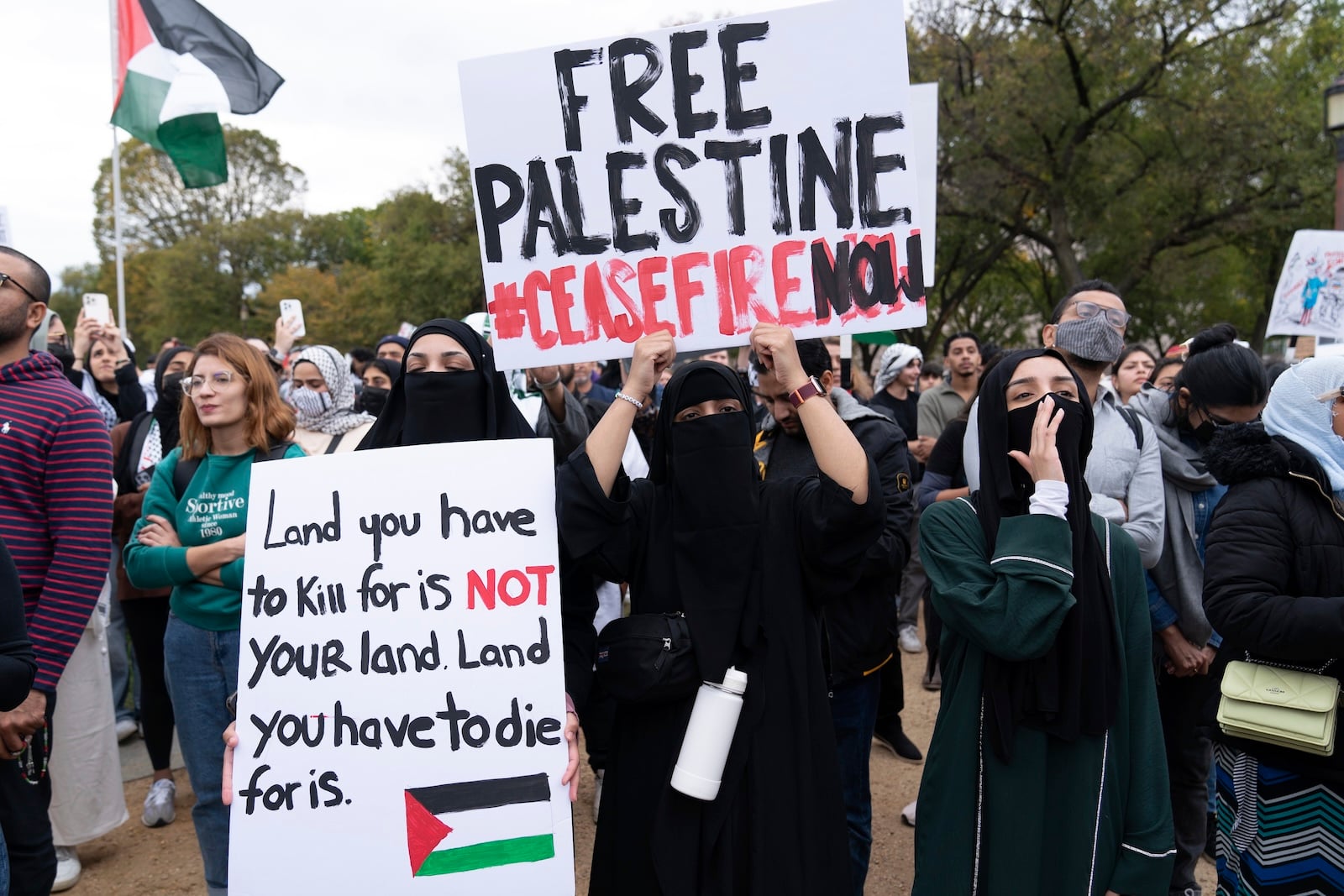
The first indication that my expectations of the meeting were off was the crowd I met as soon as we walked in. Small town meetings couldn’t possibly attract this many people. Then I saw their masks, their flags, their signs. This was a pro-Palestine, ceasefire-now protest. In a town with so many problems and no influence on international policy, what was there to accomplish here? My classmate bailed as sick before the open comments began.
The first woman had some important points about tax rates and housing. But she was followed immediately by a full three hours of pro-Palestine propaganda. Numbers were false and true knowledge was rare, but passion was aplenty. About a half-hour in, I started feeling uncomfortable and slid across the room when I noticed a rabbi. And so, diligent student that I am, I listened to “Food, Not Bombs,” who had much to say on bombs and little on food. I listened to “Gays for Palestine.” I listened to people translate “Yahud” as Israeli, and “River to the Sea” as something it does not mean. I watched one speaker after another stand up fully masked, declaring fears for their safety. I listened to hours of TikTok propaganda and talking points.
After two hours, my anger outweighed my timidity. I stood up and spoke. My voice shook, but I shared truth. I spoke about my intended purpose for attending the meeting, and my anger and frustration as things developed. At that point, the booing started. Through protest and noise, I shared the horrible facts of the massacre and the ongoing continued terror. I spoke of the true segregation in Israel and the democracy on just one side.
It was the bravest thing I’ve ever done. I sat down shaking, but the worst of it was not over. As the meeting wound down, the rabbi approached me with a police officer. “This kind gentleman will accompany you to your car,” he instructed. And that’s when the fear hit, the realization that 20 minutes from my lifelong home, I was in danger for sharing the truth, for being who I am.
I got to my car safely and drove home crying hysterically. I called my friend, explaining my situation between sobs. She tried her best to comfort me and stayed on the phone all the way back. I checked for stalkers behind me every five seconds, racing home to outpace my invisible haters. My resolve to keep the story from my family collapsed as soon as I walked through the door and the waterworks restarted.
That’s when my life truly changed. This was my first real experience with antisemitism. My religious practice and Israel connection didn’t change. But I started wearing my dog tag out, soon replaced by a State of Israel necklace.
I owned who I was and stood up with pride. But I also began living with a gentle fear. When asked if I was Jewish, what was the underlying intention? If someone asked the origins of my Hebrew name, should I share? Should I enter a conversation that can easily go south? When I started interviewing for jobs, my necklace stayed out. But it was a struggle each and every time, the proud Jewish voice winning almost every time. I continued visiting Israel and noticed the exhale each time I landed. Tel Aviv at war felt infinitely safer than the US at peace.
I am reminded of being a March 14 Jew before I can ever forget. The March 13 anniversary hit hard this year, living with the same fear and disappointment in my country two years later. When I started my job, I avoided mentioning a specific religion in my accommodation request. The other night at work, someone asked me if I was Jewish. The momentary panic that flooded me reminded me that I’ll never move on. The fear, the otherness, the sense of never quite belonging have become a steady part of my life. I was still stuck in the Diaspora this October 7th, but there’s an updated passport safe in my drawer.