
Humble with a declining sense of humor.
Beyond the (Green) Line, Beyond the Law
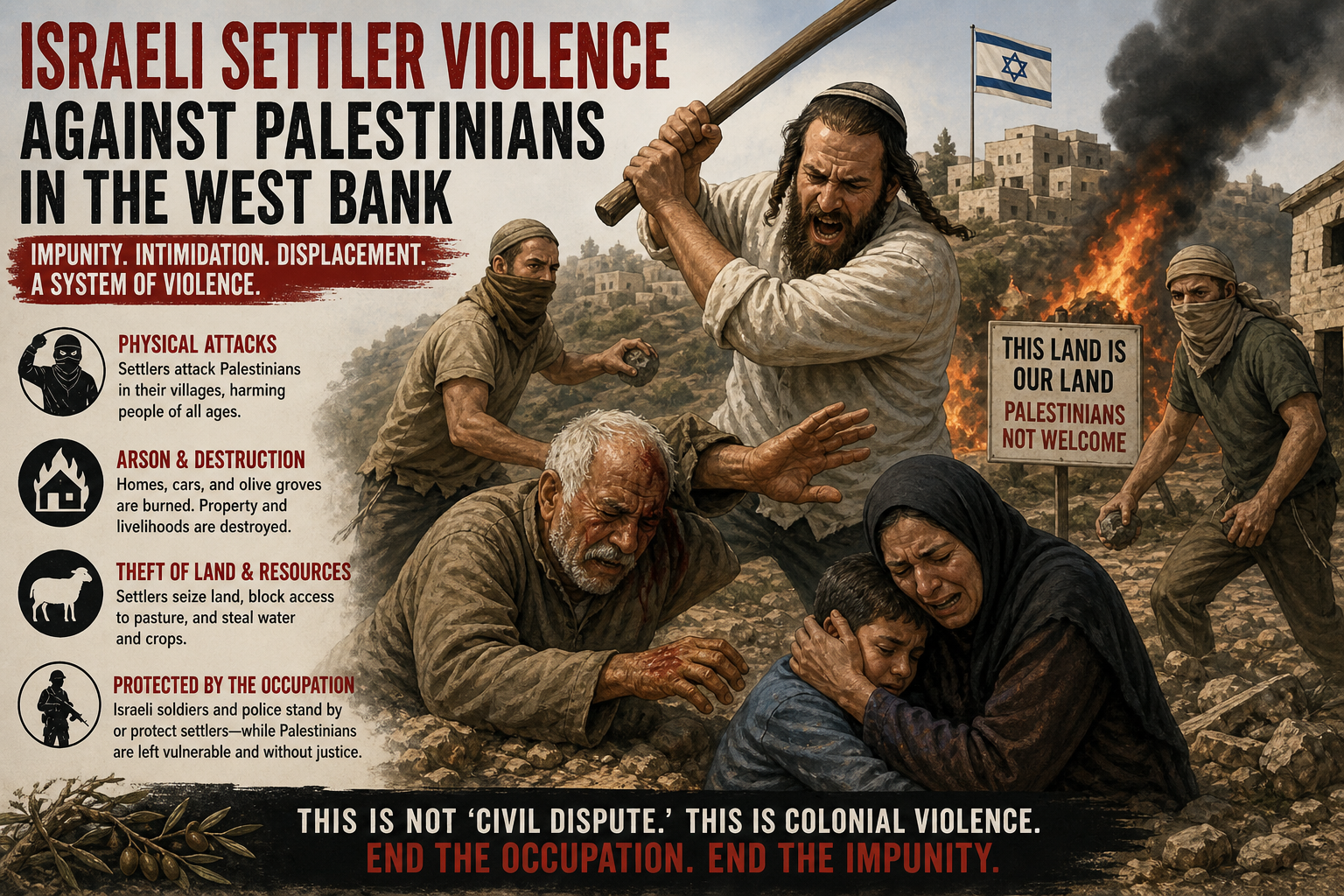
AI-generated image, Alan P. Gross
The facts are no longer in dispute.
In parts of the West Bank, so-called Israeli ‘civilians’ have carried out acts of arson, violent assault, intimidation, and actual murder against Palestinians in their own communities. These are not rumors or isolated aberrations. These are documented, repeated, and increasingly normalized.
And the response of the State of Israel has been, at best, inconsistent.
This is where the issue moves beyond politics and into something more fundamental. The phrase “beyond the Green Line” has taken on a second meaning: beyond the effective reach of Israeli law.
No state can or should allow that distinction to stand.
The settlement enterprise depends entirely on the State of Israel and some in the Diaspora—on its military protection, its legal system, and its public resources. That is an undeniable fact. Yet at its fringes, individuals act in direct violation of the very laws that sustain them. They burn property. They attack civilians. They intimidate entire communities. They kill.
Call these acts by their proper name: criminal offenses, terrorism.
And when such offenses are met with delay, deflection, or silence, the failure is not only individual. It is institutional.
The argument that “most settlers are law-abiding” is probably true—and irrelevant to the core issue. The rule of law is not measured by the behavior of the majority. It is measured by how a state responds when the minority breaks it. On that measure, the current record raises serious concerns.
The pattern is clear. Investigations stall. Cases are closed without consequence. Enforcement is sporadic. The result is not ambiguity—it is a de facto double standard in which geography determines accountability.
That is not governance. It is selective enforcement.
The consequences are predictable. Palestinians bear the immediate harm—property destroyed, lives disrupted, physical safety threatened. But the damage does not end there. It extends directly into the foundations of the Israeli state. A legal system that is not applied consistently loses credibility – and so do Israel’s political leaders. A military asked to operate amid uneven enforcement is placed in an untenable position. A society already divided becomes more so.
There is also the matter of strategic impact. Violence carried out by Israeli civilians in contested territory does not strengthen Israel’s legal or political position. It undermines it. It provides tangible evidence for those who argue that Israel does not uphold the standards it demands of others. It invites scrutiny, condemnation, and escalation.
These are not abstract risks. They are observable outcomes.
And then there is the question of principle. Israel defines itself as a state governed by law—democratic in structure and rooted in a tradition that places justice at its center. That claim cannot be conditional. It cannot apply in Tel Aviv, Haifa or Jerusalem, but falter in the hills of the West Bank. A principle that is selectively enforced is not a principle. It is a preference.
Security concerns do not alter this obligation. Historical claims do not suspend it. If anything, both intensify the need for consistent enforcement. A state under pressure does not have the luxury of legal ambiguity. It requires clarity, consistency, and resolve.
What is required now is not further acknowledgment of the problem, but a change in response.
Law enforcement must act with consistency and visibility. Investigations must be pursued to their conclusion. Where evidence exists, prosecutions must follow. Political leaders must address the issue directly, without euphemism or evasion. And leadership within the settlement movement must confront the reality that actions carried out in its name are undermining both its assumed legitimacy and the state that enables it.
The status quo is not sustainable.
The Green Line may remain a subject of political dispute. That debate will continue. But the line between lawful conduct and criminal behavior is not subject to negotiation.
If areas under Israeli authority become places where the law is applied unevenly—or not at all—then the issue is no longer confined to those areas. It becomes a question about the integrity of the state itself.
The conclusion is straightforward: A state that does not enforce its laws uniformly risks eroding its own sovereignty—not in theory, but in practice.
The law must hold. Everywhere. Without exception.
Related Topics
Related Posts