
Investor, entrepreneur, author of Amplianism: The Economics of Error
Binance Was Robbed of $6 Billion. Who Paid?
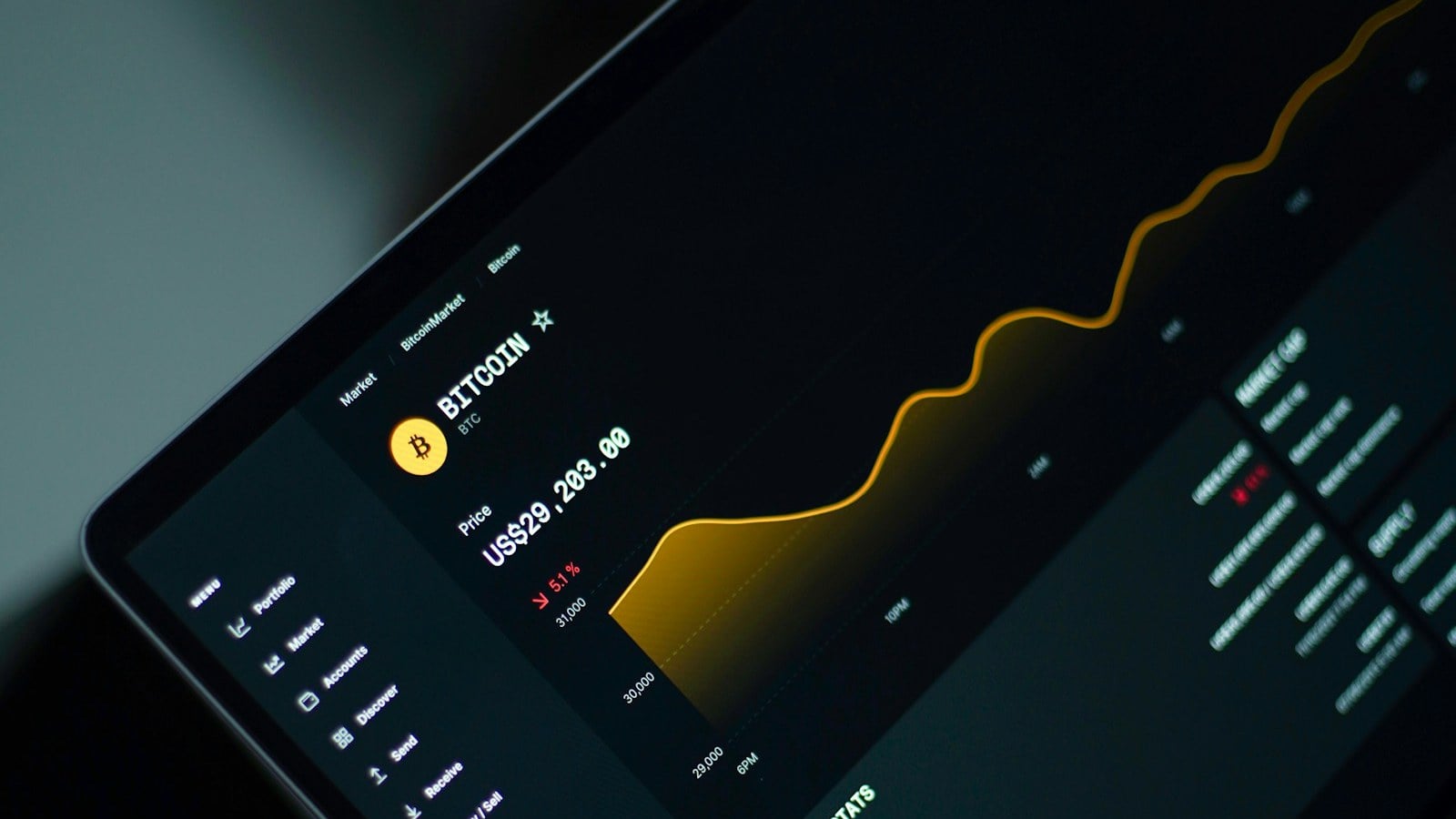
Photo: Amjith S / Unsplash
Within days of the October theft, the largest crypto has ever seen, most Binance customers had their balances back. FTX customers in 2022 waited years, and got less than many thought they were owed. I looked for a rule that required Binance to keep money ready for a theft like this, and couldn’t find one. Exchanges have contracts with their customers, and licenses in some places. What crypto still lacks, as far as I can see, is anything like deposit insurance, a pot set aside in advance that pays customers whatever shape the exchange is in.
Here is what happened, as far as I can piece it together. On the evening of October 29 someone started moving tokens out of Binance’s hot wallets, the online wallets an exchange keeps topped up for daily withdrawals. Binance’s own figure was about $6.3 billion. TRM Labs counted $6.36 billion, spread over ten blockchains [1][2]. The FBI pinned it on TraderTraitor, a group it ties to North Korea, and Pyongyang denied it [3].
Some of the money didn’t get far. Stablecoin issuers blocked a good part of it within hours, and estimates of what was frozen run from $2.7 billion to $3 billion depending on who is counting [1][2][3]. Binance said it would cover everything. Withdrawals came back in phases from November 1, and a few days later the company said most of the stolen assets had been replaced [3][4].
Where did that money come from? Partly from SAFU, the Secure Asset Fund for Users, a reserve Binance has kept since 2018 and used in 2019 to repay customers after hackers took about 7,000 bitcoin [5]. In October the fund held roughly $1 billion in bitcoin [6]. Binance says insurance and its own corporate money made up the rest [3]. I haven’t seen a full breakdown. Even after the freezes, the hole was more than three times the size of the reserve.
At FTX there was no theft to reimburse. When it collapsed in November 2022, customers learned their deposits had been used for other things. What they got back was a bankruptcy claim, valued in dollars at November 2022 prices, when bitcoin was trading near $17,000. Payouts began in 2025. Smaller claims were entitled to roughly 120 percent of that dollar value, and the larger ones are on their own schedule [7][8]. So someone who kept a bitcoin at FTX got dollars back, and watched the price of bitcoin multiply in the meantime.
Bybit lost $1.5 billion in February 2025, in another theft the FBI attributed to TraderTraitor, and borrowed money to make its customers whole [9]. Binance used its own money. Neither was drawing on a fund a regulator had made them build.
Since 2015 I’ve been working on an idea I call Amplianism. I’ve seen it in business more than once: someone makes the call and somebody else ends up paying. Customers of an exchange have no idea how much it leaves in hot wallets, and they don’t pick who approves transfers either. That’s decided inside the company, so I’d send the bill there before it reaches customers. Binance could pay, this time. A smaller exchange maybe couldn’t, and no rule would have made it put money aside first. That’s the gap I’d close, and I’ll come back at the end to how big that reserve should be.
Binance’s report on the break-in is fairly candid. In June, an engineer on the wallet team downloaded a coding tool that had been tampered with. Binance caught it and swapped out the device, but the attackers had already learned who worked on the wallets. In September a second engineer, who was looking for a new job, did a technical test for what looked like a real company, with a video call with its “CEO,” and ended up running malicious code on his own machine. On October 20 the attackers used that computer to reach the wallet developers’ systems. Nine days later the wallets were empty [4][10].
Readers here may recognize the method. In August 2020 Israel’s Defense Ministry said it had stopped a North Korean campaign against Israeli defense companies, run through fake recruiters posing as executives of big foreign firms [11]. ClearSky, the Israeli cybersecurity company, called it Operation Dream Job and found it had reached dozens of organizations in Israel and elsewhere [12].
Fireblocks, an Israeli company started by veterans of Unit 8200, built a large business on splitting keys so that no single person or device can move funds alone [13]. Binance used that kind of setup. According to Binance, the attackers never needed a private key. Through the compromised signing service they got Ethereum authorizations signed that handed control of a hot wallet to a contract of theirs, and pausing withdrawals didn’t cancel them. The last one was cleared only after midnight [1][14]. For Israel, which exports a good deal of the technology that guards crypto wallets, that distinction matters. Stopping an unauthorized transfer and paying customers when one gets through are separate jobs. Israeli firms are very good at the first. The second needs a rule. Israel’s Capital Market, Insurance and Savings Authority has been licensing crypto firms since 2022 [21]. A reserve requirement would probably take legislation as well as the regulator, but a country this small, with this much crypto talent, could try it before the big markets do.
It would be easy to turn this into a story about a careless employee. Binance didn’t. Its report said the hack “should not have happened” [4]. Back in July, its security chief, Jimmy Su, had described this very trick in an interview and said that when an employee falls for a fake interview, “the onus is on us to detect it” [15].
That answer matters to me. An employee who expects to be fired for reporting a mistake will often keep quiet, and attackers count on it. Whoever pays decides who speaks, as I put it in my own work. Whether Binance’s people now feel safe reporting the next strange recruiter call, I honestly don’t know.
Brazil had a smaller case of insider access in November 2021, when about 6 percent of the restaurants on iFood, the country’s biggest delivery app, showed up one evening renamed with political and anti-vaccine slogans. iFood said a worker at an outsourced service firm had misused editing permissions that came with his job. It promised to compensate the restaurants, and about a month later Procon in Rio de Janeiro fined it roughly R$1.5 million for failing to show that customer data had stayed safe [16][17].
Brazil’s central bank is phasing in rules for crypto exchanges this year, with separate client accounts and proof of reserves checked by independent auditors [18]. Nothing in them requires a fund to repay customers after a theft. Brazilian banks have had one since 1995, the FGC, which covers deposits up to R$250,000 per customer per institution or conglomerate [19]. In the United States, deposit insurance has charged banks premiums according to their risk since 1993 [20]. Exchanges now hold tens of billions of dollars for ordinary people, and I don’t know of anything comparable for them.
When I invest in a company, I want to know how it would cover a major loss. With an exchange I’d ask to see the reserve before anything is stolen, with an auditor’s report on it. SAFU shows that a reserve fed by trading fees can work. But Binance chose how big it was, and could have chosen otherwise. I’d want the size set by a rule and checked by an outsider.
The obvious objection is cost. A reserve equal to everything in custody would make it very hard for smaller exchanges to exist, and I don’t think that’s needed. What I’d ask for is a reserve sized to what could realistically be lost in one bad night through the hot wallets and signing permissions, checked by someone independent and ring-fenced for customers before the first deposit comes in. I’m not sure regulators will get there quickly. Binance’s customers had no say in how its wallets were secured, and they got their money back because Binance could afford it. I wouldn’t want to count on that next time.
Sources
[1] Binance, “29 October Binance Security Incident: Initial Findings and Response Update,” November 3, 2026, and “Security Incident” updates, October 29-30, 2026.
[2] TRM Labs, “North Korea Steals USD 6.36 Billion From Binance in the Largest Hack in History,” October 2026.
[3] CNBC, “Binance’s $6.3 billion hack: What we know and what comes next,” October 30, 2026; FBI statement on the Binance theft; CBS News, “$6.3 billion Binance hack was likely work of North Korea.”
[4] Reuters, “Binance hackers used fake job interview to compromise computer before $6.3 billion attack,” November 3, 2026.
[5] Binance statement on the May 7, 2019 security breach; Security Affairs, May 2019.
[6] Binance, SAFU explainer, updated October 13, 2026; Cointelegraph, “Binance to convert $1 billion SAFU fund to BTC,” 2026.
[7] FTX Trading Ltd. Chapter 11 plan and disclosure statement (customer and convenience-class recoveries), confirmed October 7, 2024, U.S. Bankruptcy Court for the District of Delaware.
[8] FTX Recovery Trust, initial distribution announcement, February 2025.
[9] FBI, public service announcement on the Bybit theft, February 26, 2025.
[10] Fortune, “North Korea used LinkedIn, fake job interviews to trick Binance engineer in $6.3 billion hack,” November 3, 2026.
[11] The Times of Israel, “Israel says it fended off North Korean hack attempt against defense industry,” August 2020.
[12] ClearSky Cyber Security, “Operation ‘Dream Job’: Widespread North Korean Espionage Campaign,” August 13, 2020.
[13] Calcalist, “Fireblocks is ‘the one’ of the crypto industry”; Fireblocks team page.
[14] Cryptotimes, “Binance Hack Explained: How $6.3 Billion Was Drained,” November 2026.
[15] Cointelegraph interview with Jimmy Su, July 2026, as reported by CoinCentral.
[16] Olhar Digital, “Restaurantes que tiveram nome trocado serão ressarcidos, diz iFood,” November 4, 2021; TecMundo, November 2021.
[17] Olhar Digital, “Procon multa iFood por não comprovar que dados não foram expostos,” December 9, 2021.
[18] Banco Central do Brasil, Resoluções BCB 519, 520 e 521, November 10, 2025.
[19] Fundo Garantidor de Créditos (FGC), coverage rules.
[20] Federal Deposit Insurance Corporation Improvement Act of 1991; FDIC risk-based premium system, 1993.
[21] CoinDesk, “Israeli Exchange Bits of Gold Becomes First Crypto Firm to Receive Capital Markets License,” September 22, 2022; Cointelegraph, September 2022.
Related Topics
Related Posts