Blogging for The Times of Israel Can Take You to Places You Never Imagined
Before the COVID-19 pandemic, I had never published anything in my life. My first publications came during the pandemic, when I began writing scientific opinion articles on subjects far removed from ophthalmology. As an ophthalmologist from Honduras, I wrote about the use of ivermectin for COVID-19 prophylaxis, public-health policies, adverse effects associated with COVID-19 vaccination, and other controversial issues related to the pandemic.
I could hardly have imagined that a few years later I would also be writing about geopolitics, nuclear threats, espionage, and the existential risks of artificial intelligence.
And I certainly never imagined where those articles would take me.
On November 3, 2024, The Times of Israel published my first blog post, Implications of a Nuclear Attack on Israeli Territory, in which I explored how the geographical and demographic realities of Israel and the Palestinian territories could make a nuclear attack catastrophic for both populations.
Nearly two months later, on December 30, I returned to the subject from a different perspective, this time exploring its moral and political implications in a post titled It Is Easier to Detonate a Nuclear Weapon on the Moon Than on Israeli Soil.
Unknown to me, five years earlier, an American psychiatrist named Dr. David L. Charney had explored a remarkably similar argument in a 2019 Jerusalem Post article titled How Iran Can Solve the Israeli-Palestinian Conflict.
I had never read his article.
It was this article, the one about the moon, that caught David’s attention.
During my recent visit to Washington, DC, he told me that when he read it, he turned to his wife and said something along the lines of, “Hey, I found someone who thinks like me!”
He decided to write to me. I answered. And that simple exchange of emails became the beginning of a friendship that we have cultivated ever since.
Our friendship would eventually influence my writing in another unexpected way. When I shared with David my article, Born Without Conscience: The Psychopathy of Artificial Intelligence, he read it and offered his perspective as a psychiatrist. His recommendation was that I develop those ideas into a book. That book eventually became Algorithmic Psychopathy: The Dark Secret of Artificial Intelligence.
David is a psychiatrist whose work has included examining some of America’s most notorious insider spies, including Robert Hanssen, the FBI agent who spied for Moscow for more than two decades and became one of the most damaging traitors in American intelligence history. Drawing on his experience studying the psychology of espionage, David developed NOIR (National Office for Intelligence Reconciliation), a proposal aimed at stopping ongoing espionage and preventing future betrayals by addressing the psychological motivations of insider spies.
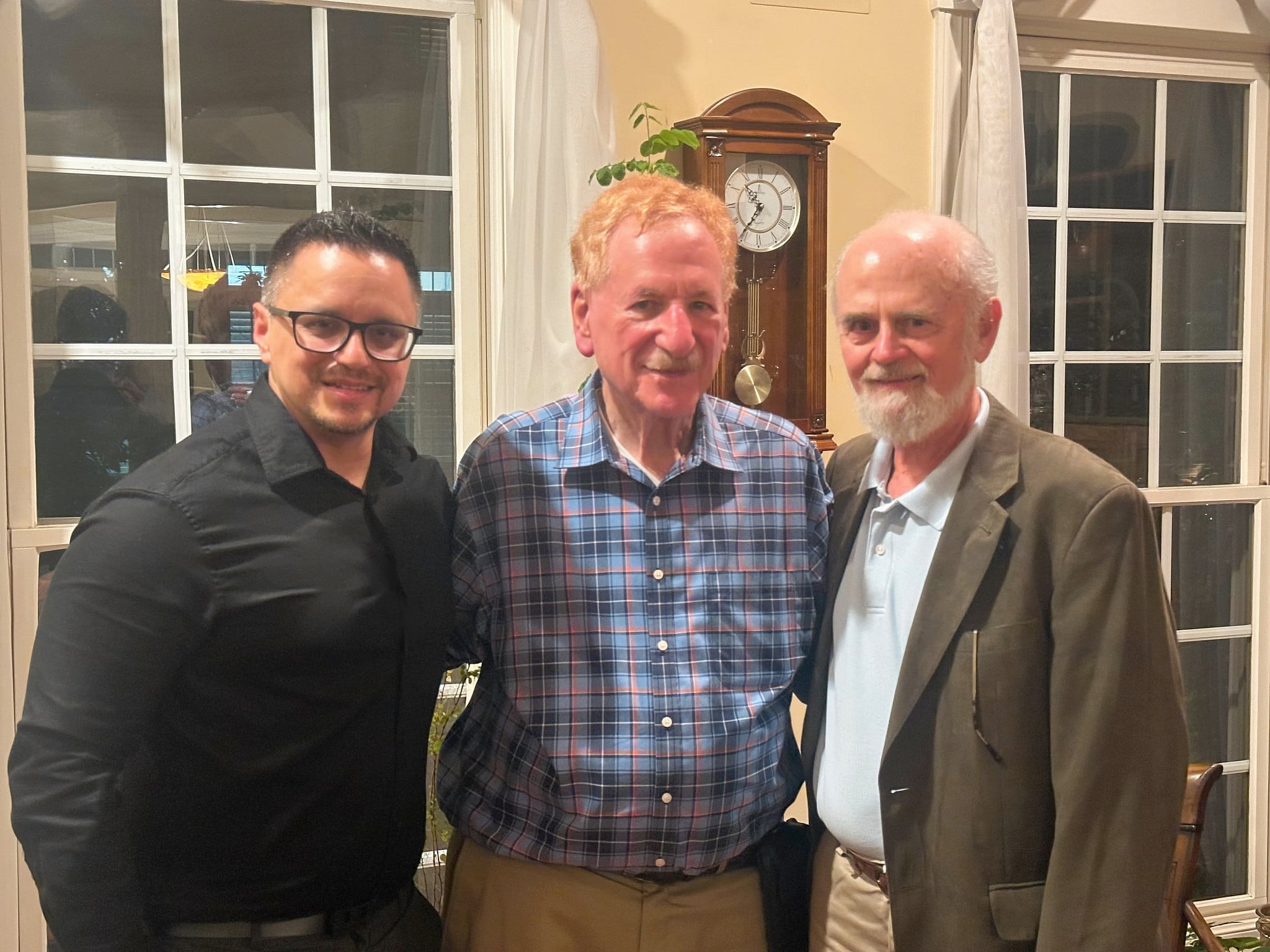
Our friendship eventually brought me to Washington, DC, where I had the pleasure of meeting him in person. Through David, I also had the extraordinary honor of meeting Jim Lawler, a former CIA operations officer who led the team responsible for dismantling A.Q. Khan’s nuclear proliferation network, helping prevent Muammar Gaddafi’s Libya from acquiring nuclear weapons.
Lawler’s work in nuclear counterproliferation earned him numerous distinctions, including the CIA Director’s Award and the HUMINT Collector of the Year Award. In 2007, the A.Q. Khan Takedown Team, which he led, was honored through the CIA’s prestigious Trailblazer program, recognizing individuals and teams whose contributions helped shape the agency’s history. Former CIA Director George Tenet praised the operation against Khan’s network as one of the most remarkable intelligence achievements in the agency’s history.
I recently wrote about our memorable evening together in another Times of Israel post, An Ophthalmologist, a Spy Psychiatrist, and the CIA Officer Who Broke A.Q. Khan.
But the story did not end with that dinner.
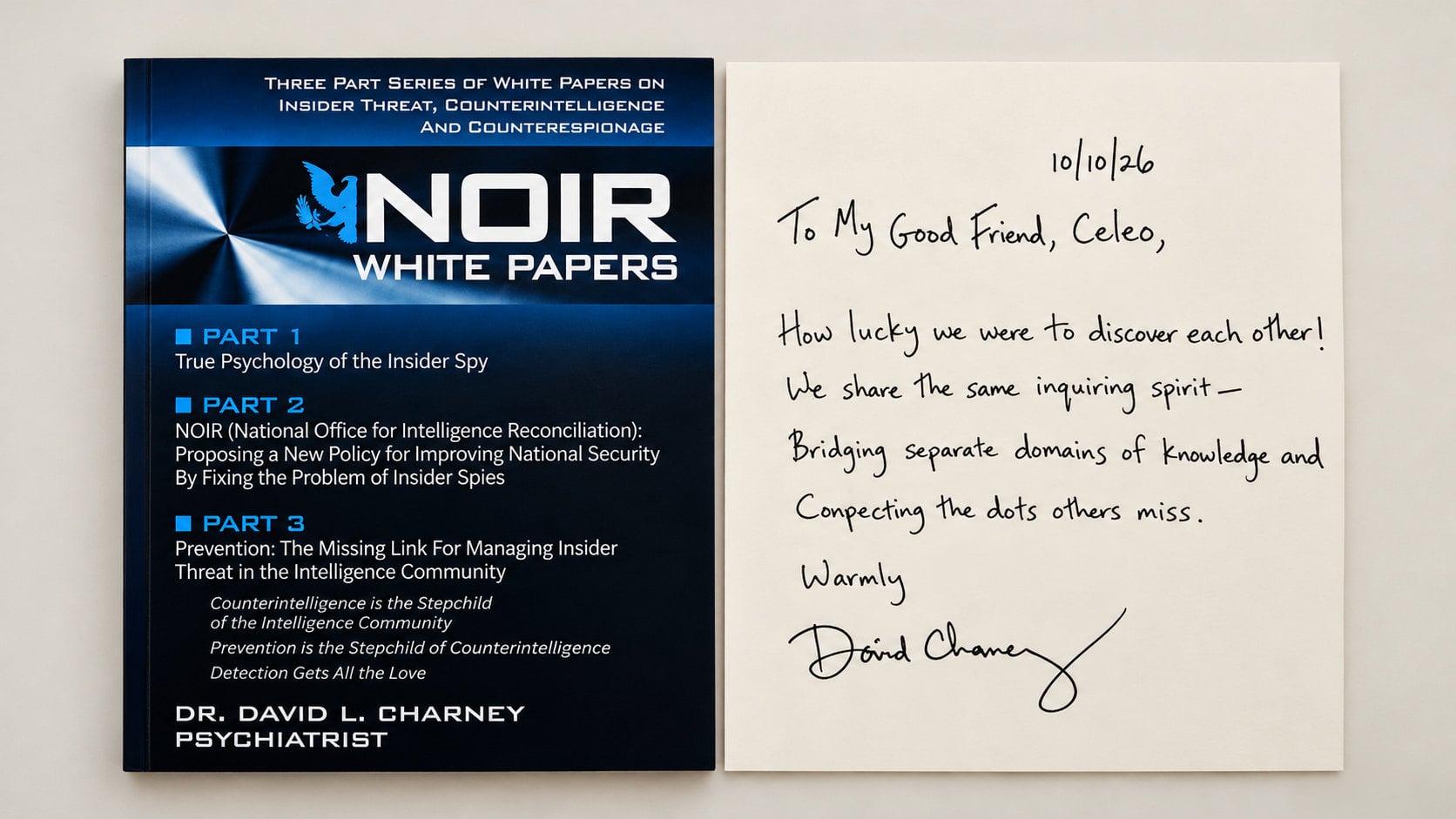
On October 10, David gave me his NOIR White Papers as a farewell gift, accompanied by a handwritten dedication that I will always treasure.
What touched me most was his observation that we share the same inquiring spirit, bridging different fields of knowledge and connecting dots that others miss. Coming from a man with his extraordinary professional background, those words meant a great deal to me.
Perhaps they also explain how two physicians, separated by geography and professional experience, could independently arrive at remarkably similar conclusions about a subject so far removed from their medical specialties.
Looking back, I find it remarkable that an article written thousands of miles away could establish such an unexpected intellectual connection, eventually leading to a friendship, a book, and encounters I could never have anticipated.
This experience has also taught me something about writing. We often measure the reach of an article by how many people read it, but perhaps, in the long run, what matters just as much is who reads it. Sometimes, a single reader can open doors that thousands of others never could.
I remain deeply grateful to David for his friendship, his generosity, and for introducing me to Jim.
So, if anyone ever asks me whether blogging for The Times of Israel can take you to places you never imagined, my answer will be simple.
Yes. I am living proof of it.