
Breaking the Bottleneck: When ADHD Meets AI
As a child, I suffered terribly from ADHD, I thought I wasn’t smart enough. Struggling to focus — constantly getting bad grades — crushed my self-esteem and changed how I saw my future. College felt out of reach.
When I finally enrolled, I started at a junior college and everything shifted. I became the Op-Ed page editor of the school paper and discovered something that stunned me: I was good at writing! Really good. For the first time, I felt like I had a voice worth sharing.
But I couldn’t turn that into a career. The time crunch of journalism, especially the endless research, was overwhelming my brain. I couldn’t hold the threads together long enough to move from idea to finished piece. It was devastating to realize my talent didn’t have the tools it needed to show the potential I knew I had.
Fast forward to today, and headlines scream:
“Zoomd stock soars 2700% on global client growth, AI expansion.”—YnetNews
AI is minting fortunes—changing lives.
But for me, the real story isn’t the stock market — it’s what AI is doing in my daily life, as someone with ADHD. It’s not about billions in value; it’s about focus, clarity, and the ability to channel my endless thoughts into action.
ADHD didn’t hold me back — the wrong tools did. Here’s how I finally worked at my brain’s full potential.
Proof in Motion
Part 1: Real-Time Advocacy
In the past month, I’ve put this new way of working to the test and the surge speaks for itself. Project Emet — my initiative to counter anti-Israel misinformation in real time — and the GrokLevAri Doctrine — a strategy for pressuring world leaders to act — have both been running at full speed.
Part 2: Visual Agenda-Setting
At the same time, I founded The Maccabean, a daily front-page project that packages the news in a bold newspaper format. These front pages are my way of setting the agenda visually, with headlines and framing that cut through the noise and reveal the bias.
Part 3: Expanding to Long Form
But the surge hasn’t stopped there. In addition, I’ve written 5 full-length articles for the Times of Israel and two for a human rights NGO — long-form pieces that stand apart from the front pages. These are published under my name, expanding the reach of my voice into outlets where analysis and argument matter most.
“This used to be impossible without losing the momentum of each idea. Now, every idea keeps moving forward until it lands.”—Maccabi Lev Ari
It’s not just about writing. It’s identifying a falsehood, verifying the facts, crafting a rebuttal, publishing it, and then pivoting instantly to the next front — sometimes juggling three or four narratives at once.
Why AI Matters Here
This is where AI has changed everything for me. ADHD means thoughts and information flood in way too fast sometimes, often in competing directions. It would become overwhelming and before I knew it – I was in “paralysis by analysis” mode. Before AI, I couldn’t manage the mass of information on different subjects simultaneously.
I can be strategizing, planning, and editing one article while another fully-formed idea barges into my head, demanding attention before the first one is even finished. Research scattered across tabs, notes half-finished, ideas slipping through the cracks.
It was AI that finally broke that bottleneck.
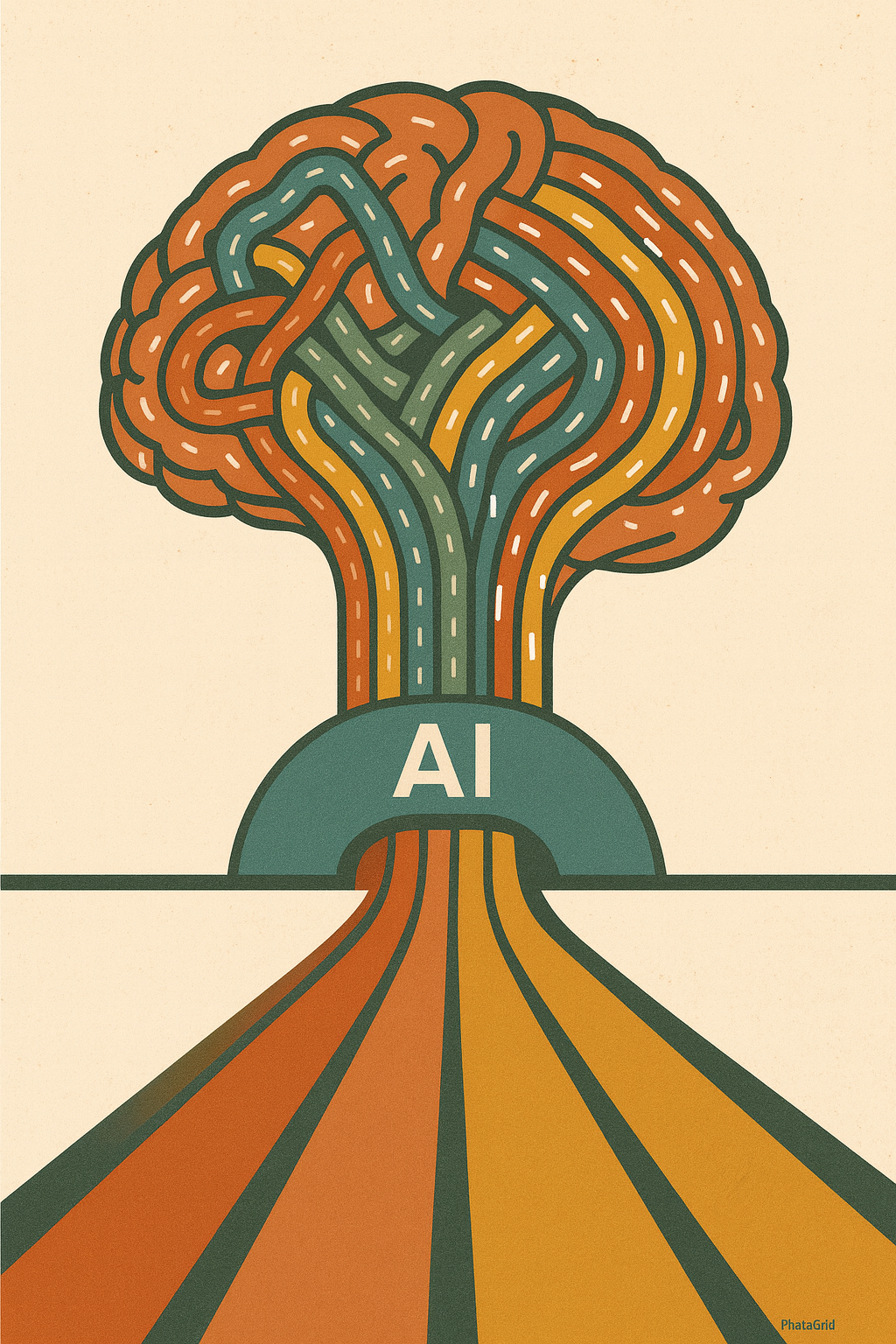
How ? Not by writing my articles for me but by serving as an organizing, funneling, and straining system. It catches the information, holds it, sorts it, and hands it back in a way I can act on in a more organized way.
Now, with AI as a constant partner, I am no longer drowning in raw research, I can move forward with clarity — even while juggling multiple complex projects all at once — and still deliver a quality product. AI didn’t “fix” ADHD. It gave me the right tools and with them, I learned to work with my brain instead of against it.
The self-doubt I carried since childhood, the feeling that I wasn’t smart enough, finally gave way to something else: momentum and self-belief.
“What once felt like chaos is now energy I can harness. What once drowned me — now drives my passion.”—Maccabi Lev Ari
And, that is the difference between feeling broken and finally realizing I was never broken at all.