
Writer covering Israel–Africa, Jewish affairs, and Israel worldwide
Breaking the Promise: South Africa’s Moral Theater Meets Everyday Reality
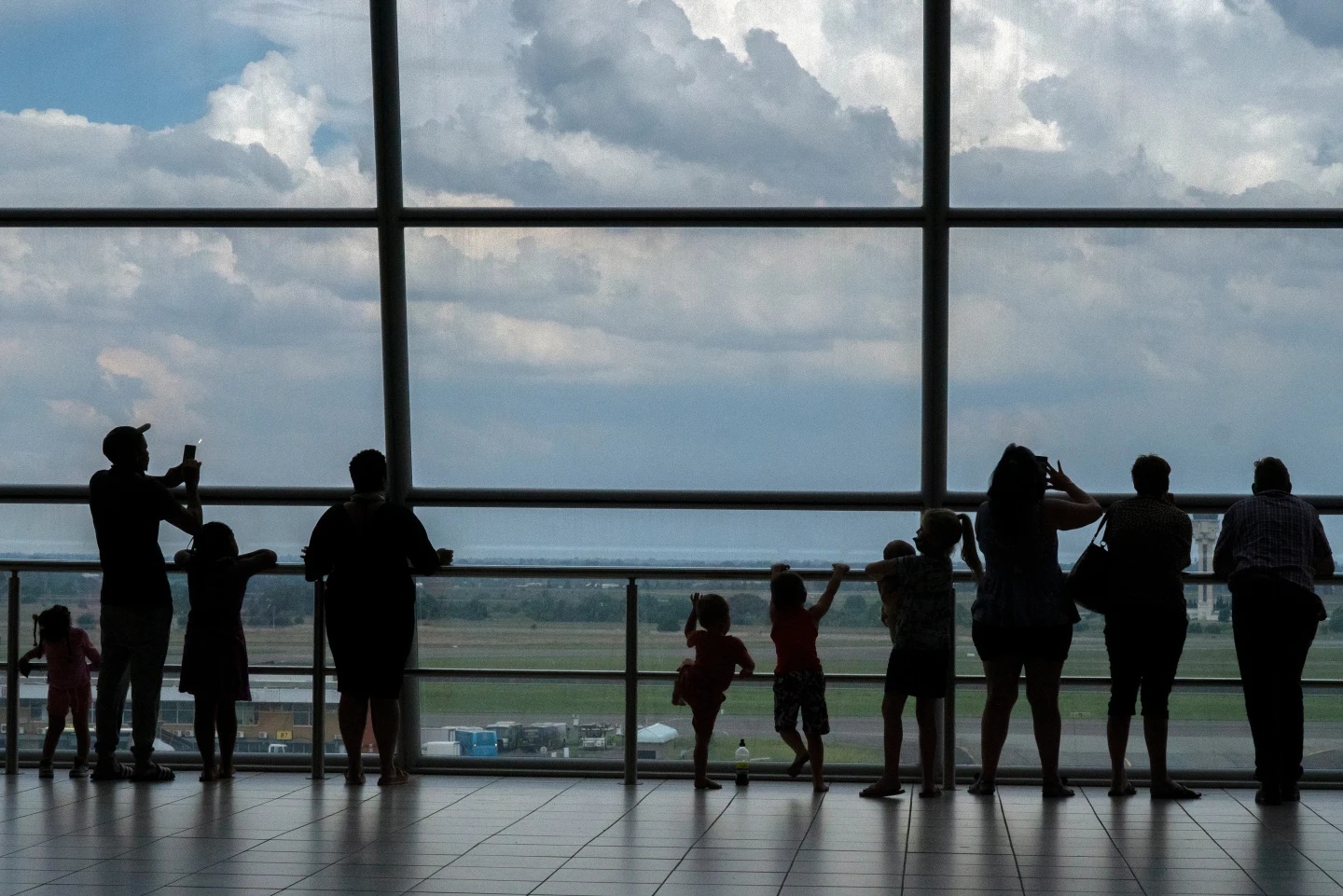
Families watch plane on the tarmac at Johannesburg's OR Tambo's airport, Monday Nov.29,2021.(AP Photo/Jerome Delay, File)
Moral grandeur above, mundane hesitation below
South Africa’s courtroom drama in The Hague could make for the most stirring of human-rights epics: in January 2024, Pretoria brought a case against Israel at the International Court of Justice (ICJ), accusing it of genocide in Gaza. Adila Hassim, South Africa’s legal eagles, presented a litany of the so-called evidence, civilian deaths, mass displacement, torn infrastructure, and allegedly genocidal rhetoric from Israeli officials. In response, Israel argued it was merely defending itself, and that South Africa’s case was politically motivated. The ICJ later on issued provisional measures, It was a moral high point for South Africa: powerful, symbolic, righteous. All the world’s a stage, and South Africa was poised for a standing ovation, applause guaranteed, consequences optional.
However here’s where the irony seeps in, there’s a certain dissonance between Pretoria’s altar call at The Hague and what actually happens when Palestinians attempt to step foot on South African soil.
Humanitarian outrage at 30,000 Feet; Humanitarian Bureaucracy on the Tarmac
From genocide claims abroad to immigration forms at home. It was meant to be a triumphant moment: a planeload of Palestinians arriving in the very country that has fashioned itself as the global patron saint of Gaza. Instead, 153 passengers from Gaza found that South African solidarity comes with conditions, specifically and surprisingly, a fondness for Israeli exit stamps. Lacking these sacred markings, they were held hostage not by the IDF, nor by an “occupying force”, but by South Africa’s own immigration bureaucracy, which appears to have mistaken compassion for a paperwork audit.
For nearly twelve hours, the passengers sat on a sweltering aircraft at OR Tambo Airport, while officials squinted at passports, baffled that people fleeing a war zone hadn’t paused for a courteous stamping at an Israeli border booth. Children fidgeted, a woman nine months pregnant waited, and the world’s self-appointed defender of Palestinian rights calmly insisted it was simply “following procedure.”
Eventually, only after NGOs intervened and offered guarantees, South Africa relented. Apparently at South Africa’s airport, moral certitude meets a line of desks and the tiniest stamp can make or break your life.
It was hard to miss the irony: the country accusing Israel of genocide at The Hague couldn’t bring itself to let Palestinians off a plane without first ensuring Tel Aviv had tidied up their passports.
Inconsistency
This curious contrast isn’t limited to one charter flight. South Africa’s bold legal posturing, especially at bodies like the ICJ, is matched by a domestic record more muddled than majestic. For instance, when South Africa accuses Israel of apartheid in court, it draws upon its own history, yet the country continues to grapple with modern forms of racial tension and policies echoing the past.
Meanwhile, back home, white South African workers have loudly protested what they call reverse discrimination, at the petrochemical firm Sasol, a share-ownership scheme was introduced exclusively for black staff, triggering a strike by thousands of mostly white workers. Abroad South Africa poses as a moral crusader while at home caught between apartheid nostalgia and affirmative-action headaches. So yes, Pretoria rails against apartheid abroad, but when it comes to equity at home, things become far less black-and-white.
The ICJ Case as Political Theatre
Just as many do, I also wonder whether South Africa’s genocide case at The Hague is really a consequence of profound moral outrage, or a theatrical performance staged for an international audience. The case is no amateur affair. South Africa’s application to the ICJ was tight, well-argued, and laden with references to established legal precedent.
Most likely, the main goal may not be to secure justice so much as to win headlines, rally global support, and burnish its moral credentials. Meanwhile, the very same officials who plead for Palestinians in court appear worryingly cautious when Palestinians actually land on South African soil unannounced, especially if their paperwork doesn’t tick the right geopolitical boxes.
Why This Matters
Why should we care about a dozen-hour delay on a plane, or exit stamps that border police demand like VIP passes? Because these micro-decisions reflect macro hypocrisy. If South Africa truly believes in the existential threat faced by Gazans, if it believes they are victims of genocide, then refusing them entry without exit stamps is less a bureaucratic detail than a moral failing.
When symbolic solidarity is offered from the pulpit of The Hague but real solidarity is withheld at the arrivals gate, one must ask if South Africa is being sincere.
If the heart of a nation is measured by its generosity at the customs, South Africa might want to check for a pulse.
Epilogue
South Africa’s petition at The Hague may be stirring, historic, but its treatment of real Palestinians at its own airport reveals a different story. The courtroom is a theatre, and Pretoria’s performance is flawless when the world is watching. But in the heat of the tarmac, when real people wait, breathe, suffer, the pro-Palestinian virtue evaporates into administrative inertia.
True solidarity would mean more than legal arguments; it would mean welcoming without conditions, treating without suspicion, and respecting humanity without paperwork. Otherwise, the grand declarations remain just that: declarations. In the meantime, big speeches, small hearts, and the occasional exit stamp stands between rhetoric and reality.
Related Topics
Related Posts