
Gaza Roadmap will fail without disarmament and deradicalisation
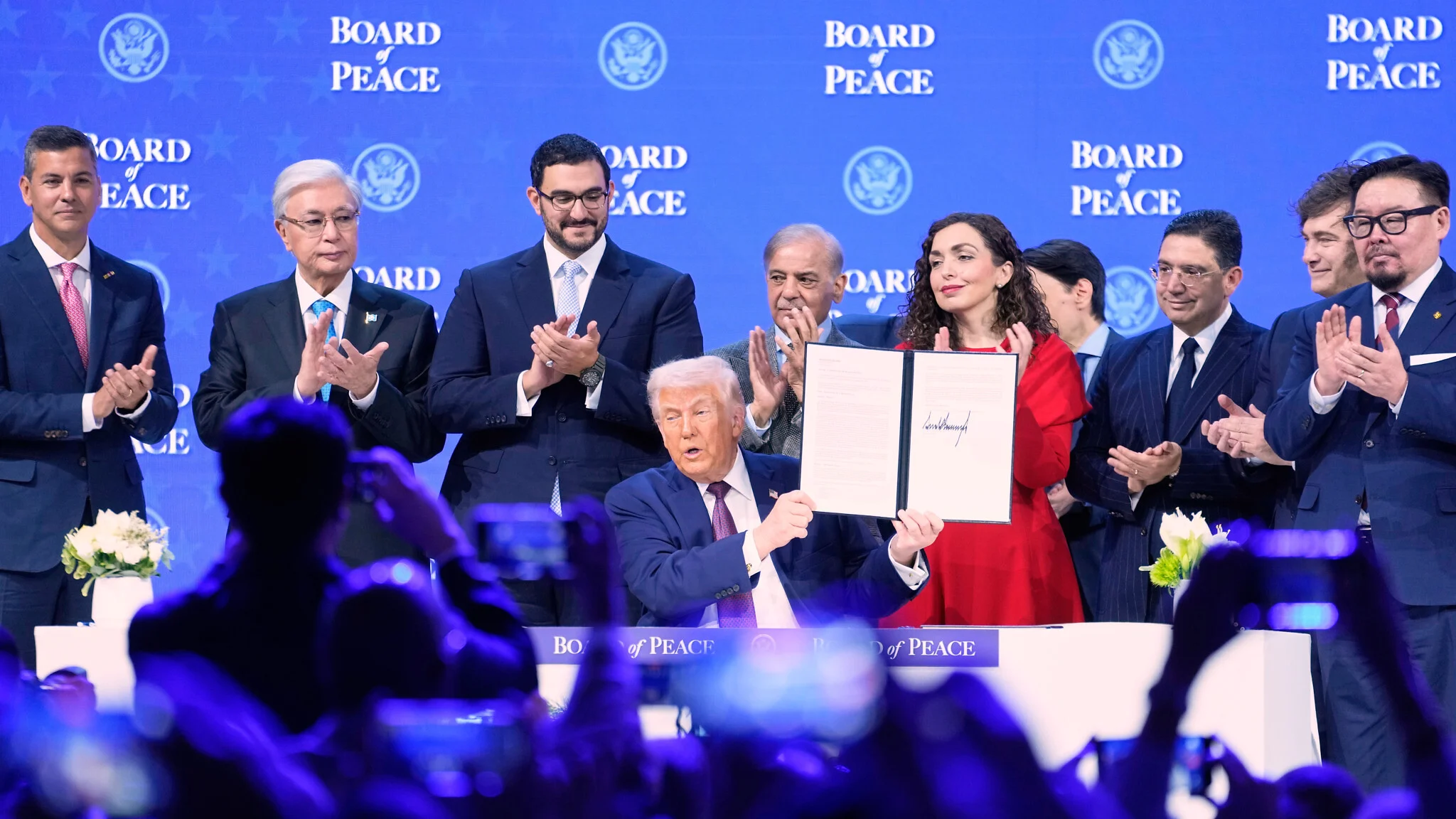
On May 21, Nickolay Mladenov, the High Representative of the U.S.-backed Board of Peace, presented a 15-point roadmap to the UN Security Council aimed at realising Trump’s Gaza peace plan. In the same briefing, he called on the international community to use “every means at its disposal” to force Hamas to disarm. It was a striking admission that the plan he just presented lacks tools to deal with terrorist groups unwilling to cooperate.
Now what is in the roadmap? The roadmap is structured around four main themes. The first five points establish foundational principles, including the completion of existing ceasefire obligations, independent verification of each stage before the next can proceed, and the creation of the National Committee for the Administration of Gaza (NCAG), a transitional Palestinian civilian authority that formally excludes Hamas from governance. Points six through eleven focus on security arrangements. They include the principle that there will be only one authority and one law, police reform and integration. It also involves gradual decommissioning of weapons by armed groups, the regulation of personal weapons, and a social peace agreement to prevent internal violence. Points twelve to fourteen deal with the deployment of an International Stabilization Force as a buffer and a phased Israeli withdrawal tied to verified progress on decommissioning. The final point links reconstruction to areas certified as stable and under effective civilian administration.
The Conceptual Strengths of the Roadmap
Several aspects of the roadmap are reasonable and doable. The requirement for independent verification of each stage before moving forward addresses the deep lack of trust between the parties. Linking any reconstruction to verified stability also makes sense as it reduces the risk of resources going to areas still controlled by armed groups. However, when the roadmap is studied from the perspective of Israel’s security needs, the roadmap contains serious structural weaknesses.
The Core Weakness in Disarmament
The most immediate problem is that the roadmap has no plan for how to deal with armed groups that refuse to disarm. Hamas has publicly rejected disarmament. The roadmap assumes a gradual, cooperative process, but offers no backup plan when groups resist disarmament. This is not a theoretical concern; it is the reality now on the ground.
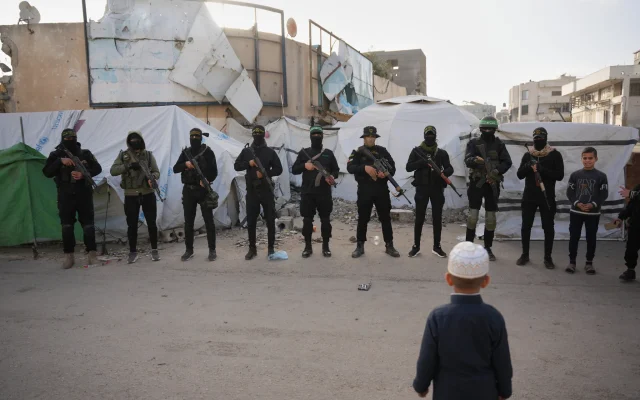
Weapons are to be transferred to the NCAG under international monitoring, but the plan provides no mechanism for actively locating and verifying weapons stockpiles. There is no provision for systematic searches of tunnels, warehouses, or other locations. If a group declares a certain number of weapons and hands over that amount, the roadmap offers no reliable way to determine whether they are concealing large quantities elsewhere. This creates a trust-based system rather than a verification-based one, dependent on the good faith of terrorist groups who have spent years building extensive underground infrastructure specifically designed to hide weapons and fighters, and have shown deception tactics time and time again.
Also, there is no requirement to deal with existing terrorist infrastructure, risking future use by armed groups, with a rebuilt Gaza providing the human shields.
The Governance and Oversight Gap
The NCAG, tasked with managing civilian affairs during the transition, raises immediate questions the roadmap does not answer: how it will be formed, who qualifies for membership, and what vetting process will screen out individuals with ties to armed groups and who will have a say in the vetting. Could Israel veto individuals? Unclear. The oversight role of the Board of Peace remains equally vague, leaving uncertainty about how much real influence the international side would have if the NCAG makes decisions that conflict with security requirements.
That vagueness is not only an administrative shortcoming. It reflects a deeper structural problem with how the roadmap approaches international oversight more broadly. The assumption throughout the plan is that international bodies and monitoring mechanisms can be trusted to uphold security requirements without Israeli input or veto. The historical record provides serious grounds for questioning that assumption. UNRWA offers the clearest and most documented case study in why that trust is misplaced. A UN internal investigation concluded that nine UNRWA staff members “may have been involved” in the October 7 attacks, the agency’s own words constituting a damning self-indictment.
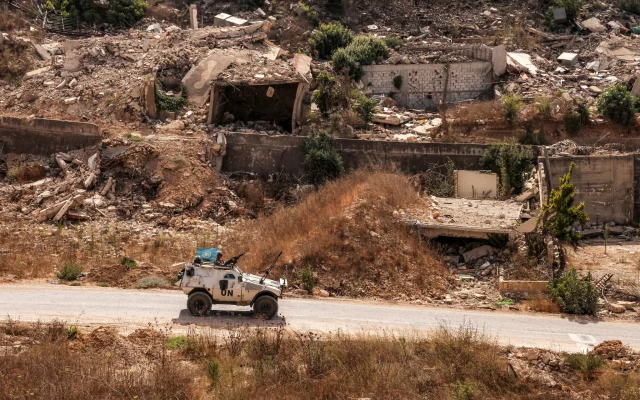
The New York Times reported in December 2024 that twenty-four UNRWA teaching staff were confirmed members of Hamas or Palestinian Islamic Jihad. A Hamas tunnel running directly beneath UNRWA’s Gaza City headquarters, housing a data center for Hamas, was confirmed by international journalists in 2024. Multiple donor countries suspended funding in response. UNRWA is not an exception; it is a UN agency that operated in Gaza for decades under international oversight, with none of the safeguards that oversight was supposed to provide. Any governance framework that does not take this lesson to heart is not a serious security proposal. The UNIFIL experience in Lebanon, where Hezbollah systematically used UN forces as cover for weapons storage and tunnel construction, confirms this is not an UNRWA-specific failure but a pattern. And then there is the well-documented anti-Israel bias at the UN.
The Absence of Any Deradicalization Strategy
The most serious problem is the complete absence of any plan for deradicalization. For nearly two decades, Hamas has controlled schools, summer camps, mosques, and media for 19 years, creating a generation exposed to systematic indoctrination that glorifies violence against Israel. Historical experience demonstrates that reversing this kind of entrenched radicalization requires intensive, sustained intervention over many years. The post-World War II denazification and re-education programs in Germany and Japan involved military occupation, institutional purges in the government, media, education system and long-term societal transformation, and even these efforts were imperfect and took more than a decade. The current roadmap offers no comparable measures to deal with the radicalisation that has taken place in Gaza. And sustained economic development, tightly controlled to prevent diversion to armed groups, must accompany any deradicalization effort. Without job creation and economic development, even successful ideological reform risks being reversed by the next cycle of extremist recruitment exploiting Gaza’s high unemployment and lack of economic horizon.
The Security Risks of Palestinian Sovereignty
The roadmap’s implicit acceptance of eventual Palestinian sovereignty would create serious and lasting security challenges for Israel. Any future Israeli military operation in Gaza would likely be framed internationally as a violation of sovereignty rather than a counterterrorism action, intensifying legal and diplomatic pressure precisely when operational freedom is most needed. It would reduce Israel’s ability to maintain effective control over Gaza’s borders, making it harder to prevent weapons smuggling.
A sovereign Palestinian government could also have the legal right to enter defense agreements with third countries, raising the risk of states hostile to Israel establishing a formal military or intelligence presence on its border. The 2005 disengagement already demonstrated the underlying logic: reduced Israeli control allowed Hamas to grow on a scale that made October 7 possible. Full sovereignty would foreclose the security measures needed to prevent a recurrence.
What Any Realistic Plan Must Include
Mladenov’s appeal to the UNSC to use “every means at its disposal” was itself an admission that the roadmap’s own plans fall short. Any serious alternative must address the structural gaps in a clear order of priorities.
First, forced disarmament of armed groups must be carried out by willing international or regional partners prepared to conduct sustained operations against Hamas and Palestinian Islamic Jihad. Current ISF candidates have expressed they are not willing to do that, only peacekeeping. In the absence of genuinely willing partners, the Israel Defense Forces must be granted clear operational authority, within the bounds of international law, to disarm and degrade these groups’ capabilities completely.
Second, Israel must maintain long-term security control over the Philadelphi Corridor and buffer zones inside Gaza to prevent weapons smuggling and protect Gaza envelope communities. IDF Chief of Staff Eyal Zamir has recently warned of force collapse risk across multiple fronts due to lack of manpower if measures are not taken; any Israeli presence in Gaza must therefore remain strictly security-focused, without settlements that would create friction points and require extra troops to protect them.
Third, mandatory deradicalization population-wide must be treated as a central and long-term component of any viable plan. Islamist and jihadist ideologies have proven particularly resistant to deradicalization, and reversing nearly two decades of Hamas-controlled indoctrination will require sustained intervention measured in years, not months. Israel should seek partners with relevant cultural and religious experience like some Arab partners in the region, to design and implement programs that resonate with the Gazan population.
Fourth, once meaningful progress has been achieved on disarmament and deradicalization, controlled economic development should be permitted under strict security oversight, with international aid released in tranches tied to verified benchmarks and rigorous audits to ensure funds are not used by armed groups.
Fifth, any future governing body must operate with a clear Israeli veto on all security-related matters, including oversight of the composition of any transitional authority and the mandate and operations of any International Stabilization Force deployed in Gaza.
Sixth, any realistic plan must remove ambiguity about the long-term political horizon. Nineteen years of Hamas rule following the 2005 disengagement demonstrated that an independent Palestinian state in Gaza creates serious security issues. The end goal must therefore be an autonomous area under strict security oversight to prevent any rebuilding by armed groups.
A Clearer Path to Security
Any plan that hopes to prevent another October 7 must begin with the recognition that security cannot be outsourced or achieved through goodwill alone. It requires clear Israeli oversight, the physical disarmament and degradation of terrorist groups, long-term Gaza-wide deradicalization, and political arrangements grounded in security realities rather than diplomatic optimism. Without meaningful reforms to address the structural weaknesses identified here, the roadmap as it is, is likely to repeat past failures rather than prevent another October 7.