Journalist
Buchenwald Is Not a Stage for Protest
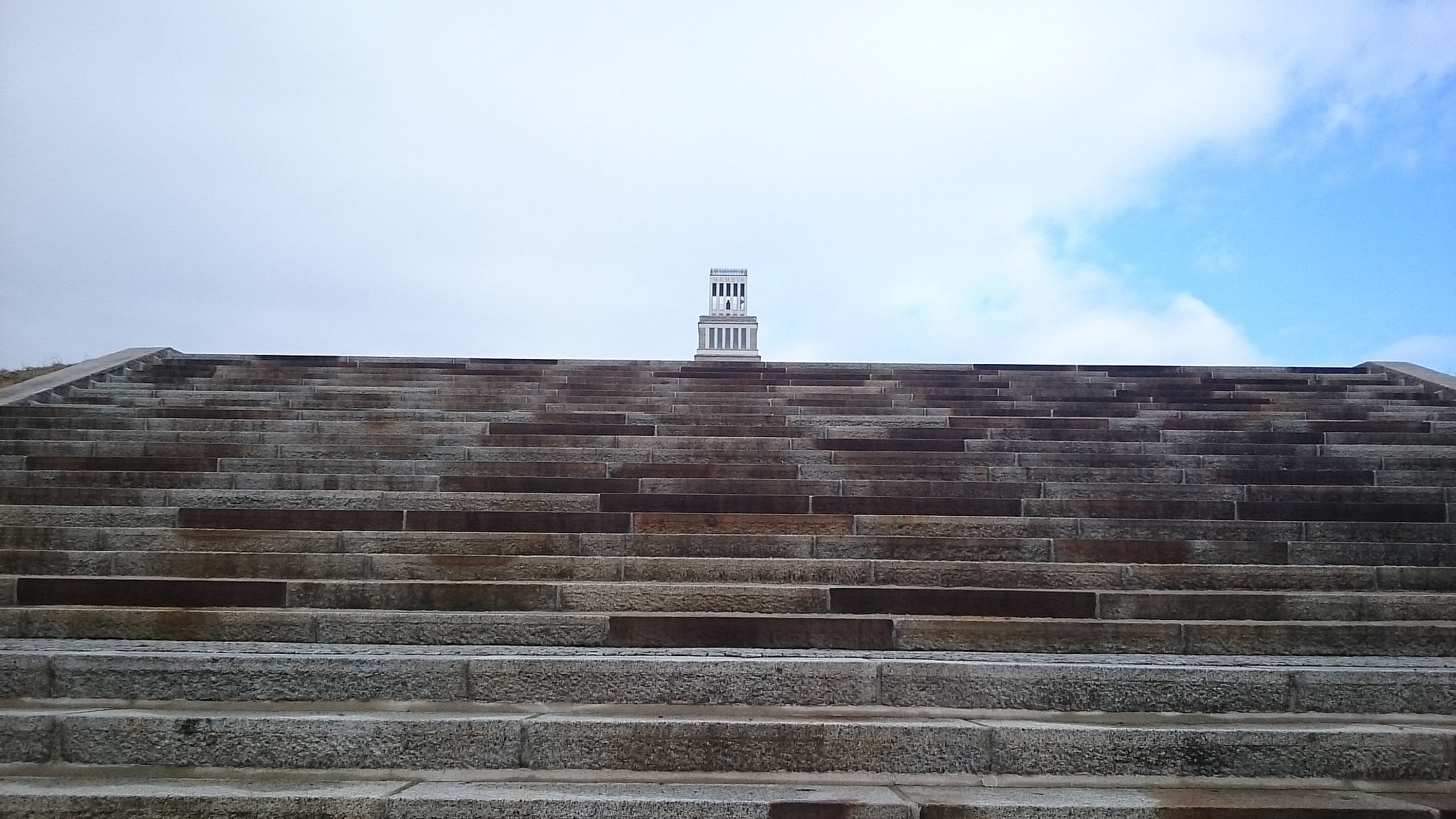
Photo: Lubomir Rosenstein, CC BY-SA 4.0 via Wikimedia Commons
There are places where even silence carries weight. Buchenwald is one of them.
Tens of thousands were imprisoned, starved, beaten, and reduced to numbers by a system designed to erase them. Jews, Sinti and Roma, political prisoners, and others deemed expendable were stripped of identity and, in many cases, their remains reduced to ash. Today, the site is not simply historical ground. It is a mass grave, a place of mourning, and a space for sober reflection on what happens when human beings are stripped of dignity.
For decades, Buchenwald has served as a site of education and remembrance. Its purpose is not neutral. It is to confront visitors with a specific history and its consequences. That purpose carries an implicit boundary: not every contemporary political cause belongs there.
This is the context in which the campaign, calling itself “Kufiyas in Buchenwald” must be understood. Its organizers accuse the memorial’s leadership of “historical revisionism” and “genocide denial” and demand the right to display political symbols—most prominently the keffiyeh—during commemorative events. The memorial foundation has refused, arguing that such symbols, when used in this way, shift the focus from historical remembrance to present-day geopolitical conflict.
That distinction is not semantic. It is the line between remembrance and appropriation.
Supporters of the campaign frame the issue as one of free expression. But the question is not whether political speech is legitimate in general. It is whether a former concentration camp, during a liberation commemoration, is an appropriate setting for it. A memorial site is not a public square. It is not designed for debate, but for remembrance. It is a context-bound space with a defined purpose: to preserve the integrity of historical memory.
To say this is not to deny that remembrance has contemporary relevance. On the contrary, the lessons of the Holocaust inevitably shape how societies think about racism, violence, and the abuse of state power today. But there is a difference between drawing careful, historically grounded lessons and using a site like Buchenwald as a stage for current political messaging. When that boundary collapses, the specificity of the past is at risk of being diluted or instrumentalized.
Some activists involved in these protests argue from a universalist perspective: that the memory of past atrocities must inform responses to present ones. This is not, in itself, an illegitimate moral impulse. The problem arises when the comparison is made in a way that flattens historical differences or suggests moral equivalences that cannot be sustained. The Holocaust was not one atrocity among many. It was a state-driven project of total annihilation.
The leadership of the Buchenwald memorial, including its director, Jens-Christian Wagner, has drawn a line accordingly. The policy does not target individuals. It limits the use of the site as a platform for political demonstration. German courts have, in relevant cases, upheld the principle that memorials may enforce such context-specific rules to protect their function.
Reasonable people can disagree about where exactly to draw these lines. But it should not be controversial to insist that the primary obligation of a place like Buchenwald is to the victims and to the integrity of their history. That obligation includes protecting the site from being repurposed, however well-intentioned the cause.
What is at stake in Weimar is not only a local dispute. Across Europe and North America, institutions of memory are increasingly asked to absorb the pressures of contemporary political conflicts. The urge to draw direct lines between past and present is powerful, and often misleading. But without discipline, that impulse can erode the very clarity that makes historical memory meaningful in the first place.
Remembrance is not passive. It requires judgment, context, and, above all, restraint. Not every message needs every platform. Not every cause belongs in every place.
Buchenwald does not exist to host the arguments of the present. It exists to bear witness to a past that must be understood on its own terms, and protected from being repurposed. Preserving that distinction is not an act of exclusion. It is an act of respect.
Related Topics
Related Posts