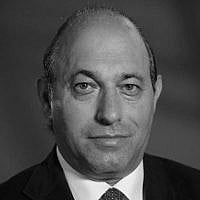
Building Pathways, Opening Doors: An Interview With Ann and Jeremy Pava

Yeshiva University recently received a transformative $10 million gift from Ann and Jeremy Pava of West Hartford, CT, to create the Pava Center for Women’s Torah Scholarship, a groundbreaking initiative advancing high-level Torah study for women across the Jewish world.
Inspired by the family’s deep commitment to Torah education and community building, this gift will help advance and empower women as scholars and leaders in Jewish life.
Launching in the fall of 2026, the Pava Scholars Program at Stern College for Women will stand at the heart of the new Pava Center as its flagship initiative, bringing together YU’s commitment to women’s Torah learning and its outstanding Judaic studies faculty, with the goal of producing more female scholars and leaders in the Orthodox community.
Heading this effort will be Raizi Chechik, the center’s inaugural director and a veteran Jewish educator. Formerly the head of school at Manhattan Day School, she studied Tanach and Counseling at Michlala Jerusalem Teacher’s College, holds an MA in Jewish History, and is currently completing her doctorate at YU’s Bernard Revel Graduate School of Jewish Studies.
I had an opportunity to speak to Ann and Jeremy Pava about the new center. Below is the transcript of our interview:
What inspired you to make this landmark investment, and why now?
We believe deeply in the power of Torah study to shape inspired, knowledgeable, and devoted Jewish communities. We have seen firsthand that when women immerse themselves in serious learning, they grow not only personally but can lead and strengthen their communities with wisdom, sensitivity, and chesed.
We are convinced that now is the time to really advance this cause. Orthodox women are seeking advanced Torah study at the highest levels, and communities are increasingly relying on women who can teach, guide, and serve.
As the flagship Jewish university in the world, YU is the natural home for the Women’s Torah Center. We feel this is the right moment to celebrate, elevate, strengthen, and expand what is already happening … and that YU’s Stern College is the perfect place to do just that.
How has your thinking evolved about the role Orthodox women can and should play in communal leadership?
We’ve always appreciated that women’s Torah learning and leadership benefits the entire community. We’ve witnessed the impact that women Torah scholars at YU and other Orthodox seminaries and institutions have had on their students and communities – and we asked ourselves, how can we create the next generation of these leaders?
Was there a particular moment or experience that crystallized the need for a formal center?
There were countless moments of inspiration for us. We saw our own daughter inspired by her female Talmud teacher in high school (a GPATS grad). We experienced numerous women scholars-in-residence inspiring and educating members of our own shul. And we have had the pleasure of meeting hundreds of women pursuing advanced Torah study and realized that there needs to be a more formal pathway to create opportunities for more women.
How do you envision this center changing the landscape for Orthodox women in the next 5–10 years?
We’d like to answer this in two parts:
- In five to ten years we hope the Center will have graduated a cadre of young women who are:
- Highly trained in Tanach, halacha, machshava, and Torah she-be’al peh;
- Skilled in pedagogy, pastoral sensitivity, communication, and community building;
- Comfortable teaching Torah, giving shiurim, leading chaburot, and supporting institutions;
- Ready to go on to further studies and to take on leadership roles.
- We believe the landscape for the entire Orthodox community (not just the women) and the entire Jewish community will benefit from their leadership and scholarship with more halachic observance and participation in Jewish life.
What kinds of programs or initiatives will the center prioritize?
The proposal clearly outlines four essential components, and we stand fully behind them:
- Advanced Torah Study: A deep, serious grounding in Torah is the heart of this initiative. Without this, nothing else follows.
- Community Engagement: Scholars must learn to serve – teaching, mentoring younger students, organizing programming, and contributing Torah to schools and shuls.
- Leadership Development: Halacha-focused leadership training – public speaking, communication, navigating difficult conversations, building partnerships, and responsible entrepreneurship.
- Cohort Building: Immersive trips to Europe, to cities across the US, and to Israel, which are formative experiences that will help the scholars see Jewish life up close, ask hard questions, and understand their role in the global community.
These pillars together will create leaders who are grounded, capable, and prepared to serve klal yisrael.
How will the center interact with Stern, GPATS, RIETS, and other YU divisions?
The center is intentionally designed to be woven throughout the YU ecosystem. Each division contributes something crucial:
- Stern College provides the academic and Torah foundation.
- GPATS offers upper-level courses for Year 3 scholars for Pava Scholars who choose to attend them, as do Revel and Azrieli graduate schools
- RIETS ensures halachic alignment and provides rabbinic guidance.
- Other schools- law, psychology, social work, business – provide professional skills.
The Pava Center becomes the hub connecting these strengths, ensuring that a woman’s journey from student to communal contributor is coherent, grounded, and supported.
What metrics or milestones will define success in the early years?
We will look for indicators such as:
- Growing demand for admission into the Pava Scholars Program.
- Strong placement outcomes – schools, camps, shuls, and organizations actively seeking Pava Center-trained women.
- Evidence of increased respect and recognition for women’s Torah scholarship on campus and in the community.
- High-quality Torah outputs – shiurim, divrei Torah, source sheets, publications.
- Successful mentorship relationships with YU faculty and communal leaders.
Most importantly, we will look for graduates who feel confident, grounded in halacha, and ready to serve the community with integrity.
How will the center navigate the wide variation across Orthodox communities?
With humility and clarity. The same way YU prepares young men to serve the entire community with sensitivity to differences and a love of klal yisrael and am yisrael.
What message do you hope this gift sends to other philanthropists and institutions?
Investing in women who learn Torah seriously and who want to serve their communities is one of the most impactful ways to strengthen the Jewish future. Our message is that this work deserves attention, excellence, and resources – because women’s Torah study enhances the entire community.
What do you hope will be different 20 years from now because of this center?
We hope that in twenty years, advanced women’s Torah learning and leadership will not be the exception to the rule – it will be what is expected.