
Historian, Librarian, Educator, and Artist
By the Grace of God: My Brush with the Ramot Junction Terror Attack
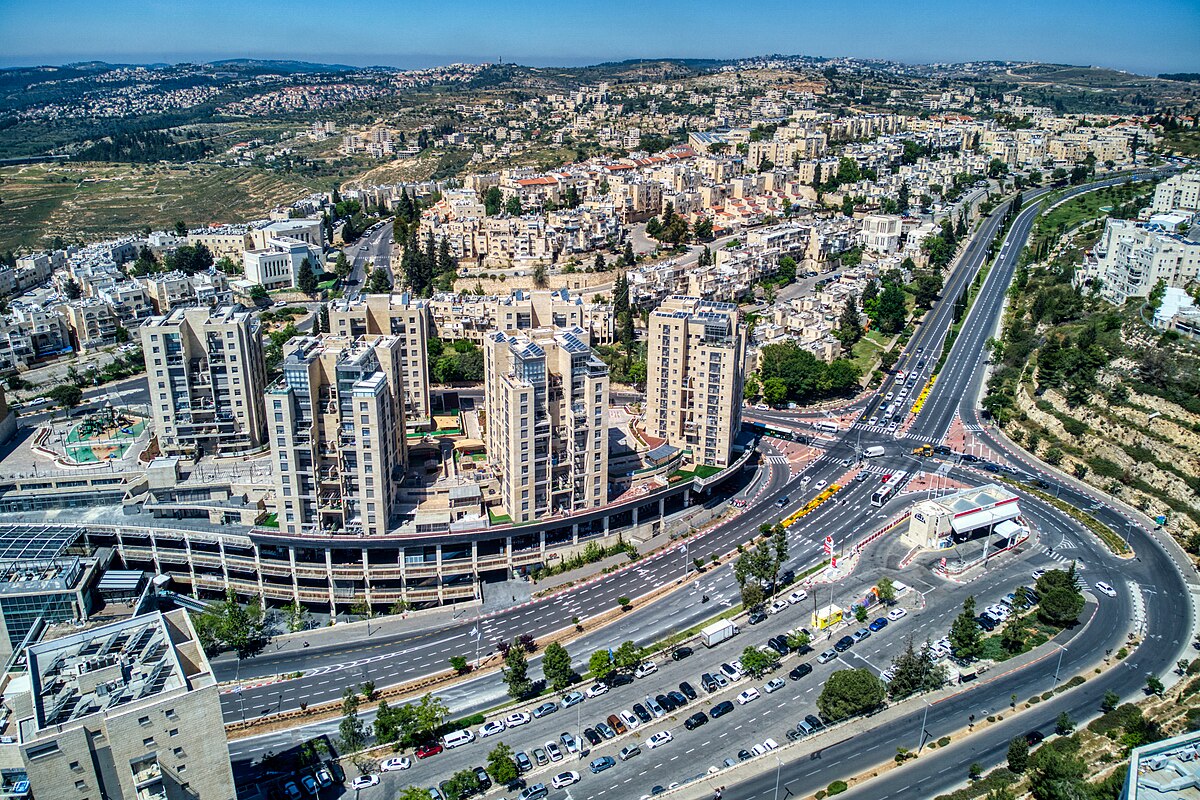
Ramot, Jerusalem. Source: Wikipedia Commons
“By the grace of God, it could have been me.” That phrase has echoed in my mind since yesterday morning, September 8, when two Palestinian gunmen opened fire at the Ramot Junction bus stop outside Jerusalem. Six people were murdered. More than 20 were injured. I was not there, but I could have been.
I teach two days a week in Modiin. To get there, I have two commuting options: a train that runs safely within Israel’s pre-1967 lines and a bus line that passes through the West Bank, skirting tense junctions where Israelis and Palestinians intersect. The day before the attack, I had been running late to catch the train. I nearly boarded that bus. At the last minute, I stepped off, choosing to walk toward the station instead. I told myself: I don’t care if I lose the job—my life is more important.
My mother used to tell me that safety always comes before money. That day, her philosophy may have saved my life.
What Really Happened at Ramot Junction
On September 8 at about 10:13 a.m., two young men from West Bank villages near Ramallah opened fire on commuters waiting at Ramot Junction, armed with makeshift Carlo submachine guns. They killed six civilians and wounded 21 others before being shot dead by an off-duty soldier and an armed civilian. Hamas and Islamic Jihad praised the attack as “heroic” and a “natural response,” though neither claimed direct responsibility. Israeli forces swiftly closed nearby villages and launched raids, vowing to step up counter-terror operations.
The victims were ordinary Israelis on their way to work, school, and errands. They were not in Jerusalem’s Old City, often portrayed abroad as the epicenter of danger. They were at a suburban junction where the perceived security bubble thins.
Myths vs. Facts
- Myth: Terror attacks happen only in Jerusalem’s center, especially the heavily fortified Old City.
Fact: The September 8 attack occurred at Ramot Junction, a crowded bus stop on the northern outskirts of Jerusalem—bordering West Bank territory, not inside the Old City. Reuters reported that the gunmen struck “on the outskirts of Jerusalem, at Ramot Junction,” while The Guardian confirmed the attack took place at “a crowded bus stop in the northern outskirts of Jerusalem.” This information is not anti-Israel reporting, but a fact. This distinction matters: commuters on peripheral routes are far more vulnerable than those in Israel’s best-protected areas. - Myth: Israel’s intelligence and government always anticipate and prevent threats.
Fact: Despite years of experience and warning signs, this attack was not prevented. Everyday commuters like me could sense the risks—so why not the professionals entrusted with national security? - Myth: The Diaspora’s fears are exaggerated—Israel is uniformly unsafe.
Fact: Reality is more complex. Central Jerusalem and the Old City are heavily guarded. Outlying junctions and border roads remain far more exposed. - Myth: Complacency is only the government’s failure.
Fact: Complacency is cultural. Israelis often grow numb to daily threats. Diaspora Jews, from afar, flatten Israel into a caricature of constant danger. Both perspectives miss the reality of layered, shifting risks.
A Failure of Common Sense
I have spent decades writing about American-Israeli relations, politics, and foreign policy. I may not have been tracking every intelligence detail since the first Trump presidency, but even I could see the signs of brewing unrest. Talk of annexation, West Bank friction, and the ease of access to Israeli roads—none of this was hidden. If ordinary citizens like me could sense the danger, why couldn’t the government?
Benjamin Netanyahu has once again missed the mark. Israeli security services and policymakers alike have become too comfortable. They rely on old models of threat while ignoring the obvious vulnerabilities in daily life. Meanwhile, Israelis are too arrogant in their assumptions of safety, and Diaspora Jews are too misinformed about where danger actually lies.
What This Means for Us
When I chose the train instead of the bus, I chose life. I chose foresight over convenience. I chose my mother’s wisdom: safety over money. That single choice separated me from those six who never made it home.
I was saved by God’s hand, but also by clear thinking. And that is what our government has failed to do. Israel cannot afford complacency. Too many lives have been lost because warnings were missed and threats were minimized.
Diaspora Jews, too, need to understand that attacks like Ramot Junction do not define all of Israel. But neither can they dismiss them as anomalies. This country lives in shades of danger, not absolutes.
A Call to Vigilance
The Ramot Junction shooting serves as both a tragedy and a personal reminder for me. I survived because I thought before I acted. Israel’s leaders must do the same. So must every Israeli commuter and every Diaspora Jew who imagines Israel through the haze of myths.
We must stop believing that geography guarantees safety or that the government’s warnings are enough. We must recognize the blind spots and close them before more lives are lost.
By the grace of God, I am alive. By the failure of leadership, six others are not. That is the truth we cannot afford to ignore.
Related Topics
Related Posts