
Can Israel destroy Iran’s nuclear program without Trump’s military support?
Recent developments have sent clear warning signals across the Middle East’s nuclear landscape. IAEA Director Rafael Grossi revealed that senior Iranian officials privately cautioned him: an Israeli strike on Iran’s nuclear facilities—particularly Fordow or Natanz—would not only pose immense technical challenges but could also harden Tehran’s resolve to pursue nuclear weapons or even trigger its withdrawal from the Non-Proliferation Treaty.
More pointedly, Grossi conveyed that Iranian officials explicitly warned they would retaliate by targeting Israel’s nuclear reactor in Dimona, signaling a potential escalation into direct nuclear brinkmanship.
At the same time, a forty-minute phone call between Benjamin Netanyahu and Donald Trump stirred speculation about a potential alignment of military and political strategies between Jerusalem and Washington.
While the content remains undisclosed, both leaders openly acknowledged the subject: Trump remarked, “We are doing a lot of work on Iran,” and Netanyahu confirmed the imminent resumption of negotiations.
These intertwined signals underscore a stark geopolitical reality: despite Israel’s evident intent, it cannot unilaterally dismantle Iran’s nuclear ambitions.
Two critical dimensions must be analyzed: the operational feasibility of such a strike and the political calculus—largely in the hands of the White House.
Iran’s nuclear infrastructure is engineered to withstand conventional military strikes. Fordow sits more than eighty meters beneath solid rock, while Natanz lies under twenty to twenty-five meters of reinforced concrete, layered with gravel and earth.
Israel fields advanced strike aircraft—F-35I Adir and F-15I Ra’am—and employs GBU-28 bunker-buster bombs, capable of penetrating approximately 5 to 7 meters of reinforced concrete and up to 20 to 30 meters of soil or rock.
Yet, these munitions fall short against the reinforced depths of Fordow and Natanz. Only the U.S.-developed GBU-57 Massive Ordnance Penetrator (MOP), capable of breaching at least 60 meters of reinforced concrete or over 100 meters of dense soil or compacted rock, offers a plausible chance to neutralize such fortified targets.
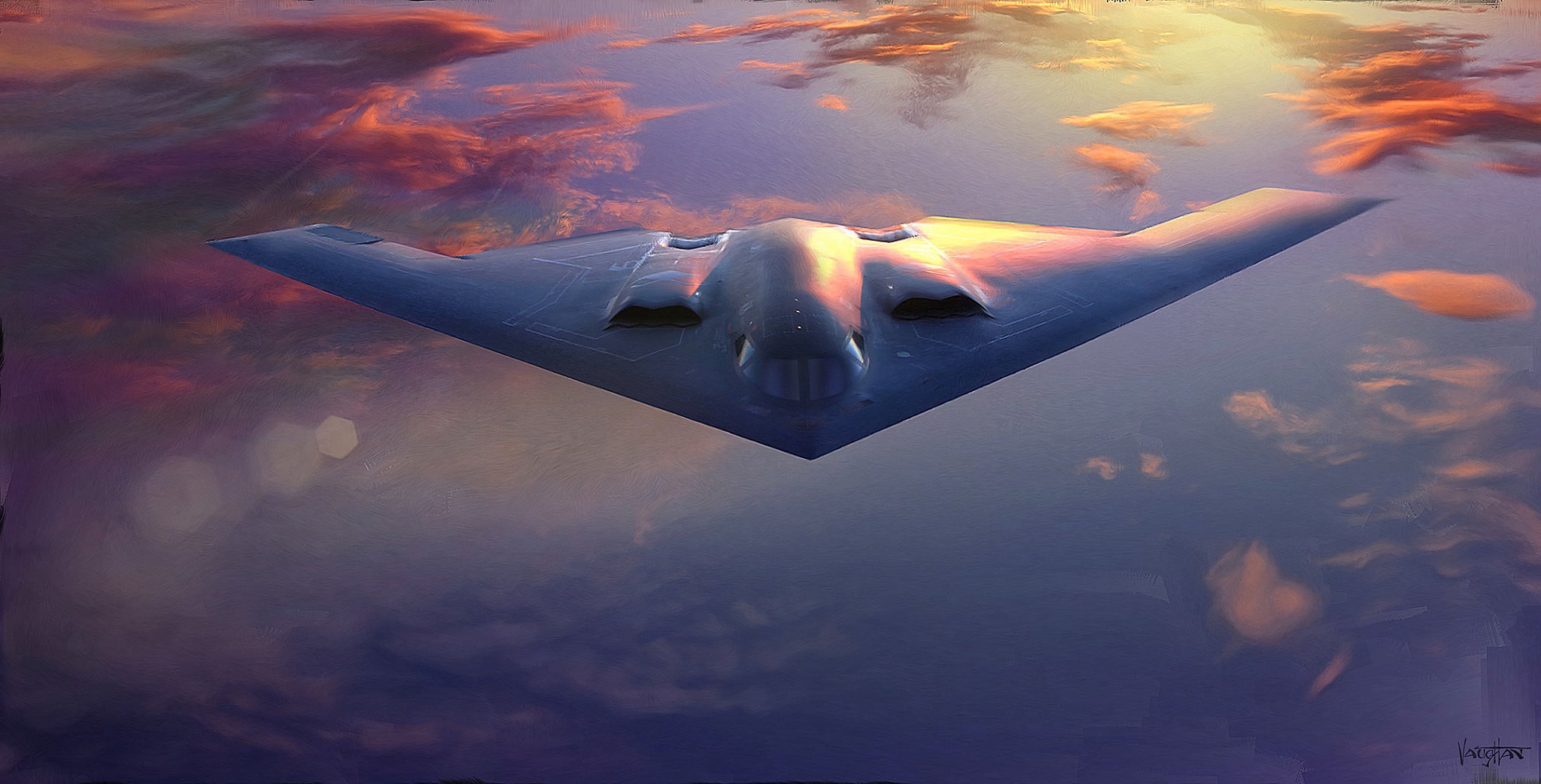
Importantly, the MOP is deployed exclusively by U.S. B-2 stealth bombers, highlighting Israel’s operational dependence on Washington.
The challenges extend beyond hardware. Fordow’s location—over 1,500 kilometers from Israeli bases—and its surrounding advanced air defenses create significant logistical hurdles. A strike would require mid-air refueling, electronic warfare support, and permission to traverse neighboring airspace—resources and authorizations that only Washington can realistically provide.
Furthermore, any attack on Iran’s nuclear program cannot be isolated from its broader military capabilities. To maximize success and limit retaliation, simultaneous strikes would likely be necessary against Iran’s sophisticated air defense networks and missile silos, which would otherwise pose immediate threats to Israeli targets.
Neutralizing these systems—including missile launch sites and command centers—would be essential to degrading Iran’s capacity for a rapid and decisive counterattack.
However, this strategic path faces a current political constraint: in a recent conversation with Israeli Prime Minister Benjamin Netanyahu, former U.S. President Donald Trump reportedly stated that military action against Iran’s nuclear program is “off the table for now.” As reported by The Times of Israel, Trump emphasized diplomacy as the preferred course, at least at this stage.
While the military option remains part of the broader calculus, its temporary suspension underscores the limits of Israeli planning in the absence of explicit American backing.
This leads to a fundamental conclusion: while a limited, tactical strike targeting Natanz or surface-level assets might be within Israel’s unilateral reach, its impact would likely be transient and insufficient to derail Iran’s nuclear program. By contrast, a comprehensive, strategic strike aiming to dismantle Iran’s nuclear capabilities would necessitate U.S. involvement—providing both the advanced weaponry (MOP and B-2) and the logistical and diplomatic support essential for success. Such support hinges directly on President Trump’s decisions. He alone holds the authority to greenlight B-2 deployments and to assume the political mantle—diplomatic shielding, sanction mitigation, and containment of retaliatory risks—that an operation of this magnitude demands. The line between a symbolic strike and one that could alter the regional nuclear balance is drawn by this presidential resolve.
Yet even this may prove insufficient. A second, more daunting threshold looms: the potential deployment of tactical nuclear weapons. Should the GBU-57 fail to guarantee the total destruction of Fordow—due to the site’s redundancy, extra shielding, or complex underground networks—the nuclear option might appear technically viable, if politically perilous. Low-yield tactical nukes could neutralize deeply buried facilities but would unleash catastrophic consequences: widespread radioactive contamination, international condemnation bordering on unanimity, violation of long-standing warfare norms, diplomatic isolation, potential military escalation with Iran and its allies, and deep psychological scars across the region.
Another critical dimension Israel must consider is the diplomatic fallout of acting without explicit U.S. support. An Israeli strike on Iran carried out unilaterally would risk isolating Israel internationally, as Washington’s diplomatic backing is pivotal in maintaining Israel’s legitimacy on the world stage.
Without U.S. endorsement, Israel could face widespread condemnation from key global actors—including the European Union, Russia, China, and many Middle Eastern countries—potentially leading to resolutions against Israel in international forums such as the United Nations.
This diplomatic isolation would constrain Israel’s ability to manage the political consequences of the strike and reduce its leverage in global negotiations. Furthermore, without U.S. logistical and intelligence support, Israel’s operational capabilities would be significantly limited, increasing the risks of a retaliatory escalation it may struggle to contain alone.
Moreover, unilateral action risks straining the crucial Israel-U.S. alliance, potentially impacting future military cooperation and diplomatic relations. In short, Israel must weigh not only the military challenges but also the profound diplomatic costs of acting independently.
For now, Israel and the United States are likely to rely on conventional means—cyberattacks, covert sabotage, and diplomatic pressure—to keep the conflict below this nuclear threshold. Yet the question persists: can the nuclear option be entirely dismissed if a decisive strike is truly sought? From a technical standpoint, no; politically, such a move would be nearly impossible to justify. In this fraught context, the decisions emanating from the White House will chart the region’s path forward.
Should Trump authorize limited conventional strikes, a prolonged but controlled escalation seems inevitable. If, instead, he sanctions the use of the MOP with B-2 support, backed by necessary logistics and diplomacy, a strategic and impactful operation could unfold. And if these measures prove insufficient and the nuclear option enters consideration—extreme though it remains—it would mark an irreversible turning point.
To date, Israel has pursued a nuanced deterrence strategy: cyber operations, industrial sabotage, and international pressure. Yet, as Grossi’s warnings attest and Iran advances its nuclear program with increasing defiance, Israel’s strategic options are narrowing. The recent Trump-Netanyahu dialogue signals that the window for direct action may be opening—but its ultimate feasibility rests on decisions yet to be made.
In the final analysis, it is not the jets launching from Israeli runways but the signals sent from Washington that will decide the fate of the region. Should President Trump provide the necessary tools, logistical infrastructure, and political shield, Israel may attempt a strike once considered prohibitive.
Absent that support, the region faces a future marked by imperfect deterrence—a steadily advancing Iranian nuclear threat and a watchful world asking if anyone will dare cross the threshold.