
Russian-American-Israeli Palestinian. Palestine is Israel.
Canonical e-Day
Mathematical constants have their own ontology: they exist as ideal entities that humans can only discover. Image © Ivan Bassov, 2025. Licensed under CC BY 4.0.
When Form Matches Content
If we already celebrate Pi Day, then how could we not celebrate the day of another fundamental number that stands side by side with π at the very heart of mathematics? The number in question is e.
e is an ideal mathematical entity that expresses the structure of natural growth and continuous change. It is irrational, transcendental, and serves as the base of the natural logarithm. It is approximately equal to 2.71828… It is denoted by the lowercase Latin letter e and is sometimes referred to as Euler’s number.
Some celebrate e Day on February 7 (2/7) by analogy with Pi Day on March 14 (3/14), based on the US date format (month/day). However, for the rest of the world this is simply February 7 and March 14, without any inherent relation to e or π.

Why the number e needs its own canonical day
In the previous article, “Canonical Pi Day,” I proposed recognizing the 314th day of the year as the canonical (orthodox) Pi Day. The idea is simple: a symbolic date is a way to express an idea in time, embedding a number in the calendar not by the whim of some notation format (3/14 or 14/3), but by the place dictated by the number itself.
If π ≈ 3.14, then the 314th day of the year is its natural date (November 10 in common years and November 9 in leap years).
Exactly the same principle can be applied to the number e.
If e ≈ 2.71828…, then its first three digits (2.71) determine the 271st day of the year as its natural calendar home.
In the Gregorian calendar this corresponds to:
- September 28 in common years
- September 27 in leap years
This day is proposed as the Canonical e-Day, the day on which the symbolism of the number aligns with the sequence of time.
The symmetry of the two principal numbers
π already has its canonical day.
e deserves its own.
They are united in mathematics by a unique equation: e^(iπ) + 1 = 0.
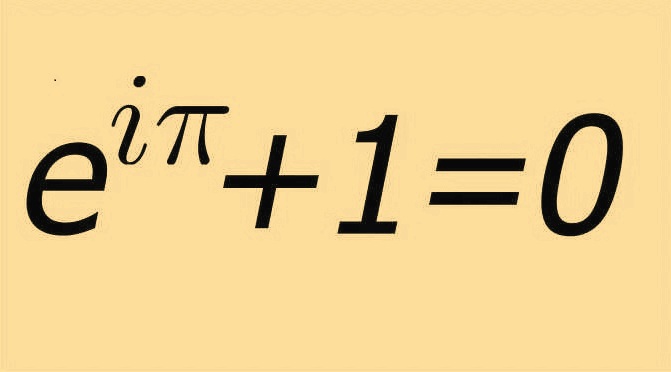
In a single formula appear five fundamental constants: e, i, π, 1, and 0, where i is the imaginary unit, equal to √−1.
This connection is not artificial but profound, built into the very structure of mathematical reality.
Nothing could be more logical than honoring both numbers as they deserve, without calendar forced fits.
Canonicity of e across calendars
Here we refer again to the argument from the article about Pi Day. The beginning of the year is a convention. Different countries and cultures use other calendars either alongside or instead of the Gregorian one: the Hebrew lunisolar calendar, the Islamic lunar calendar, the Ethiopian calendar, the Indian calendars, and many others.
Date formats (month/day or day/month) are even more arbitrary.
The essence of the canonical approach lies elsewhere: what matters is the ordinal number of the day within the year.
Therefore, the Canonical Day of the Number e is the 271st day of any calendar (in analogy with the 314th day for π and the 256th day for Programmers’ Day).
A bit personal, but honest
In the previous article, I admitted that the 314th day of the year is my birthday, and some readers might suspect bias. However, the commonly celebrated Pi Day on March 14 is also personally significant for me: it is the day of my wedding. Moreover, March 14 is the birthday of Albert Einstein, which makes this date especially appealing for mathematicians, physicists, and all lovers of science. So I certainly do not need to change holidays for personal convenience.
Moreover, I have no personal connection to September 28 at all.
Thus the Canonical Day of the Number e (like the Canonical Day of π) is proposed not out of personal motivation, but based purely on mathematical reasoning.
Conclusion
π and e are two pillars of modern science. Each deserves not an arbitrary date, but a date arising from its own numerical essence.
The 314th day of the year belongs to π.
The 271st day of the year belongs to e.
Form and content coincide.
September 28 (or September 27 in leap years) is proposed as the Canonical Day of the Number e.
P.S. Canonical days for the other constants
Following the same logic, canonical days can also be defined for other constants appearing in the famous Euler identity.
December 31 can be recognized as the Canonical Day of the imaginary number i, since this day most naturally corresponds to the number −1, whose square root is i.
January 1 naturally corresponds to the number 1 as the first day of a new count.
The moment of New Year’s arrival (the transition between December 31 and January 1) can be regarded as the Canonical Moment of the number 0, since it marks the transition from −1 to +1 through the zero point.
New Year fits organically into the context of Euler’s identity, linking the calendar with the legendary formula. It unites the principles of growth (e), rotation (i), geometry (π), unity (1), and nothingness (0).
The equation can be interpreted as a metaphysical declaration: from growth (e) and rotation (i), through structure (π), unity (1) emerges from nothing (0).
Thus a complete calendar set emerges for the five fundamental constants united in Euler’s identity:
e^(iπ) + 1 = 0
Numbers and the calendar finally enter a state of perfect harmony.
See Also
Related Topics
Related Posts