
Charlie Kirk wasn’t the only thing lost that day

On the day Charlie Kirk was assassinated, something far greater than a man was lost. It wasn’t only Charlie the husband, father, or leader who died. With him, part of the public square, the battlefield of ideas, was assassinated too.
Charlie’s arena was never the street or the gun. His battleground was the debate stage, the microphone, the sharp yet civil conversation where ideas collided and truth could rise to the surface. He believed deeply that words were the weapons of a healthy society, not violence. As he once said, “When people stop talking, that’s when you get violence. That’s when civil war happens, because you start to think the other side is so evil, and they lose their humanity.” That chillingly prophetic warning has now been carved into history by his tragic death.
What Died That Day
With Charlie’s assassination, we lost more than a man, we lost the very permission to disagree without destroying one another. We lost a defender of the sacred space where differences were not only tolerated, but tested. Where we could confront each other’s beliefs without canceling the person behind them.
This is not just an American tragedy. It’s a global one, especially for us in Israel. Our enemies thrive when free societies collapse into chaos, when we can no longer debate facts, history, or morality without fear. If we cannot argue civilly at home, how can we possibly defend truth abroad? The silencing of voice, through intimidation, censorship, or, tragically, assassination, always benefits those who fear truth most.
A Personal Lesson
I’ll admit something: for a long time, I followed someone on social media whose views drove me crazy. I thought he was toxic, arrogant, and flat-out wrong on nearly everything. But then one day, I met him face to face. And suddenly, everything shifted.
He was still wrong in my eyes, but he was also human. We laughed, we shared stories, and even in disagreement, I saw the person behind the posts. That encounter reminded me of what Charlie lived for: real conversations. When we argue in person, we strip away the venom of the screen and remember that our opponents aren’t monsters, they’re people.
The Jewish Lesson
As Jews, we should understand this better than anyone. Our Talmud is built on argument. Our sages disagreed passionately, sometimes ferociously, yet they preserved every opinion side by side. Why? Because debate is holy. Debate is the foundation of wisdom, of growth, of survival itself.
To kill debate is to kill Judaism’s intellectual heartbeat. And to kill debate in society is to strangle democracy.
The Israeli Lesson
If you ask me, the best living example of healthy debate in Israel is the IDF reserves. Anyone who has ever served there knows exactly what I mean. In the reserves, people feel free to share their opinions openly and respectfully. Soldiers don’t just talk over each other, they actually listen, challenge, and seek truth together.
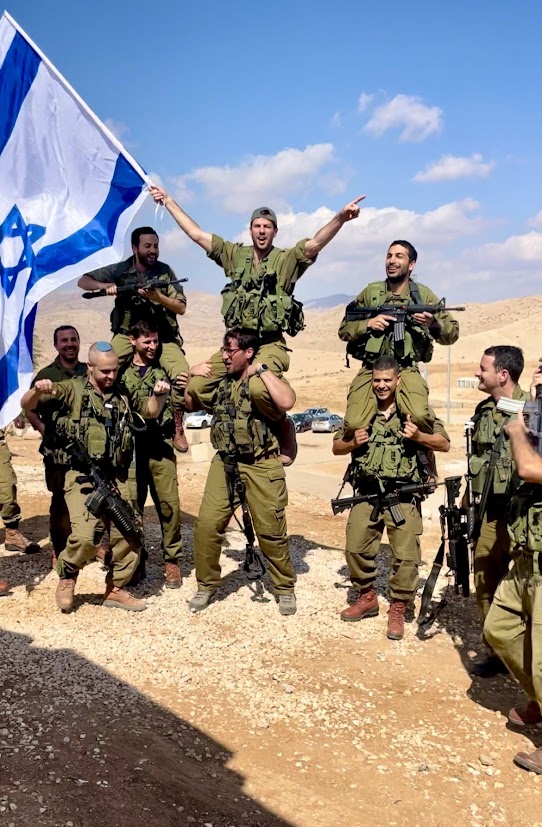
(Photo © Yair Jablinowitz)
It’s a beautiful thing, because the reserves bring together Israelis, Jews and non-Jews, from every part of society. Naturally, that means a mix of perspectives. But instead of shutting each other down, we engage. We argue, we laugh, we wrestle with hard questions, and we walk away with deeper respect.
For me, the reserves are the moral high ground of what debate should look like in a healthy society: diverse voices colliding, but always with dignity and a shared commitment to something greater than ourselves.
What We Must Do Now
This tragic day must be a wake-up call. Violence is never the answer. Social media rage is not the answer. The fake world of algorithms thrives on outrage, but it poisons the real world with hate.
From today, I’ve decided: whenever someone sends me a hate message, I’ll respond with one simple question:
“Are you interested in a serious debate between your views and mine, based on facts and good faith?”
If yes, I will engage. If no, I will block. I suggest we all do the same.
Because the best way to honor Charlie Kirk’s memory is not to weep over the silencing of his voice, but to multiply it. To carry forward his insistence that ideas must clash, not people. That disagreement is healthy, but hatred is deadly.
Charlie Kirk may have been assassinated, but his message has not been. The day the debate died can also be the day we awaken, awaken to the truth that conversation is our only path forward, for Israel, for America, for humanity.
Let us not bury his legacy. Let us live it.