
Checkmate in Tehran
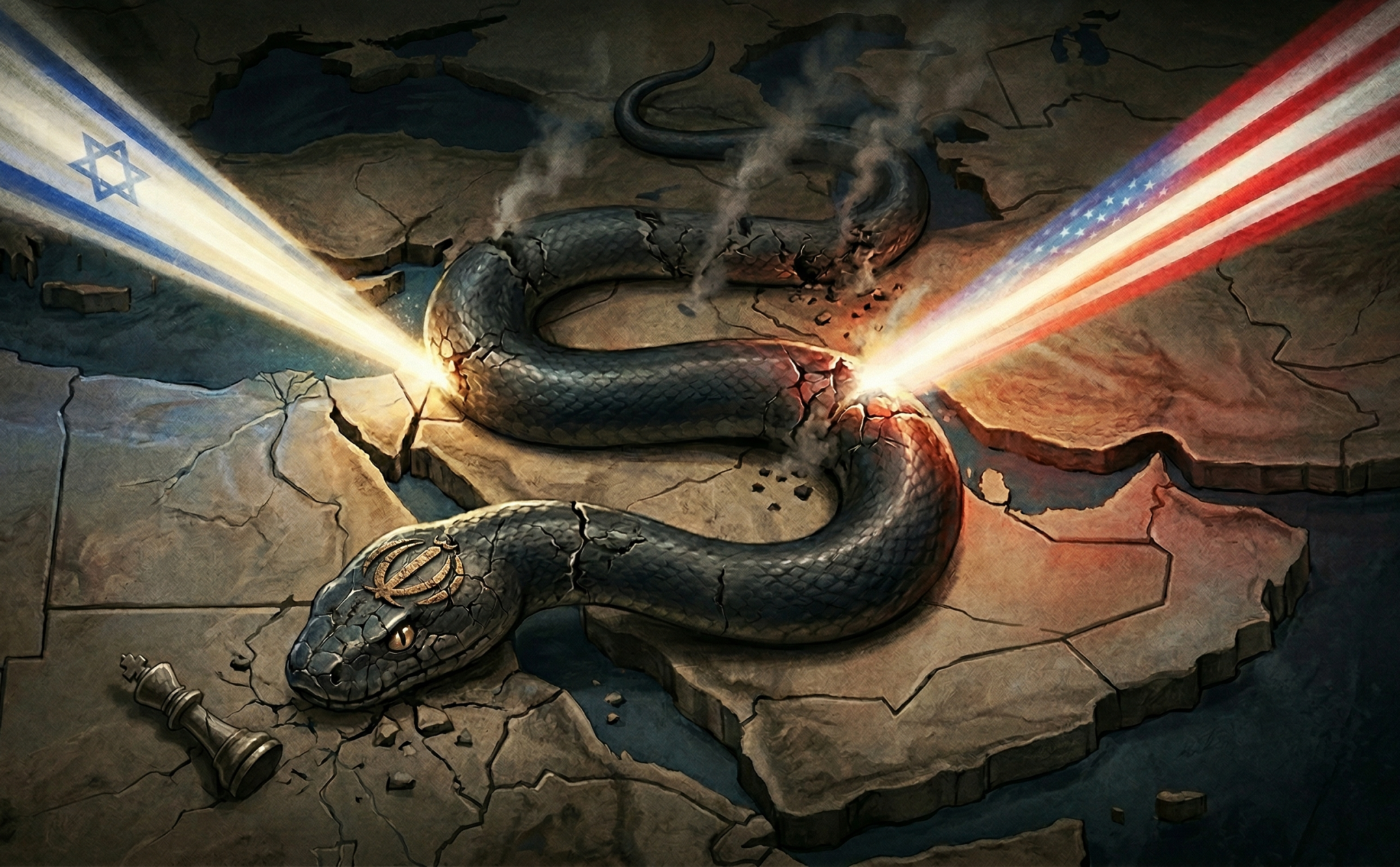
For nearly five decades, the Islamic Republic of Iran ran a sophisticated terror franchise. It armed militias, financed massacres, and strangled its neighbors, all while hiding behind proxies and plausible deniability. Israel warned loudly, and for years. Some listened. Most looked away. Now, the bill comes due.
The waiting is over. What is unfolding in the Middle East is a confrontation nearly five decades in the making, the collapse of Iran’s proxy empire, the forging of a new strategic front, and a struggle for the shape of the world that is only beginning.
I. Decapitating the Snake
Iran’s grand strategy was, in theory, elegant: encircle Israel with a ring of armed proxies, Hamas in Gaza, Hezbollah in Lebanon, the Houthis in Yemen, Assad in Syria, bleed your enemies slowly, and never have to fight the war yourself. For decades, it worked.
Then came October 7, 2023. When Hamas launched its massacre, murdering, raping, and slaughtering nearly 1,200 Israelis in a single morning, the result was not what its architects had planned. It handed Israel, and then the United States, which came in its protection, the political mandate to finish what had long been left undone.
The results speak for themselves. Hamas has been neutralized as a military force, and hopefully it will remain this way until they are disarmed. Hezbollah has been decapitated and degraded. The Houthis’ leadership has been dismantled. Assad is in Moscow. And now, for the first time in the regime’s history, the head of the snake itself, the IRGC and the fundamentalist clerical establishment in Tehran, is under direct, sustained military pressure, and taking hits it cannot absorb.
Supreme Leader Khamenei spent decades positioning himself as the architect of the so-called resistance. He misread everything: the shifting regional landscape, the resilience of his enemies, the catastrophic blunder his proxy in Gaza was about to commit, and the bringing in of its most prized proxy, Hezbollah. October 7 was not a victory for the axis of the so-called resistance. It was its suicide note.
Checkmate.
II. One Mission, Two Armies
What we are witnessing is something military historians will study for generations: the IDF and the United States military operating as a single, seamless instrument, sharing intelligence, coordinating strikes, and executing a campaign that no single force could have achieved alone.
This partnership was not improvised. It was built over decades, shared values, shared doctrine, shared future. It is now delivering results that are rewriting the map of the Middle East. This is what decades of trust look like under fire: two nations, one mission, and a common understanding of the risks they face together.
The enemy they are fighting together never hid what it wanted. The Iranian regime did not whisper its ambitions. It broadcast them, in English as well as Farsi: Death to America. Death to Israel. The order that makes Western prosperity and freedom possible is not self-sustaining, it requires active defense against forces that spent decades openly announcing their intention to destroy it. What is happening in Iran today is not an escalation. It is a response, long overdue.
III. The Fight for the New World Order
Step back further, and the stakes become even clearer.
This is not purely a Middle Eastern story. It is one front in a broader realignment of global power that has been accelerating for years.
The United States and China are engaged in a long-term strategic competition. That competition plays out across trade, technology, and military posture, but also in energy. Locked out of Western markets by sanctions, Iran has been selling oil to Beijing at heavily discounted prices. It is a pragmatic arrangement for both sides. But it means that what happens to Iran has direct consequences for the resources and leverage available to America’s primary long-term rival.
The Middle East and the great power competition are not separate stories. They are part of the same shifting landscape, a world in which the rules, alliances, and hierarchies of the post-Cold War era are being renegotiated. Every shift in the regional balance feeds into that larger contest, whether the players intend it or not.
The free world did not choose this fight. But it is in it. And the Iranian people, who have lived under this regime for nearly five decades, watched their economy looted, their culture suppressed, and their children jailed for daring to imagine a different country, are waiting for an answer too.
What happens next in Tehran will echo far beyond the Middle East. A regime that built its identity on exporting violence and outlasting its enemies is now fighting for survival. That is a moment. Moments pass. The question is whether the free world has the clarity and the will to see this one through.