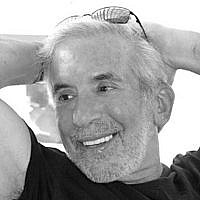
Psychologist exploring memory, identity, and moral courage
Many Banners, One Mishkan, A Tisha b’Av Plea to a Fractured Society
Many Banners, One Mishkan
In 1980, soon after I entered Ohr Somayach in Jerusalem, Rabbi Mendel Weinbach z”l, co-founder and co-rosh yeshiva, invited me to his office.
I was thirty-three, already a psychologist, and beginning to find my way into a religious Jewish life. Rabbi Weinbach looked at me with clarity and kindness and said something I’ve never forgotten.
“Michael,” he told me, “you’re going to fall in love with the scope and beauty of Torah, with Jewish thought, with Shabbat, with the holidays, and with the depth of our tradition. That won’t be your problem. It’s what you’ve been searching for.”
Then he paused.
“The problem,” he said, “will be Jews.”
He didn’t say it with contempt. He said it with the realism of a man who loved the Jewish people enough not to romanticize them.
We are, after all, the people the Torah itself calls stiff-necked. The same stubbornness that helped us survive exile, persecution, dispersion, and war can keep us from hearing one another when fear takes hold.
Forty-six years later, as we approach Tisha B’Av and the disdain between Haredim and non-Haredim over the draft grows more poisonous, I know Rabbi Weinbach was right. Sinat chinam has become so familiar that it may no longer disturb us.
It should.
The rabbis taught that the Second Temple was destroyed because of baseless hatred among Jews. The warning is clear: a people can be threatened from outside yet still be destroyed from within.
I entered the religious world through the Haredi community. I didn’t remain there, but I never fully left it either. I’ve learned there, prayed there, admired and resisted it, and spent much of my professional life listening to its private pain.
For decades, rabbis referred clients to me, including their own children. Hasidic rebbes sent family members. I was trusted with marital struggles, children in crisis, abuse, and wounds rarely shown to outsiders. That proximity taught me gratitude and caution: I have been close enough to see the Haredi world’s humanity and commitment from the inside, yet far enough to see its shadows.
At its strongest, the Haredi world has preserved a distinctive seriousness about Torah: the sense that Torah is not one part of life but the atmosphere in which life is lived. That does not diminish the Torah commitment of the dati-leumi world, where Torah, army, family, work, and public responsibility have been joined in extraordinary ways. But the Haredi world has guarded one indispensable expression of Torah: the insistence that every detail can be brought before the question, what does Torah ask of me now?
I remember a young Haredi man, a serious learner, telling me that while driving he began to ask himself: What is the Torah’s position on speeding? He wasn’t asking whether the police would stop him. He was asking what Torah demands of a Jew behind the wheel.
That question stayed with me. It revealed a life trained to ask: What does Torah want from me here?
That is one of the treasures of the Jewish people.
But appreciation for a world does not require blindness to its failings. I have seen arrogance, dismissal of other Jews, the assumption that Torah belongs to one community alone, and an inability to recognize holiness, sacrifice, and seriousness beyond its own walls.
The Haredi world does not own Torah. The dati-leumi world does not own sacrifice. The secular world does not own courage. These are not tribal possessions. They are parts of a single national soul.
And that is what is being torn apart.
The anger in the dati-leumi and secular worlds is real. It shouldn’t be dismissed as anti-Haredi hatred. Much of it stems from grief, exhaustion, reserve duty, wounded soldiers, and bereaved families whose homes will never be whole again.
A religious soldier who rises early to study Torah, prays with a rifle beside him, serves in Gaza, and then returns to reserve duty is entitled to ask: Am I not a ben Torah? Is my learning less holy because I wear a uniform?
A secular medic who risks his life to save wounded soldiers may ask: Don’t I have a place among the Jewish people, even if I don’t speak the Beit Midrash’s language?
These questions cannot be dismissed.
But neither can the Haredi father’s fear be ignored. He fears the army will not merely take his son’s time but his soul. He fears the erosion of religious identity, rabbinic authority, modesty, family structure, and the continuity of a world built on Torah. The IDF has never been only a military institution in Israeli life. It has also been a central instrument of national integration, a “people’s army” in which different groups were meant to become part of a single Israeli story.
That fear deserves to be heard, but it cannot be the only truth. The need for soldiers is not merely a demand for equality. It is pikuach nefesh. Soldiers and reservists are protecting Jewish lives, sometimes at the cost of their own. Haredi soldiers already serve in frameworks designed to preserve their religious way of life. Their courage deserves honor within the Haredi world, not suspicion.
Haredi fear can be the starting point for serious solutions, but it cannot serve as a permanent exemption from the fate of the Jewish people. The question is whether we can honor each tribe’s fear without allowing any tribe to stand apart from the whole.
The Torah offers an image of that whole. In the desert, each tribe camped under its own banner. The Torah didn’t erase differences. It organized them around the Mishkan. There were many banners, yet one shared center. That is the image we have lost.
The Haredi banner isn’t the Mishkan. The dati-leumi banner isn’t the Mishkan. The secular Zionist banner isn’t the Mishkan.
So what is our Mishkan today?
It is not one institution, party, rabbi, court, army unit, or ideology. It is the shared covenant at the center of Jewish life: survival, Torah, the sanctity of human life, Israel’s burden in Jewish history, mutual sacrifice, and responsibility for one another even when we do not understand one another.
That is the center toward which all our banners must face. If we do not still share that center, no draft law will heal us.
As a psychologist, I have spent my life observing how pain narrows people. Fear, trauma, and grief can make a person morally tunnel-visioned. So can a nation. A traumatized people can become a collection of wounded tribes, each certain that its wound is the only one that matters.
That is where we are in danger of heading.
The question before us is not whether Torah or the army is more important. That question is poisonous. The question is how the Beit Midrash and the battlefield can recognize their need for each other.
During the war against Amalek, Yehoshua fought below while Moshe stood above with his hands raised. The Mishnah teaches that Moshe’s hands didn’t win the war by magic. Rather, they directed Israel’s heart toward Heaven.
But Moshe’s raised hands did not exempt the camp from battle. Yehoshua still had to fight. Neither could replace the other. Moshe’s role was not a model for mass withdrawal from the battlefield; it was a reminder that battle itself must be joined to Heaven.
That is the point. The Beit Midrash cannot say to the battlefield: “I have no need of you.” The battlefield cannot say to the Beit Midrash: “You are nothing.”
But mutual recognition cannot remain abstract. If Torah learning is to be called service, it must be visibly bound to those who serve with their bodies. It must know their names and carry the wounded, the bereaved, the hostage families, the exhausted reservists, and the parents who wait for a knock at the door.
Torah learning sealed off from the fate of Am Yisrael may be learning, but let’s not mistake it for Ahavat Yisrael.
To the great Torah leaders of the Haredi world, I say this with respect: Don’t think only of protecting your sector. Think about your nation’s sickness. Think about how the Beit Midrash can help heal Am Yisrael without surrendering its soul. If the state is asked to help sustain Torah, Torah leaders must also ask how that Torah helps sustain the state and the people who defend it. Public support creates reciprocal responsibility.
I am not asking you to harm the world of Torah. I am asking you to help save the Jewish people from becoming enemies of one another. I am asking you to lead not only your camp but all of Am Yisrael.
To my own dati-leumi world and to the secular Israelis whose sons and daughters have borne so much, I say: Be honest about the costs Haredim will bear. Military service has been part of your life since childhood. For Haredim, it has never been part of their culture. The change we demand is necessary, but it is not small. And those Haredim who already serve should not be treated as failures by their community or symbols by ours. They are human beings trying to bridge worlds.
I don’t write this because I believe I have authority over anyone. I write because I have spent a lifetime listening to Jews in pain, have lived in more than one Jewish world, and have come to Israel not to watch Jewish history from the sidelines but to share responsibility for it.
I’m now almost eighty years old. I don’t need another argument or my name attached to a solution. But I cannot remain silent while Jews devour one another with words, and sometimes with fists.
Before the Romans breached our walls, something within us had already broken. I fear the same now.
The walls around us matter. Iran matters. Hamas matters. Hezbollah matters. But the walls within us matter too.
If we cannot recover a shared center, our banners won’t protect us. They will divide us. And if the Beit Midrash and the battlefield cannot recognize each other as part of the same people, we will have forgotten why the Mishkan stood at the camp’s center.
As Tisha B’Av approaches, I don’t know for certain how to resolve the draft crisis. But I know this: if we cannot honor Torah not only by learning it but also by living its command to love our fellow Jew; if we cannot demand responsibility and protect conscience, then the walls we should fear most are not only those around us.
They are the walls breaking inside us.
Related Topics
Related Posts