Chomsky, Epstein, and Me: How I Changed My Mind About Israel
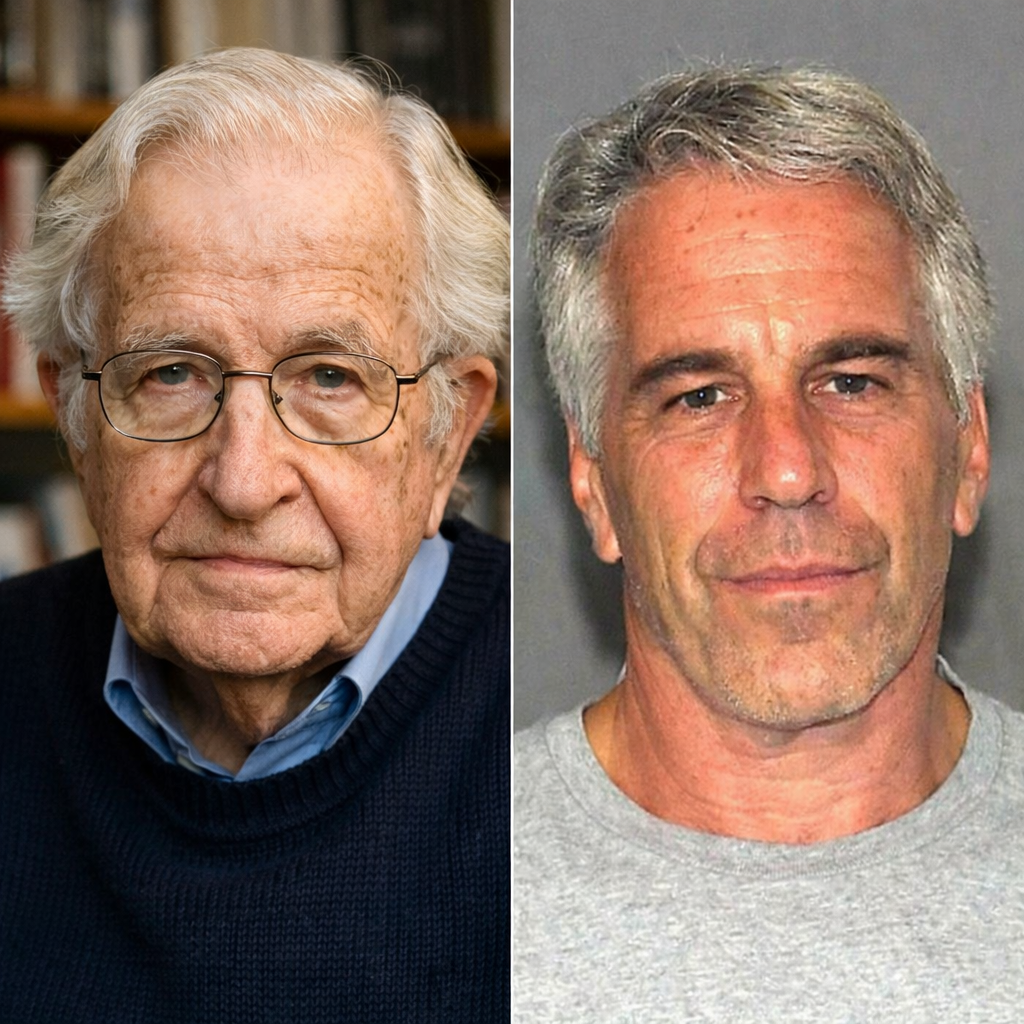
Left: Noam Chomsky (Wikimedia Commons). Right: Jeffrey Epstein mugshot (Florida Department of Law Enforcement).
When your old intellectual hero gets exposed for his friendship and advice to a convicted rapist and sex trafficker.
There I was in Noam Chomsky’s office. We were laughing about how we both disliked Sam Harris, how Marx was right about religion, and how tragic the assassination of Bishop Oscar Romero was.
I asked him about his introduction to leftism and anarchism. He told me about his parents and his childhood memories of hanging out at a family-owned newsstand in NYC. He said it was full of communist and socialist literature he would pore over. Our 45-minute conversation seemed like a blink of an eye. It wasn’t for the anxious CNN journalists he told to wait, so he could talk philosophy with a random student like me. I remember it being the highlight of my year. He was friendly, warm, and funny.
As I was leaving, I thought to myself: “I just hung out with Noam Chomsky. I NEED to get a picture with him. People might not believe me.”
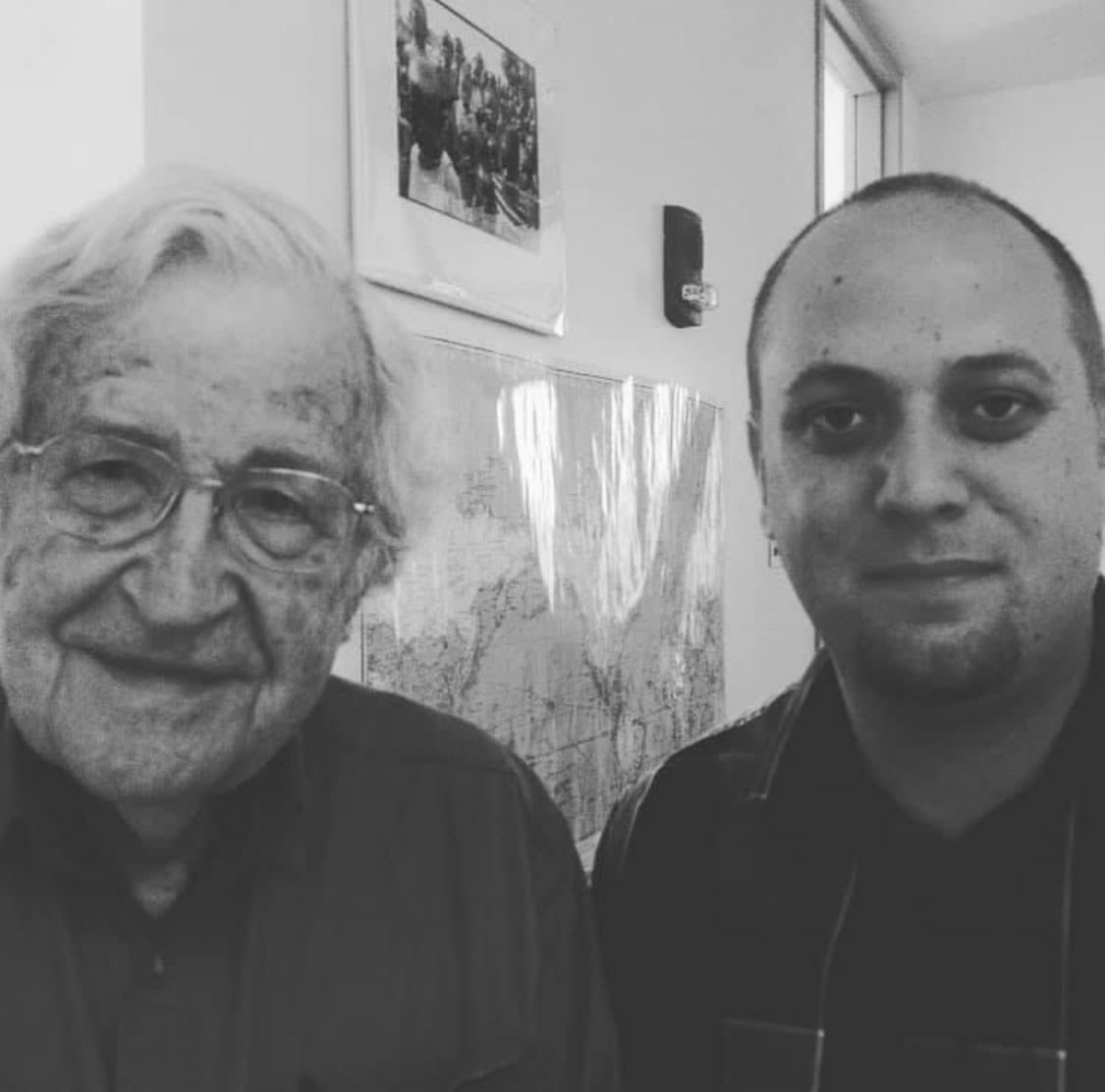
Screenshot: Noam Chomsky and I, at his M.I.T. office in Cambridge, MA.
I was a bit of a fan. I read most of his work and listened to almost all of his talks and interviews. There was something about the way his mind worked that truly impressed me.
That’s where it ended.
I had hammered in all the leftist literature I could grab with my sickle. I was a Communist at the time, and while I knew there were antisemitic issues in the movement, I figured they either had the theory wrong or implemented it incorrectly. I certainly didn’t want to see a perspective I held lend itself to antisemitism.
It’s been years since that surreal conversation with Chomsky, and since then, I’ve changed most of my political views, but I still continue to value some leftist critiques.
Except in one area.
I had generally agreed with antizionism. To my shame, I never spent much time studying Zionism. I learned about it from its opponents. I’m fairly certain the current protestors have as well. I viewed the state of Israel as an illegitimate colonial project that oppressed Palestinians. “Zionism”—a pejorative in leftist circles for an Imperialist, expansionary system—was considered a serious problem in the world.
Shortly after October 7th, the groups I identified with — ones that spoke regularly about justice, oppression, and moral responsibility — seemed strangely comfortable looking the other way when Jews were being harassed. Even worse, they often condoned it. That’s why I’m writing this today, and a reason I couldn’t stay. I saw people share Inglorious Basterds memes one week, and chant “From the River to the Sea” the next. I didn’t want to be that.
I saw that the same people who treated principles as absolute towards Israel, often considered them flexible elsewhere.
It was towards the end of deconstructing my beliefs about Israel that I came across reports of Chomsky’s friendship with Jeffrey Epstein. There he was, on a private jet, looking quite comfortable with a rapist. I was shocked. Here was my old hero, laughing with the Devil himself. It sounds weird, but I felt a little betrayed. What came to mind was how he could rationalize a relationship with the incarnation of what he claimed to oppose most. I know better than to trust famous people. I’m not entirely naive; I guess I wanted to believe that some people held to their values.
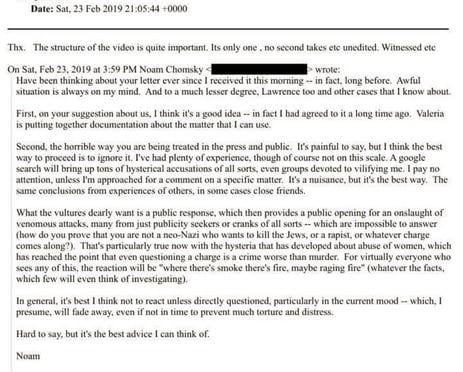
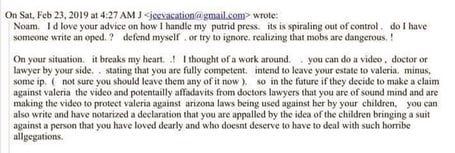
A February 2019 email shows Chomsky counseling Epstein on dealing with his “putrid” reputation, commenting on the “horrible way” Epstein had been treated by the media, and advising him to ignore it. Had I known this was the person I was looking up to, and excited that I met, I would never have gone to M.I.T. I started thinking about all the harsh statements he’s made about Israel—how it’s worse than Apartheid, run like the Mafia, and genocidal. I was relieved that I no longer believed such nonsense.
I thought about the double standards Israel faces and how frustrated Jews must feel seeing it all the time.
Egyptian border closed? National security. Israel’s closed? Open-air prison.
Collateral deaths during war? Tragic. When Israel has them? Genocide.
States built on religious identity? Context matters. Israel is Jewish? Ethnostate.
National movements formed through war? History is complicated. Zionism? Colonizers.
I also noticed how language works differently when applied to Israel. Somehow, Jews are white, the indigenous are colonizers, and refugees are imperialists. It’s what I refer to as the “Inverted World.” It’s an antizionist reconstruction of an entire people, designed to portray them as their enemy, and demonize their character. A detailed lexicon of words and phrases, loaded with destructive power, and constantly repeated. It’s insidious, and unfortunately, it works.
As I mentioned in an earlier post, I no longer believe Israel is an illegitimate colonial project or an Imperialist expansionary system. It’s the land and home of its indigenous people. A people who make me feel at home as well. I said goodbye to Chomsky and antizionism; it’s about time I say hello to Zionism.
Source: Email published in reporting on Epstein court filings (e.g., Wall Street Journal / released documents).
About the Author
Kile Jones researches and writes on modern antizionism, history, and the uses of language, working alongside the Jewish community to fight Jew-hatred. He holds two master’s degrees, an M.T.S. and S.T.M. in Religious Studies, from Boston University. A long-time bridge-builder, Jones has created interfaith programs and projects including “Interview an Atheist at Church Day,” and founded and edited the Claremont Journal of Religion at the Claremont Colleges. His work has appeared in philosophy, religion, and society publications, including Philosophy Now, The Humanist, The Routledge Guide, and Free Inquiry. He writes at The Inverted World: kilejones.substack.com.