Vice-Chair, Hadassah's National Educators Council
Choosing to Be an Upstander
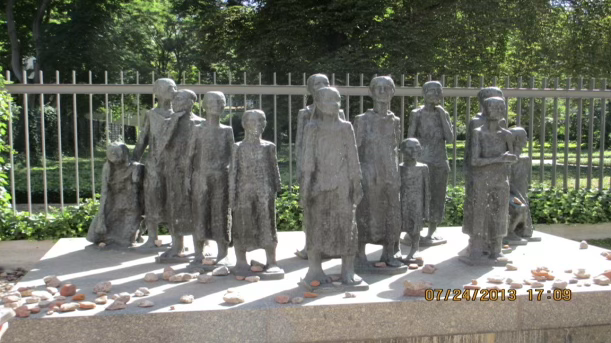
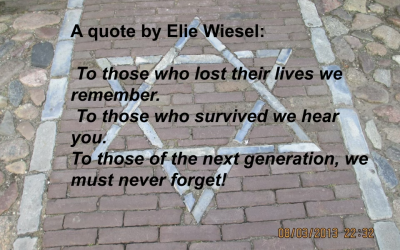
Holocaust Memorial at the Jewish Cemetery in Berlin, Germany. Photo taken by author Paula Mann.
Attending a recent panel discussion on book banning presented by Hadassah’s National Educator’s Council, where I serve as vice chair, struck a deeply personal chord in me. The topic resonated not only as a matter of policy, but as a lived experience, deepening my empathy for students, educators, librarians and families affected by these efforts and strengthening my commitment to be an upstander in the fight against book banning.
Not long ago, I participated in a two-day professional development conference at a New Jersey university focused on exploring how the study of texts can lead to peaceful solutions to global conflicts. The format was thoughtful: educators examined selected readings, identified the roots of various world dilemmas, discussed what perpetuated them and considered how peace might be achieved. The conversations were lively and intellectually engaging.
When the Israeli Palestinian conflict arose, I was eager to see how the texts would frame the issue and what solutions might emerge from our discussions. But as I read more closely, I noticed troubling factual inaccuracies and inconsistencies regarding the Middle East. In one supposedly current textbook, Jews were referred to not as Jews, but as Hebrews, an outdated and peculiar choice for a modern educational resource.
I began to question why these particular texts had been selected, especially when they appeared to misrepresent Israel’s perspective. If educators relied on these materials, their students would inevitably receive incomplete or misleading information.

Concerned, I contacted the New Jersey Commission on Holocaust Education. The director responded promptly, sending me alternative, well-vetted texts that presented a more accurate and balanced view. At the following session, I spoke privately with the professor, who graciously invited me to address the class. I shared specific examples of inaccuracies, citing page numbers and distributed a list of recommended resources. The professor and my colleagues responded appreciatively.
Later, I learned that the original texts were rooted in an explicitly anti-Israel philosophy. That experience reinforced an important lesson: When we encounter red flags in educational materials, we must speak up and offer constructive alternatives.
I faced a different but related situation while teaching middle school language arts in a New Jersey public school. One of my eighth-grade students, George, who had dyslexia, had never read a book cover to cover. One day, he discovered The Hate U Give by Angie Thomas on the library shelf. It was appropriately placed for his age group, though it contains mature language.
Before he began reading, I called his mother to discuss the book. I wanted her to be aware of its content while also sharing my excitement that George had independently chosen a novel. She was grateful for the call and asked for two copies to be sent home. Together, mother and son read the book. They both loved it. For George, it was a breakthrough, his first completed novel. Respect, communication and partnership turned that moment into a powerful success story.
Today, that same book has been banned in some communities. We must ask ourselves: Why?
Another moment tested my resolve in a different way. While walking my dog one afternoon, I noticed a swastika carved into a sidewalk in a new residential development. My stomach tightened. I had never felt more vulnerable as a Jew than I did seeing that symbol of hate in my own neighborhood.
I photographed it and went to the police station to file a report. Unsatisfied with a passive response, I proceeded to the township zoning office and insisted that the slab be removed. I referenced the work of the Anti-Defamation League and made clear that our community could not tolerate such visible hate. Within days, the swastika was covered. Within a week, the slab had been replaced entirely.
Hate had been erased because someone chose not to ignore it.
I share this story when teaching about the Holocaust in religious schools and community programs. Students often ask what they can do if they encounter antisemitism or other forms of hate. I tell them: Education is empowerment. Use your voice. Trust your instincts. Be an upstander, not a bystander.
I once had a student named Chris who ran into my classroom, breathless, to report a swastika etched into a library table. He had already informed the librarian. A report was filed, and the tables were removed. Our school adopted a new motto: “Hate Has No Place Here.”
These experiences, challenging inaccurate texts, partnering with parents, confronting hate symbols and empowering students are bound by a single theme: proactive courage. Whether addressing book banning, antisemitism or misinformation silence allows harm to spread. Action interrupts it.
As Hadassah encourages, we must gather the facts, understand the motivations behind decisions and advocate thoughtfully and persistently.
Here are ways to take action:
- Write letters or organize a letter-writing campaign.
- Connect with like-minded organizations.
- Submit Letters to the Editor or op-eds to local newspapers.
- Attend rallies, marches, and public forums.
- Speak out on social media.
- Participate in school board, city council, PTA, and town hall meetings.
- Contact local, state, and federal officials.
- Consider running for your local school board or another office
Each of us has a voice. Each of us has agency. The question is not whether we will encounter moments that test our values, but whether we will choose to stand up when we do.
Related Topics
Related Posts