I write what I see
Cities Are the Easy Part
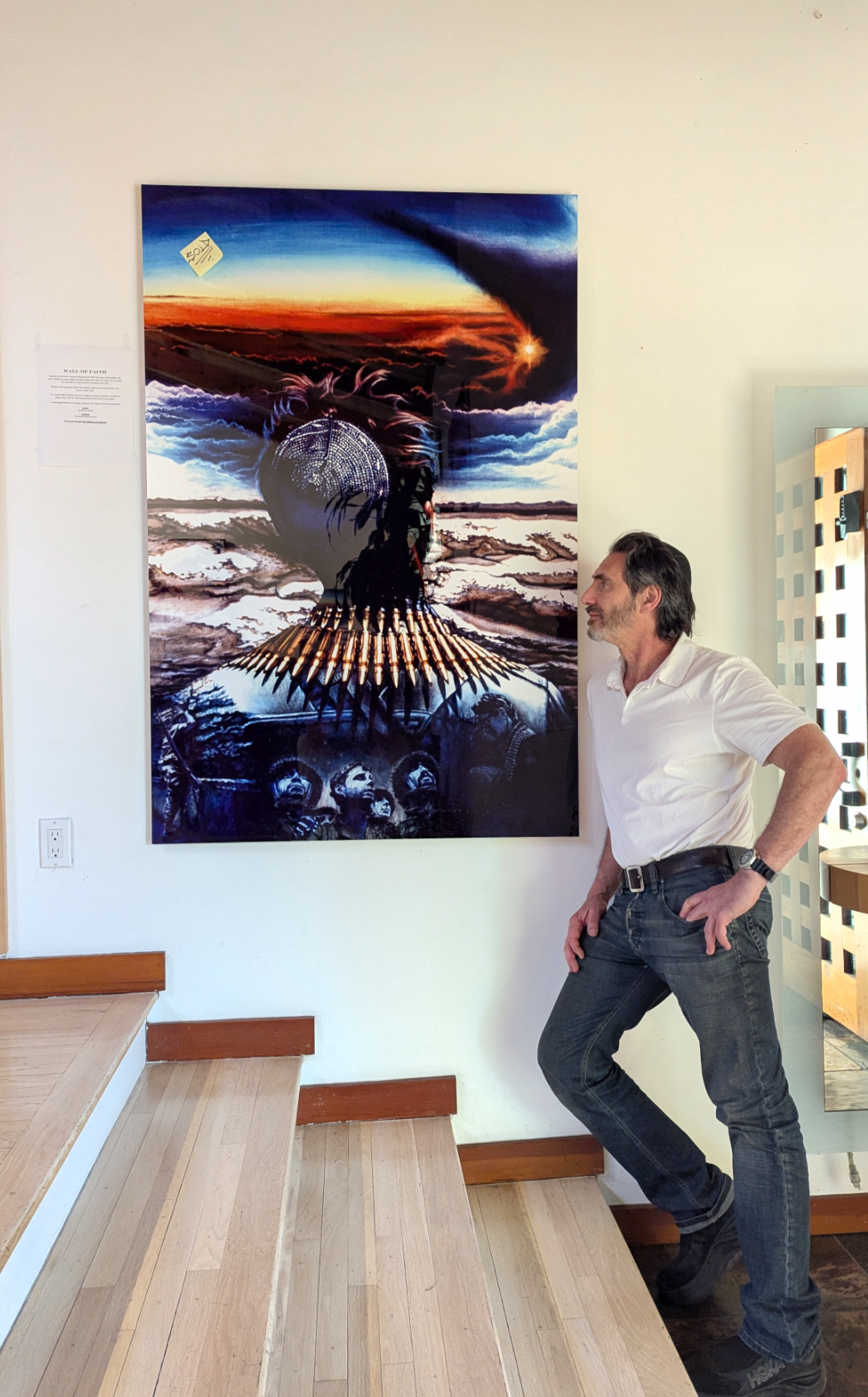
"Wall of Faith" by Joe Yuss Simon. The painting was donated and auctioned to raise funds for the IDF Widows and Orphans Organization, which supports the spouses and children of Israel's fallen soldiers. (Courtesy Ilana K. Levinsky)
They say time heals all wounds, and at first glance it sounds very comforting. However, it is also one of the greatest misunderstandings about grief.
Time may soften grief’s sharpest edges, but it does not erase the empty chair at the table, the voice you no longer hear, or the future that disappeared with a single knock on the door.
History teaches us that rebuilding after war is not primarily about rebuilding cities. Because cities are the easy part. Buildings will rise again from rubble, bridges can be reconstructed, roads can be repaved and with time economies will recover. The reality is that with people it’s harder. We already know this.
After World War II, much of Europe focused understandably on physical reconstruction. Yet some of the deepest wounds left by the war were carried not by nations but by children. Millions of orphans and fatherless children grew up navigating loss, displacement, uncertainty, and trauma. Among them were thousands of Jewish children who survived the Holocaust only to discover that no parents were coming home. The world eventually learned that rebuilding lives required far more than food, shelter, and economic recovery. It required restoring hope, dignity, community, and a sense of belonging.
The greatest challenge facing post-war societies was not simply restoring what had been destroyed, but ensuring that an entire generation did not grow up feeling abandoned by the world around them.
This lesson remains relevant today.
Every war creates casualties. Less visible are the lives permanently altered long after the fighting ends—the widows forced to build a future they never imagined and the children who must grow up without the parent they lost. Israel knows this reality all too well.
We mourn the fallen, we honor their sacrifice, and we speak their names and promise never to forget them. We show up at yearly ceremonies. Remembrance is only the beginning. Ultimately, a society is measured not by how it commemorates loss, but by how it responds to those who must continue living with it.
Governments have an important role to play, and Israel provides support to bereaved families. Yet no government program can fully address the emotional and social challenges that accompany profound loss. For me this is not a political issue but rather a human one about bereaved families whose stories did not end the way they were supposed to.
We live in an age of compassion fatigue. Every day presents another worthy cause, another tragedy, another appeal for help. Most of us care deeply, but the sheer volume of suffering can leave even the most compassionate people emotionally overwhelmed.
Yet some causes deserve particular attention—and it is definitely not because their pain is greater than anyone else’s, but rather because their sacrifice is inseparable from the story of the nation itself.
Recently, I was given a glimpse into the work of the IDF Widows and Orphans Organization, which is committed to honoring the legacy of Israel’s fallen soldiers by supporting the families they left behind. The evening took place in Los Angeles and was organized by artist Joseph (Joe) Yuss Simon, whose dedication to the cause brought together a community determined to make a difference. Joe not only organized the event but also donated one of his own works of art to be auctioned, transforming creativity into meaningful support for families whose lives have been forever altered by loss.
I was honored to speak at the event, sharing my own perspective as someone who understands that for many Israelis and Jews around the world, loss is rarely a distant concept. It is woven into our collective story through military service, terrorism, war, or simply through the connections that bind families and communities together. Most of us know someone whose life has been forever changed by tragedy, so when I shared my experience of what this meant for me, I did not speak as an expert on the topic, far from it, only as someone who understands that behind every headline is a family learning to navigate a future they never expected.
Members of my extended family, the Ron family, were murdered in the Matza restaurant suicide bombing in Haifa. Their deaths forever altered the lives of those who loved them and taught me something that statistics and headlines never can: tragedy does not end when the news coverage ends.
For bereaved families, grief becomes part of the landscape of everyday life. The most difficult period is often not the immediate aftermath of tragedy, when support arrives from every direction, but the months and years that follow, when life resumes for everyone except those learning to live without someone they loved. This is what makes the work of the IDF Widows and Orphans Organization so important.
Under Danny Elbaum’s leadership, the organization has helped bring greater awareness to a responsibility that often receives less attention than it deserves. Its mission is not simply to provide assistance, but to honor the legacy of Israel’s fallen soldiers by standing beside the spouses and children they left behind.
That mission recognizes a profound truth that while a nation can never repay the debt it owes those who gave their lives in its defense, it can ensure that their families are not left to navigate the future alone. Perhaps the most meaningful way we can honor those who made the ultimate sacrifice is by caring for the families they loved most. Had these soldiers lived, they would have continued protecting, supporting, and providing for their spouses and children. In their absence, that responsibility belongs to all of us.
As I listened to Danny speak about the organization’s work, I was reminded of the lesson history has taught repeatedly: societies are ultimately judged not by how they mourn their dead, but by how they care for the living. The widows and orphans of fallen Israeli soldiers did not choose this path, yet every day they find the courage to move forward.
The least we can do is make sure they never have to do so alone.
*If this article resonated with you and you would like to support the work of the IDF Widows and Orphans Organization, you can learn more or make a donation here:
Related Topics