
99.6% Ashkenazi + .4% Viking = 100% Zionist
Clicks: 1, Truth: 0
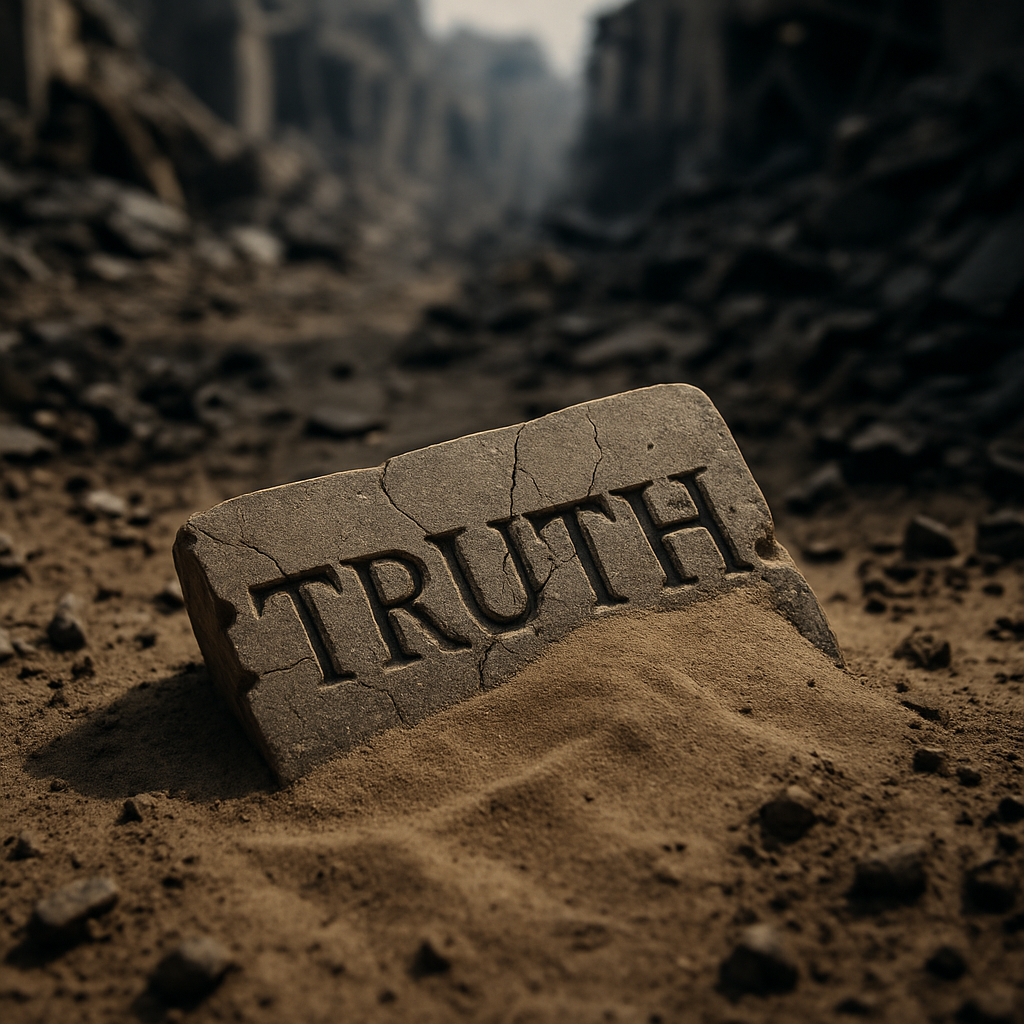
Burying the truth
“How Misleading Headlines About Gaza Turn Propaganda Into “News”
You’re not alone if you’ve noticed a disturbing pattern in media coverage of the war in Gaza: bold, declarative headlines that appear to report facts—but only if you ignore the footnotes.
Take the recent reports alleging that dozens of Palestinians were killed by Israeli fire while waiting for food aid. Headlines across major platforms—Reuters, AP, The Washington Post, The Guardian—stated variations of:
“Dozens killed as Israel fires on Gazans waiting for food.”
A shocking claim. An emotionally charged image. A guaranteed click.
But open the article and start reading, and somewhere in paragraph two or three, you find a small but crucial caveat: “According to the Gaza Health Ministry.”
Some go a step further: “According to the Hamas-run Gaza Health Ministry.”
But by then, the damage is done. The headline has traveled around the world. The context? Forgotten, ignored, or never even seen.
The Power of the Headline
Headlines matter. They’re not just a preview—they’re often the only thing people read. A 2016 Columbia University study found that nearly 60% of links shared on social media are never clicked. The headline becomes the narrative. It gets quoted, repeated, even chanted. It enters the bloodstream of public opinion without ever facing scrutiny.
So when a headline presents an unverified claim from a terrorist organization as fact, that’s not journalism—it’s propaganda laundering.
The Gaza Health Ministry is not an independent health authority
Let’s be clear: the so-called Gaza Health Ministry is not a neutral, independent health authority. It is run by Hamas, a U.S.- and EU-designated terrorist group that:
- Uses hospitals to store weapons
- Embeds fighters among civilians, and
- Does not distinguish between combatants and civilians in its death tolls
In any other context, responsible reporters wouldn’t touch such a source without caveats, corroboration, or skepticism. If a headline read:
“Ukraine Kills 40 Russian Civilians, Kremlin Says”
…you’d hear immediate pushback: “Says who?” And rightly so.
But when it’s Hamas? The press shrugs. The standard suddenly changes. We pretend it’s a credible source because it’s the only one available—and in doing so, journalists risk becoming mouthpieces for terror.
False Balance Is Not Fairness
Some argue that quoting the Gaza Health Ministry is necessary because they’re the only ones reporting from the ground. Fine. Quote them. But don’t canonize them. Report what they say—but don’t make it your headline. That’s not reporting facts; that’s elevating one side’s narrative to the level of presumed truth.
What’s worse, many outlets fail to include that:
- Israel denies the claims outright
- Hamas has a clear motive to fabricate casualty numbers
- Aid convoys are often ambushed by Hamas fighters, who seek to control distribution for propaganda or black-market resale
These omissions don’t serve truth. They serve spectacle.
This Isn’t Journalism. It’s PR.
This isn’t news—it’s a megaphone for Hamas. When you blast an accusation from a belligerent party in a war, without context, and with all the weight of your platform’s credibility behind it, you’re not reporting—you’re amplifying.
And when that amplification drives clicks, shares, and ad revenue, what we’re really witnessing is journalistic integrity for sale.
Let’s not pretend otherwise. There’s no valor in being the first to push out a shaky claim if it turns out to be false—or weaponized. And there’s no honor in rewriting headlines two days later, after the damage is done and the world has already moved on.
What You Won’t See in the Headlines
A video began circulating recently—one you probably haven’t seen on the front page. It shows hundreds of Gazans rushing toward an aid truck, desperately gathering food. Israeli soldiers, guns at the ready, are visible in the foreground. Tense, right? But then something remarkable happens:
The people turn to the soldiers… and cheer. They clap. They wave. Not in defiance—but in gratitude. In relief. In what can only be described as a fleeting moment of shared humanity, even brotherhood. Israeli soldiers oversaw the delivery, not to intimidate—but to protect.
That’s newsworthy. That’s powerful. But it doesn’t fit the preferred narrative. It doesn’t enrage. It doesn’t go viral. So it doesn’t make the cut.
Meanwhile, in a Palestinian Christian village in the West Bank, a church was set ablaze. The early narrative, predictable as ever, pointed to violent Israeli settlers. But an independent report told a different story:
A young shepherd boy claimed to witness Palestinians setting the fire. He ran to alert nearby Israeli farmers—yes, settlers—who rushed to the scene with fire extinguishers in hand. They weren’t the arsonists. They were the first responders.
Video footage backs the account. But again, don’t hold your breath for saturation coverage. It’s not “clicky” enough. It lacks outrage, villainy, simplicity. And so, it slips through the cracks.
A Better Way to Report
Let’s say the facts are unclear. A responsible headline might read:
“Dozens Reported Killed Near Gaza Aid Trucks—Hamas Blames Israel”
That phrasing communicates:
- That the numbers are unverified
- That the source is not neutral
- That Israel disputes the claim
That’s not spin. That’s what balance looks like. It acknowledges complexity. It encourages readers to think critically. In short, it does what journalism is supposed to do; what journalism used to do.
The Real Score
In today’s media ecosystem, headlines chase clicks the way moths chase flames. Accuracy takes a backseat to virality. And when the subject is war, those headlines don’t just mislead—they inflame, distort, and serve the enemy’s goals.
Let’s be blunt: a misleading headline is a win for Hamas. Every time their narrative is repeated without question, they gain legitimacy. Every time a terrorist-run ministry is treated as an official source, the line between propaganda and truth gets blurrier.
So here’s the updated scorecard after this latest round of headlines—and after the stories that were buried or ignored:
Clicks: 1
Truth: Still 0
Related Topics
Related Posts