
Climate Change at My Doorstep
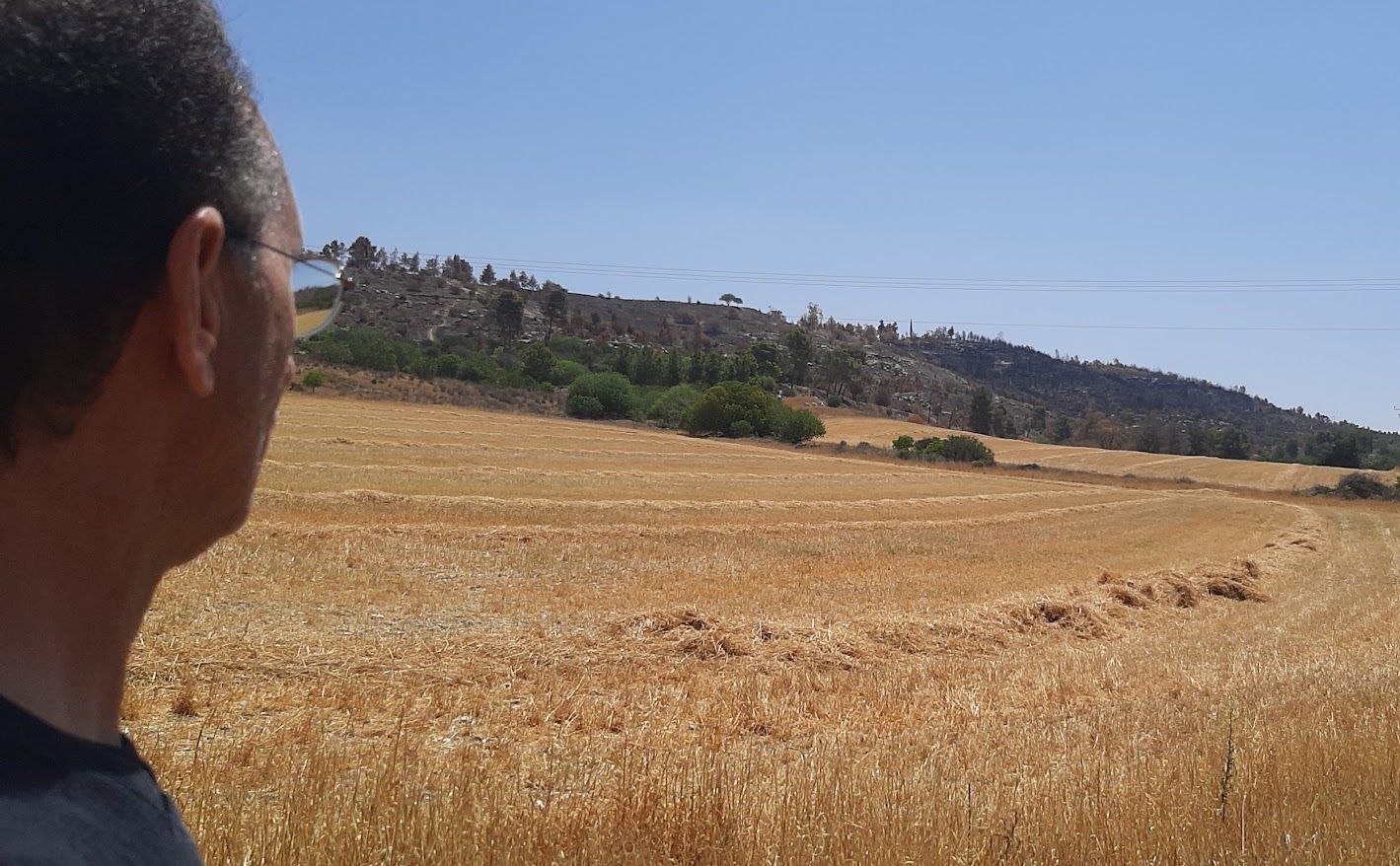
I don’t need data to remind me of the climate change threat. That task was handled quite well by the April 30 blaze near my home in the Judean Hills region. For the first time in our lives, my family readied backpacks in case we had to flee.
The fact that the fire occurred two months before the official beginning of summer dovetails with by-now familiar climate warming forecasts: less rain, more droughts, hotter days, drier – and hence more flammable – vegetation. No wonder the International Association of Fire and Rescue Services’ annual report ranks Israel fifth out of more than 80 countries in wildfires per capita.
But the dangers stemming from climate change go far beyond forest fires. They encompass a wide range of other vital issues, such as food security, which I last wrote about here four months ago.
My focus back then was on the aftermath of the October 2023 Hamas invasion that left border farms evacuated and vast swaths of agricultural land destroyed. This, in a region where local agriculture had previously accounted for about 60% of the country’s food supply.
Together with Israel’s other vulnerabilities, the attack also exposed weaknesses in the food security area. While relevant challenges in this sphere have always included a reliance on global imports and foreign labor, climate change has now surpassed them as the greater danger.
The Agriculture Ministry expects climate change to significantly cut agricultural yields in the foreseeable future. This forecast is already reflected in its recent ask from the Treasury for 400 million shekels to compensate farmers for this year’s drought-related economic damage, estimated at 287 million shekels. In the coming decade, the amount is anticipated to reach some 1.5 billion shekels.
As that process unfolds, by 2050 the country’s population will hit 16.5 million (from almost 10 million today). This could lead to a 65% rise in food demand.
There is no mystery about where the challenge of climate change is headed. The question is: are we doing enough about it?
In recently unveiling Israel’s inter-ministerial National Food Security Plan 2050, the Agriculture Ministry provides at least a partial response to that question. Its 2.5-million-shekel program’s multi-faceted goals focus on long-term resilience, production and import capacity, food availability, as well as diets that are both sustainable and healthy.
The Ministry’s new plan is not the only indicator of how the challenge might be tackled.
Consider, for example, the 2024-25 Climate Tech Status Report issued jointly, just days after the fire was brought under control, by the governmental Israel Innovation Authority and the non-profit PLANETech. According to the document, 946 climate tech companies — including 49 new ones– have been active in Israel during the past year.
The report indicates that while investments in this sector fell by about 39% between 2023-24, more than 90% of the funding rounds that did occur involved international investors. The Innovation Authority also increased its own investments in 2024 to a record sum surpassing 372 million shekels.
Perhaps all this tech activity will offer medium- and long-term solutions to the challenges posed by climate change. There is no substitute, however, for government perseverance.
The reality in this context is best illustrated by the Environmental Protection Ministry’s first-ever “Biennial Transparency Report,” which reflects the status of Israel’s work to address the climate crisis. Submitted to the UN in late April, the Ministry acknowledges that Israel is expected to achieve only a 19% reduction in greenhouse gas emissions by 2023, short of its international commitment of 27%.
Not giving up, the Ministry continues its activities on the ground. These include its recent announcement that a new Negev facility for recovering energy from waste will be built. The project is designed to reduce landfill in the south and will be implemented through a public-private partnership.
At the end of the day, results are what count – and they don’t always paint a pretty picture.
This clearly emerged from the findings of the State Comptroller’s May report examining implementation of the 2019 government resolution to integrate the UN’s Sustainable Development Goals into Israel’s policy. Bottom line: despite good intentions at the start, the resolution has not been implemented to the extent envisioned back then.
As the April 30 fire near my home proves, the challenges posed by climate change must be met with urgent and concrete action. The Agriculture Ministry’s new food security plan demonstrates that where there’s a will, there’s a way.