
Could Putin Use a Low-Yield Nuclear Bomb at Chernobyl to End War with Ukraine?
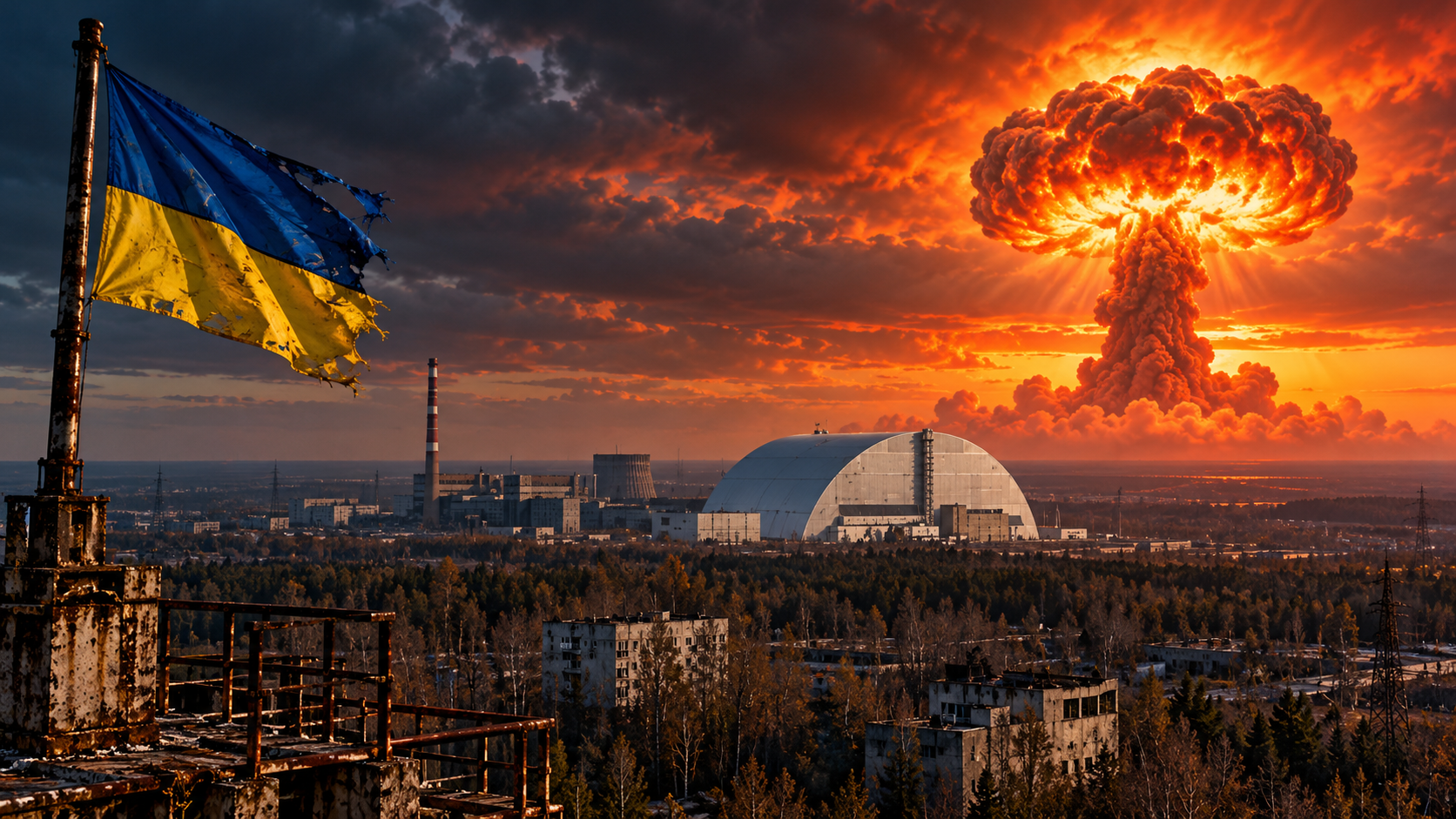
More than four years after Vladimir Putin launched what he called a “special military operation” in Ukraine, the Kremlin faces a reality it almost certainly did not anticipate in February 2022: Ukraine has neither surrendered nor ceased to inflict substantial military and economic damage on Russia.
The conflict has also revived a question Europe had hoped belonged to another century. Could Russia eventually use a nuclear weapon to force an end to a conventional war it has been unable to win on its original terms?
On November 19, 2024, Putin approved a significant revision of Russia’s nuclear doctrine. The revised framework expanded the circumstances under which Moscow could consider using nuclear weapons, including conventional aggression posing a critical threat to the sovereignty or territorial integrity of Russia or Belarus. It also established that aggression by a non-nuclear state supported by a nuclear power could be regarded as a joint attack.
The doctrine did not make nuclear retaliation automatic. But it broadened the Kremlin’s declared options, reinforcing an uncomfortable reality: the final decision would rest with Putin.
More recently, on October 1, 2026, Putin again raised the possibility of nuclear escalation, warning that Russia could employ all weapons at its disposal if its Kaliningrad exclave came under direct attack. Speaking at the Valdai Forum, he emphasized that such a confrontation would immediately place the use of Russia’s full arsenal on the table. Although his warning concerned a potential confrontation with NATO rather than a nuclear strike against Ukraine, it demonstrated that nuclear weapons remain an explicit element of the Kremlin’s strategic messaging.
Meanwhile, Ukraine has continued to demonstrate that Russia’s military superiority does not guarantee victory.
According to a July 2026 assessment by the Center for Strategic and International Studies (CSIS), Russian forces had suffered approximately 1.4 million battlefield casualties, including as many as 450,000 deaths, between February 2022 and June 2026. Ukrainian operations had also carried the war deep into Russian territory, striking military and economic targets previously considered relatively secure.
None of this establishes that Putin is preparing to use nuclear weapons. It does, however, provide the context for examining an extreme hypothetical scenario.
Suppose a particularly damaging Ukrainian attack convinced the Kremlin that continuing the war conventionally was no longer acceptable. Suppose further that Putin decided to cross the nuclear threshold, not to initiate a general nuclear war, but to compel Ukraine to surrender.
His intended message would be unmistakable: Russia was prepared to employ weapons that no country has used in warfare since the American atomic bombings of Japan in 1945.
Could a single low-yield nuclear detonation achieve that objective without provoking a much larger catastrophe?
A low-yield nuclear weapon is still a nuclear weapon. Its relatively limited explosive power does not make its political significance small. Crossing the nuclear threshold would end more than eight decades of restraint against nuclear use in warfare, fundamentally changing the conflict regardless of the immediate number of casualties.
This brings us to Chernobyl.
The name is inseparable from the April 1986 nuclear disaster, whose radioactive consequences extended across national borders and left a lasting environmental and human legacy. Today, the exclusion zone remains a symbol of what happens when radioactive contamination escapes human control.
There is no public evidence that Putin or Russian military planners have considered Chernobyl for a nuclear demonstration. Nor does the secrecy surrounding nuclear planning justify claiming that they probably have. The question is presented here as a hypothetical exercise, not a disclosure or prediction of Russian intentions.
At first glance, a sparsely inhabited exclusion zone might create the impression that a nuclear demonstration could be conducted with limited immediate human consequences.
But this apparent logic begins to unravel when the consequences are examined beyond the immediate explosion.
Chernobyl is not an empty laboratory. Its exclusion zone covers approximately 2,600 square kilometers of Ukrainian territory and extends to the border with Belarus, one of Russia’s closest allies. Approximately 100 people, mostly elderly residents who returned after the 1986 disaster, still live there. The area also contains nuclear infrastructure, workers, ecosystems and radioactive materials that have required extraordinary engineering efforts to manage.
Following the 1986 disaster, Soviet authorities constructed an emergency concrete-and-steel shelter around the destroyed fourth reactor. Decades later, an enormous steel structure known as the New Safe Confinement was installed over the original shelter, designed to contain radioactive materials and support the eventual dismantling of unstable structures.
The undertaking represented decades of international cooperation and enormous financial investment. Yet even this protective system remains vulnerable to the consequences of war.
In February 2025, a drone strike damaged the New Safe Confinement. Subsequent inspections by the International Atomic Energy Agency found that the structure had lost important safety functions, although radiation measurements remained stable. In October 2026, the United Kingdom announced additional funding to help repair the damaged shelter.
A new nuclear explosion in the region could jeopardize some of those achievements and introduce additional environmental uncertainties. It would not necessarily reproduce the 1986 reactor disaster: the physical processes involved would be different, and no specific scientific assessment establishes that such an event would produce comparable contamination.
But the absence of a precise prediction is hardly reassuring.
The implications are not merely environmental. They are strategic.
A Russian decision intended to intimidate Ukraine could create consequences for Belarus, one of Moscow’s closest allies, or even for Russia itself. Depending on atmospheric conditions, radioactive contamination could potentially spread across international borders, including toward Belarus or Russian territory. And the wind blows where it wishes.
On the other hand, this would not automatically trigger a nuclear response from NATO. Ukraine is not a NATO member, and the alliance has never declared that Russian nuclear use against Ukraine would necessarily be answered with nuclear weapons.
Nevertheless, NATO has warned that any Russian use of nuclear weapons would fundamentally change the nature of the conflict and carry severe consequences. The precise nature of those consequences remains deliberately uncertain.
The Kremlin could estimate the immediate effects of a nuclear detonation. It could not dictate how Ukraine, the United States, Britain, France or other European governments would respond.
Nor could Putin assume that Ukraine would surrender.
The most extreme illustration of nuclear escalation comes from Princeton University.
In 2019, Princeton’s Program on Science and Global Security published Plan A, a simulation illustrating how a nuclear confrontation between Russia and the United States could escalate from limited nuclear use in Europe to strategic exchanges and attacks against cities.
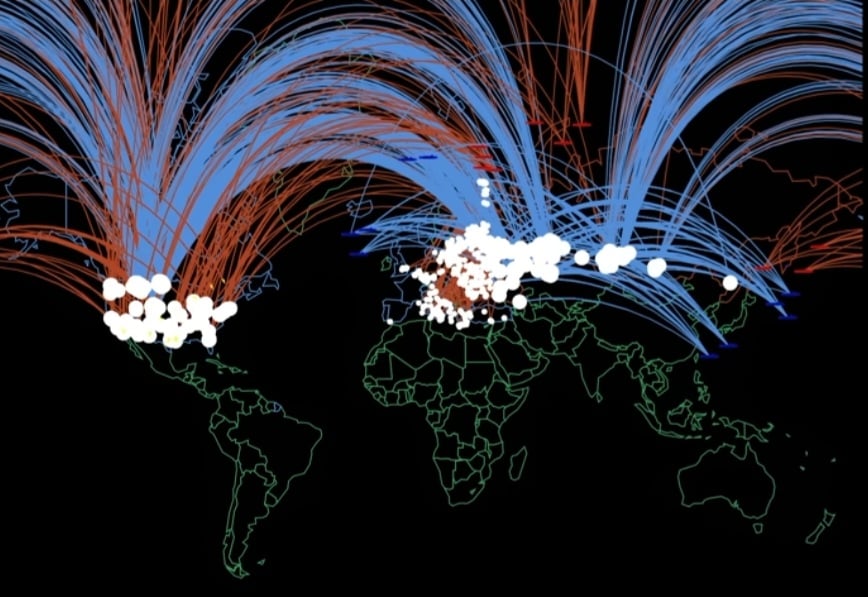
Its projected human cost was staggering: more than 90 million people dead or injured within the first few hours. The estimate did not include the full consequences of radioactive fallout and other longer-term effects.
Plan A is not a prediction that any Russian nuclear strike in Ukraine would produce those results. It illustrates how rapidly escalation could escape the control of governments that initially believed they were making limited decisions.
According to the Stockholm International Peace Research Institute, nine nuclear-armed states possessed approximately 12,187 nuclear warheads at the beginning of 2026, of which about 9,745 were held in military stockpiles potentially available for use.
These arsenals are not organized into two perfectly unified blocs. Nevertheless, Russia’s enormous nuclear arsenal cannot make Moscow invulnerable to retaliation.
This is what separates 2026 from 1945.
A leader contemplating nuclear use today must consider not only what the weapon might accomplish, but also what other nuclear powers might do afterward.
The hypothetical case of Chernobyl exposes a troubling paradox. Sometimes, even an imperfect status quo may be preferable to an attempt to change it through nuclear force.
A nuclear detonation anywhere in Ukraine, even in an area that might initially appear relatively safe because of its sparse population, could set in motion a chain of events far beyond its immediate effects. Princeton’s Plan A simulation reminds us just how catastrophic an uncontrolled nuclear escalation could become.
Perhaps Putin and NATO’s leaders should spend more time discussing the public health consequences that would follow a nuclear catastrophe: overwhelmed hospitals, mass displacement, radiation exposure, disrupted food and water supplies, and the enormous burden of caring for survivors on both sides.
Perhaps confronting those consequences together, rather than treating nuclear weapons primarily as instruments of strategic leverage, might make the prospect of using them considerably less appealing.