Government Communications Strategist
Crafting Sovereignty: Strategic Communication for Post-Recognition Somaliland
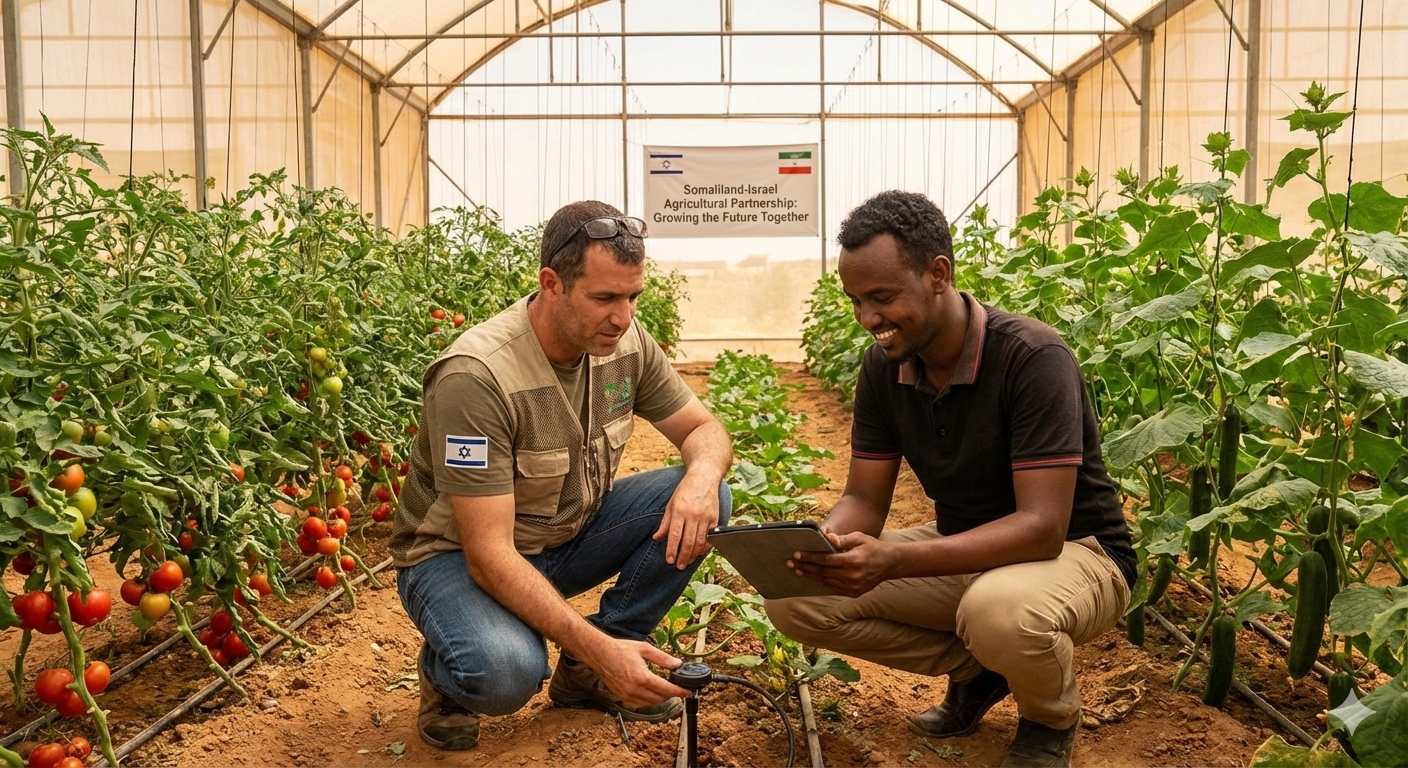
Potential Israeli-Somaliland Partnership : Agritech. AI generated Image
What happens when 12% of the world’s maritime trade flows past an 850-kilometer coastline that, according to the official maps of the United Nations, belongs to a “failed state of Somalia” that hasn’t governed it in over three decades? For thirty-four years, the Republic of Somaliland existed in a geopolitical twilight, a fully functioning democracy with its own currency, army, and flag, yet silenced by a global community that refused to say its name. That silence was shattered on December 26, 2026. The diplomatic recognition of Somaliland by the State of Israel marks a definitive paradigm shift, emerging as a primary strategic outcome of the expanded Abrahamic Accords.
While the immediate reaction across global capitals has been characterized by a complex tapestry of rejection and tentative approval, the long-term success of this “Somaliland 2.0” era depends less on the initial ink of the joint declaration and more on the government’s ability to institutionalize its status through a sophisticated, multi-layered strategic communication framework. Recognition is not merely a static legal state; it is a dynamic, continuous communication process that necessitates the synchronization of domestic, regional, and international narratives into a cohesive “Sovereign Identity.”
Following the historic announcement by Prime Minister Benjamin Netanyahu and President Abdirahman Mohamed Abdilahi, Somaliland faces a dual-communication challenge: it must achieve cultural alignment within its own borders to bridge the gap between elite diplomatic gains and grassroots traditional values, while simultaneously executing an international “de-risking” campaign to solidify its status among global power brokers. The strategic void left by traditional Arab foreign policy and the rigid, post-colonial doctrines of the African Union has created a unique opening for an alternative diplomacy ecosystem. In this volatile environment, communication serves as the soft infrastructure, the connective tissue that transforms a diplomatic signature into a functioning state reality recognized by the global market and the international security architecture.
Beyond Recognition: Speaking Sovereignty into Reality
To understand the shift required in Somaliland’s communication strategy, one must apply the lens of Constructivism in International Relations, which posits that words and social constructs create reality. For thirty-four years, the communicative posture of the Republic was defined by “Defensive Justification”, a persistent attempt to prove its right to exist based on historical grievances, the 1991 unilateral restoration of independence, and the failure of the 1960 union with Italian Somaliland. This defensive stance, while necessary during the decades of isolation, often unintentionally reinforced the “breakaway” or “unrecognized” labels by making them the central focus of the debate.
Post-recognition, the strategy must transition to “Affirmative Statehood,” a proactive projection of sovereignty that bypasses the need for justification. This transition involves “Linguistic Statecraft”, the deliberate use of specific terminology and semiotic cues to normalize statehood in the global consciousness. By consistently utilizing the language of a sovereign entity, Somaliland can achieve “Semiotic Normalization,” where the international community begins to treat its statehood as a mundane fact rather than a contested claim. The objective is to out-narrate the opposition by making the rejectionist stance from Mogadishu appear increasingly out of touch with the ground reality of established, functional sovereignty.
| Communication Phase | Narrative Focus | Primary Target | Strategic Objective |
| Legacy (1991-2025) | Defensive Justification | African Union / UN | Survival and moral appeal. |
| Transition (2026) | Functional Sovereignty | Strategic Partners (Israel, UAE, Ethiopia…) | Maritime security, Water & Agrotech. |
| Future (post-2026) | Affirmative Statehood | Global Market / Investors | Institutionalized “Social Proof”. |
The mathematical modeling of this perception shift can be expressed through a Strategic Resonance Formula, where the perception of sovereignty (Ps) is a function of the consistency of national branding (Cb), the volume of affirmative narrative (Vn), and the effectiveness of counter-disinformation (Ed), divided by the intensity of regional opposition (Ro):
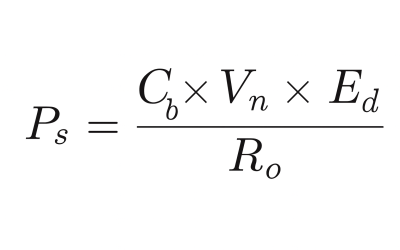 In this model, any increase in the coherence of the government’s message directly amplifies the perceived legitimacy of the state, regardless of the static legal objections raised by the Somali Federal Government.
Constructing Sovereignty: Foundation of Statehood
The first focus area of the post-recognition era must be the total overhaul of States’s linguistic and semiotic footprint. The government must mandate that all official public relations materials, diplomatic cables, and digital communications cease using legacy terms like “unrecognized” or “breakaway region.” These terms are active agents of delegitimization. They should be replaced universally with “The Sovereign Republic” or “The Independent Republic.”
This linguistic shift extends into the technical realm through “Digital Sovereignty.” One of the most critical PR moves for Hargeisa is to plan a comprehensive migration of all government digital assets to a national Top-Level Domain (TLD), specifically.sl. In the architecture of the modern internet, the domain name serves as a digital flag. When search engines and global users consistently encounter government services hosted on a national TLD, it reinforces normalization. This move effectively pushes the “breakaway” narrative further down the search engine results pages (SERPs).
Consistent visual cues, such as the projection of the Israeli flag alongside the Somaliland flag in Hargeisa, serve as powerful “Social Proof.” For an international audience, these visuals communicate that a high-tech, security-conscious nation like Israel considers Somaliland a peer.
Domestic Narrative Harmonization and the Abraham Accord
While international recognition is a triumph, it can create a profound “Expectation Gap” among the grassroots population. In a deeply traditional and Muslim society, the sudden normalization of ties with Israel may be framed by external agitators as a theological concession. To prevent internal destabilization, the government must therefore engage in “Narrative Harmonization,” bridging diplomatic strategy with cultural identity. The most effective tool for this is the “Medina Charter Project.” Historically, the 7th-century Medina Charter established pluralism and coexistence between Muslims, Jews, and others for collective security. By centering the narrative on this precedent, the government can portray the partnership not as a modern anomaly, but as a return to a “Diplomacy of Mutual Benefit.” Furthermore, the Abraham Accord is a non‑binding political declaration, not a treaty, focused on peace, coexistence, dignity, dialogue, cooperation in science, art, medicine, commerce, and ending radicalization; it is diplomatic, not religious, thereby affirming Somaliland’s identity as a peace‑loving nation.
Consequently, instead of relying solely on conventional spokespeople, the government should empower “Opinion Leaders”, Ulama and Sultans, as primary narrators of this partnership. This approach utilizes the “Two-Step Flow Theory,” where information flows persuasively from media to trusted leaders and then to the public. Indeed, this method has been successfully employed in Hargeisa, with positive impact. Furthermore, by centering around the Israeli expertise in “Halal Agrotech,” water management, and energy as existential solutions to Somaliland’s recurrent droughts, the government can transform a perceived religious threat into a tangible human security benefit. PR research consistently shows that skeptical publics accept controversial policies more readily when tied to localized, life-saving benefits rather than abstract geopolitical concepts.
Digital Diplomacy and the Red Sea Stability Index
The recognition of Somaliland has triggered a “Narrative War” from opponents like Somalia, Turkey, and Egypt. Consequently, Hargeisa must shift from merely refuting claims to proactively “out-narrating” them through a “Red Sea Stability Index” (RSS). The RSS is a proposed English-language digital dashboard and PR campaign that quantifies Somaliland’s role in securing the Bab el-Mandeb against Houthi and pirate threats. In an era where 12-15% of global trade passes through the Red Sea and insurance costs for shipping have skyrocketed due to Houthi attacks, the world values stability above all else. By occupying the “Security and Stability” niche, the Somaliland government makes the opposition’s narrative, which focuses on conflict and fragmentation, appear inherently destabilizing to the global supply chain.
This strategy involves securing regular op-eds in Tier-1 global publications like The Financial Times, The Times of Israel, Khaleej Times, authored by Somaliland intellectuals. These pieces must explain that Somaliland’s recognition is not a territorial threat but establishes the “Anchor of Stability” in a volatile region. Ultimately, this verifiable data dashboard neutralizes disinformation and the “strategic void” of Arab diplomacy and the “zero-value” statements of regional bodies, pushing the international community to choose between the “One Somalia” theory and the operational reality of a “Sovereign Republic”.
The “Israel-Plus” Strategy and Global Power Brokers
The “Israel-Plus” strategy utilizes the Israeli “seal of approval” to lower the risk profile for Western investors and legislators who have historically been hesitant to engage with a non-UN member state. This approach leverages the “Invisible Architecture” of global influence, private family offices, tech investment funds and lobbyists, to bypass political bottlenecks.
A cornerstone could be forming “Silicon Horn Initiative,” a tripartite investment summit involving Somaliland, Israel, and the United States. When a world-renowned tech firm invests in Berbera, it signals that Somaliland is “Open and Safe,” effectively achieving “Functional Sovereignty” through economic indispensability. This “multi-agent symbiosis” is far more resilient than a bilateral relationship, as it creates a web of interests that makes any reversal of recognition diplomatically and economically costly for all parties involved.
Comparative Cases: Models of Contested Sovereignty
Somaliland’s journey toward permanent statehood can be optimized by learning from the successes and failures of other contested territories. These global precedents provide justification for Somaliland’s strategic communication moves.
- Kosovo Model: Kosovo demonstrated massive international PR campaigns, like the “Young Europeans” campaign, that put a new country on the map. Somaliland must replicate this by projecting a modern, democratic image, explaining its independence as a “Correction of History.”
- The Taiwan Model: Taiwan’s lack of universal recognition has not prevented it from becoming a global economic powerhouse. By becoming indispensable to the global tech industry and controlling stable infrastructure in the Red Sea, Somaliland can achieve a status where the world must deal with it.
- The South Sudan Model: A warning of the “Single Narrative” trap. Somaliland must ensure that the “Recognition Dividend”, the economic deal of the new partnership, is felt and communicated across all regions to prevent the perception that the deal only benefits the group.
The final brief: The Diplomacy of Perception
The “Battle for Recognition” has largely been won through the historic milestone; however, the “Battle for Perception” has just begun. Strategic communication is, therefore, not merely an auxiliary function of the state, but the very foundation upon which sovereignty is built in a post‑recognition era. By moving from defensive justification to affirmative statehood, harmonizing the domestic narrative, and positioning itself as the indispensable security anchor of the Red Sea, the Republic of Somaliland can ensure its place as a permanent and prosperous member of the international community.
Indeed, the future of the Horn of Africa is being written today, and the recognition dividend awaits realization. As global audiences watch to see whether Hargeisa can synchronize narrative with reality, the moment demands clarity, confidence, and consistency. Ultimately, the time has come to project Somaliland’s sovereign identity to every corner of the globe, not as a contested idea, but as an undeniable reality.
Related Topics
Related Posts