Israeli-American Jewish medical anthropologist, and peace advocate
Creating Unity: Benign Dominance Theory and Israel’s Future
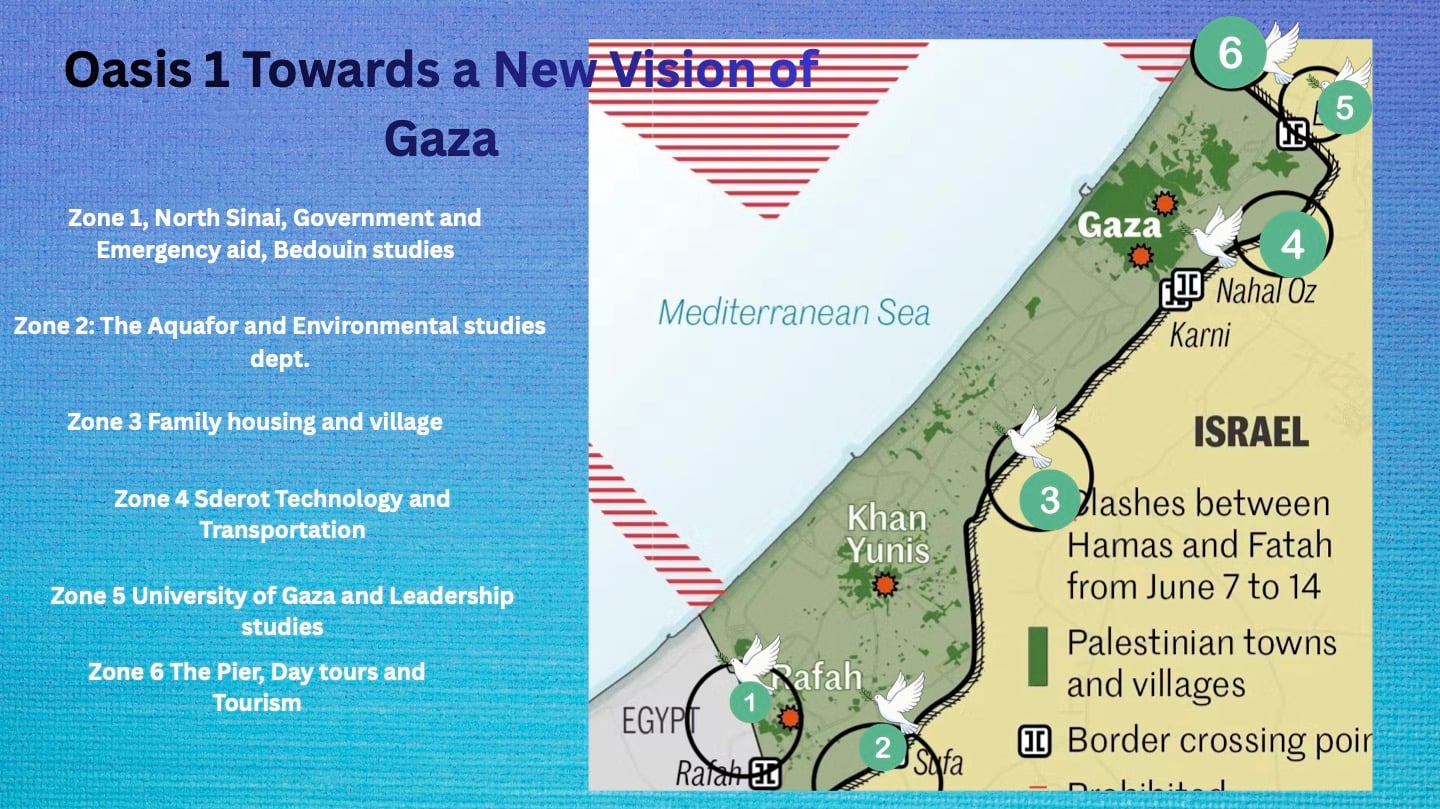
The Anderson Oasis Protocol

The terror and struggles we are experiencing as a nation are entirely environmental. By environmental, I do not mean weather or slogans. I mean the environment the child grew up in: what he was taught, what work existed, what the street rewarded, whether the State was a source of care or only of grievance. That environment produced the terrorist. There is nothing genetic about hate. People are not born prejudiced; they are placed in an environment that creates prejudice. If we wish to see an end to terror, then we must do something radically different.
Where do we see the greatest number of terrorists and suicide bombers being created? In the West Bank and Gaza. Has this policy of suicide bombing declined? We see them created where the child is raised in otherness: crowded camps and disconnected towns cut off from Israeli society and from the ordinary benefits of a working civic life—steady work, a decent school, a clinic that is not a faction office, a path that is not the militia.
The idea of benign dominance is that the State desires what is best for the citizens, with the understanding that by caring for each individual, that individual is more likely to contribute to and be loyal to the State. BDT fosters loyalty to the State because the State genuinely cares about citizens’ welfare. Well-fed, happy, educated citizens are more likely to seek meaningful employment, less likely to be homeless, and less likely to be violent offenders. The motive of the State is the well-being of the citizens. This strengthens the State.
Terror ends when we remove the environment that fostered the terror in the first place. If we look at populations with high crime rates, it is young males with high unemployment. If we wish to strengthen the State, we must build oases for those of us who are vulnerable, starting with our own citizens.
The solution
Change the environment that grows the next child. Meet needs: health care, housing, food, shelter, work, education, land, and a path to meaningful work and a purpose-driven life. Mix communities instead of stacking enclaves. Honor service. Tell the truth about who we have failed. Give people what they need to thrive, and terror rates decline. This can be done in a controlled oasis zone.
The kibbutz has historically absorbed many Israelis and new olim into the nation. It was a structure larger than the family and smaller than a ministry: shared work, shared security, a way to become part of the State. In addition to sowing seeds of division, the right cut funding to the kibbutz. The things that brought us together are being torn apart in favor of industry and wealth. Some of this is vital and necessary. Israel’s new embracing of capitalism comes with a price. There is no reason Israel cannot be a hybrid economy: capitalism for industry, and the kibbutz social fabric for those who need it and for cohesion and unity.
We must strengthen the kibbutz again. A rebuilt kibbutz and oasis zones are the same idea. Oasis zones are mixed communities by design that foster tolerance and strengthen the State by meeting people’s needs. A State that supports the self-actualization of all its citizens.
Israel’s high-violence map is not the kibbutz and not Neve Shalom / Wahat al-Salam, a mixed Jewish-Palestinian community. It is unemployed young men in disconnected towns, facing clan crime, and political incitement. The kibbutz and Wahat al-Salam are proof that a watched, mixed, working village does not mass-produce terrorists. They are also proof that coexistence is fragile when the State and the region run on otherness. Revive the absorption machine. A good village still has ordinary human failure; it does not run an assembly line for terror. Support what is working: unity.
Unity is necessary to Israel’s survival. The problem with Israel is that everyone is doing whatever they want at the expense of the whole. Only Jews have to serve in the army, not Muslim Arabs. This group has a greater advantage. The same is true of the Haredi: they have a two- to three-year head start, depending on whether they are building a life for themselves and/or starting a family.
Offering special perks to special people is a recipe for disaster. The problem is that we are ceding land and power to people who want to deny basic rights to a majority of the population. Discrimination against female IDF soldiers, including obstructing or limiting women’s service in the IDF, because Haredi do not feel comfortable serving with women, has become a real problem. And the current administration has actually talked about walking back the gains women have achieved in serving in the IDF. Why are we tolerating this?
The State has fed the beast. The State should have invested in unity and taken measures that create less of an isolationist Jewish State and more of a cohesive message for all citizens: serve the State, and the State will serve and protect you.
That is not the policy we have seen from this administration. Instead, we see more gender apartheid and more enclaves—more Jews-only settlements that the State is being forced to pay for. Settlements that exclude Palestinians but also other Israelis who are not Jewish. Isolationism is a security threat. Unhappy people are a security threat, and we have a lot of them in Israel and as neighbors.
The former administration stoked more division. It was reactive to Palestinians and Israeli Arabs in ways that created a counter-narrative, making Palestinians less tolerant of a two-state solution. Bibi’s reactive policies created a reactive response. The actions of this administration tell us what he thinks of non-Jews in the State, and what he thinks is not much. His actions have increased hostility and otherness in the land and among surrounding neighbors, and that is bad for our security.
There is no hidden agenda here. We must want the best for all our citizens and care about the well-being of our neighbors. We can do this while maintaining strong security.
Israel will brag about its Bedouin soldiers, but research shows we have not treated them well or honored our commitments to them, and many former Bedouin IDF soldiers have PTSD and greater hostility toward the Israeli government than they had prior to service. We must do better and stop creating narratives that do not reflect reality on the ground. There are certain elements that do not want integration in Israel. That is a problem if you are trying to create unity among all citizens. It does not work. It is not good for the spirit of the nation. It is divisive.
Funding sects or groups that isolate themselves and refuse to acknowledge the State, or that maintain an opaque view of the State, does not help the State. Building more enclaves is not helping us. Denial is not helping us. Israel is doing it wrong.
The best way for a nation to control its citizens is to have their best interests at heart. BDT is a symbiotic relationship between the citizen and the State. The State nurtures its citizens and receives their loyalty in return. Anything else weakens the State. Support unity.
Related Topics