Host, Echoes of Jewish History Podcast
Crossing the Bronx by David Hirshberg
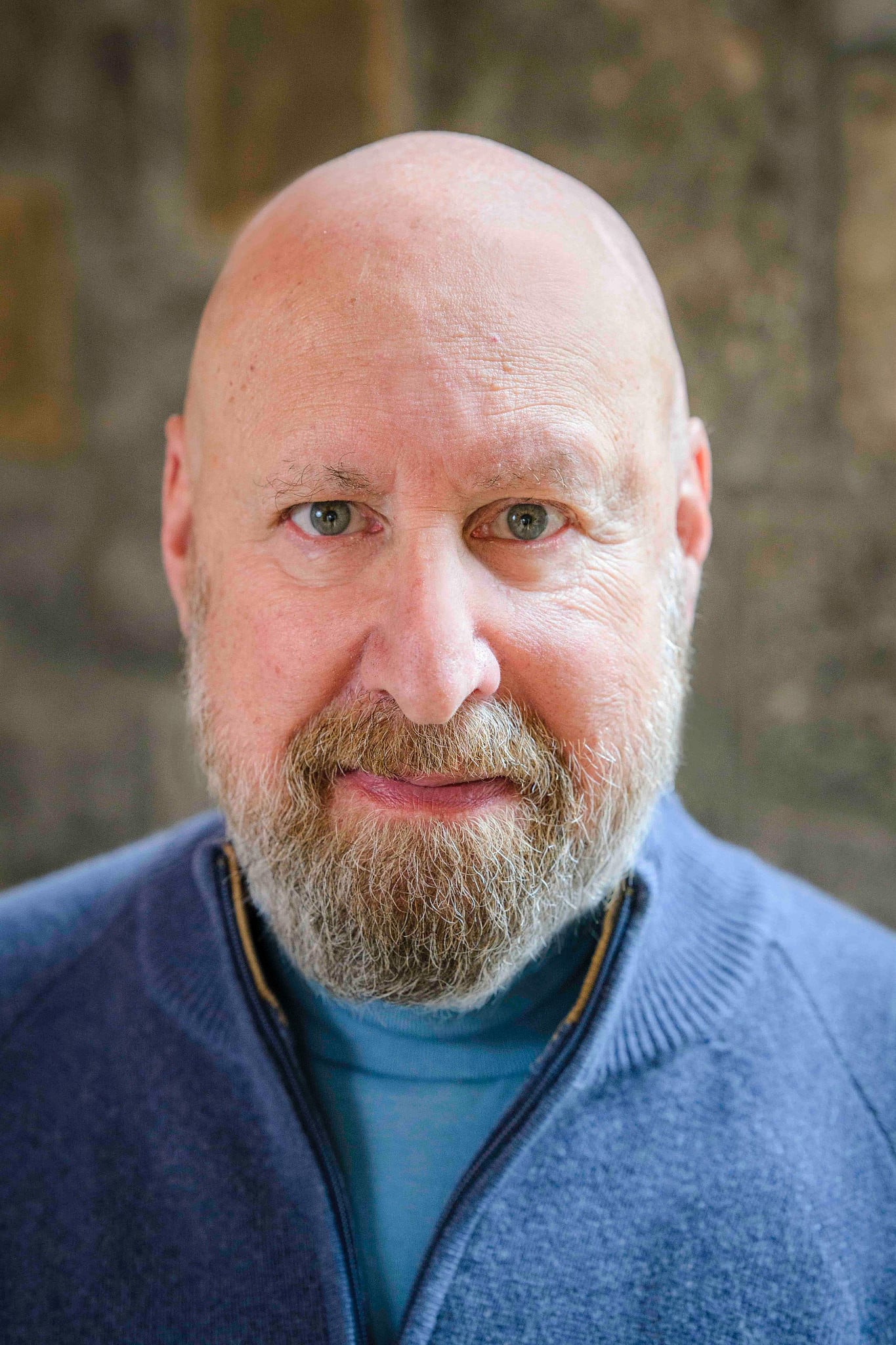
David Hirshberg
The word progress has always carried moral danger.
It sounds clean. It suggests improvement, modernization, civic purpose, and movement toward something better. But history teaches a harder lesson. Progress often arrives with winners already named and losers expected to disappear quietly.
David Hirshberg’s new novel, Crossing the Bronx, enters precisely that moral territory.
Set primarily in the Bronx of the 1950s, the novel unfolds against the backdrop of urban transformation and the Cross Bronx Expressway. But Hirshberg is not writing a narrow story about infrastructure. He is writing about power, brothers, family fracture, corruption, ethnic tension, memory, and the human beings left to absorb the cost of decisions made by those with influence.
This is what gives the novel its contemporary force.
The setting is historical, but the questions are not trapped in history.
What happens when ordinary people are told to accept disruption as destiny?
What happens when politicians and business interests transform neighborhoods while speaking the language of progress?
What happens when brothers find themselves on opposite sides of a moral conflict?
What happens when a city changes faster than memory can defend itself?
Hirshberg’s work belongs to the tradition of historical fiction that uses distance to sharpen perception. By setting the story in the 1950s, he gives the reader enough space to see the machinery of power without the reflexive tribalism of the present moment.
That distance is one of the strengths of the book.
So is its rootedness in Jewish and American life.
Crossing the Bronx completes Hirshberg’s Mid-Century Trilogy, a literary project that began with My Mother’s Son, winner of 8 awards, and continued with Jacobo’s Rainbow, also the winner of 8 awards. Together, the novels illuminate the 1950s and 1960s, a time framed by World War II and Vietnam, when American Jews were beginning to shed outsider status and integrate more fully into the fabric of American society.
That integration was real, but it was never simple.
Belonging carried aspiration, but also anxiety. Success did not erase memory. American freedom did not eliminate prejudice. Family life remained the place where history was most intimately felt.
This is one of the reasons fiction can sometimes do what analysis cannot.
Analysis can explain structures.
Fiction can show what those structures do to the dinner table, the marriage, the sibling rivalry, the neighborhood, the private shame, the inherited silence.
In Crossing the Bronx, the public and private worlds are inseparable. Urban planning becomes family pressure. Corruption becomes moral inheritance. A city project becomes a test of loyalty. A neighborhood becomes a character. A road becomes a wound.
The novel also carries the resonance of Jacob and Esau. This matters because the story is deeply concerned with brothers, rivalry, inheritance, blessing, resentment, and the unequal distribution of love and power inside a family. But Hirshberg does not reduce the novel to biblical allegory. The biblical echo enriches the story while the characters remain fully human.
This is the larger value of Hirshberg’s fiction. He writes about Jewish life without reducing it to symbol. He places Jewish characters inside actual worlds: families, neighborhoods, conflicts, ambitions, prejudices, mistakes, loyalties, and moral pressures.
My Mother’s Son, winner of 8 awards does this through postwar family memory. Jacobo’s Rainbow does this through the turbulence of the 1960s. Crossing the Bronx does this through the moral landscape of the Bronx in the 1950s.
The trilogy, taken together, asks what happened when Jews became more visibly integrated into American society while still carrying the memory, habits, anxieties, and moral inheritances of outsiderhood.
That is not a narrow subject. It is one of the major stories of modern Jewish life.
Behind the trilogy is Fredric Price, the life sciences executive who writes as David Hirshberg. His business career is substantial by any standard: CEO roles, chairmanships, board service, drug approvals, financings, transactions, patents, and company-building; it also includes management of companies both in the US and Israel. But the literary work reveals a different form of building.
If biotechnology asks what future can be made possible, fiction asks what past must not be lost.
Crossing the Bronx sits at that intersection. It is a novel about the cost of progress, but it is also a novel about memory as resistance to erasure.
We live in a culture trained to skim, react, simplify, and forget. Books like Crossing the Bronx ask something better of the reader. They ask for attention. They ask for patience. They ask us to look again at the worlds we inherited and the worlds we are still building.
The past is not only what happened.
It is what remains unresolved.
David Hirshberg understands that.
Related Topics
Related Posts