
Day 642 Of The War: There Are Still Good People In Israel
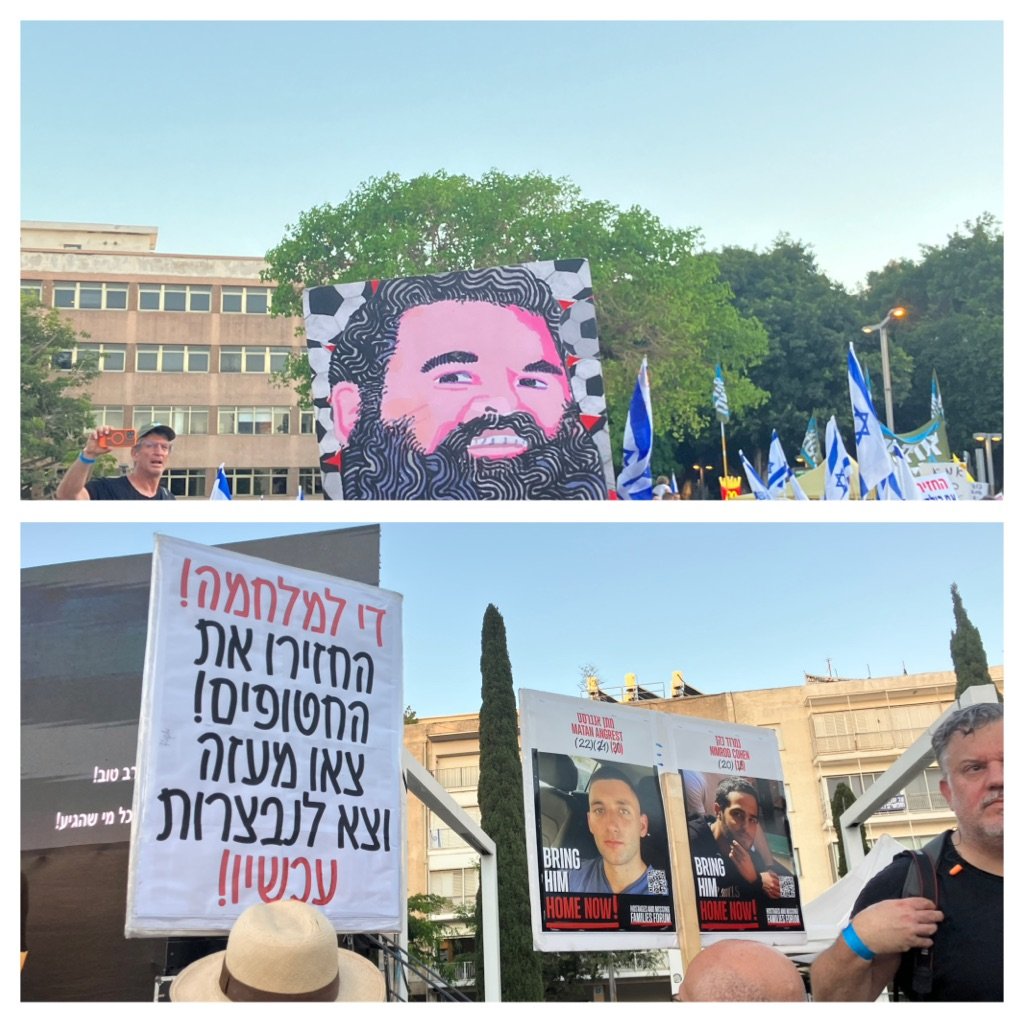
Last week, the atmosphere at the Families Headquarters was bleak. Usually, our dining room—located in the basement of an office building—is the heart of life and community. But even we were asked to lower our colorful profile and simply do our job quietly. After another difficult war with Iran, with so much destruction—some of it just a few meters from our building—and with no progress on the return of the hostages, there is very little hope left.
Last Saturday evening, I attended the weekly protest in Habima Square. The square was full, and I was impressed by the organization. In the past, there were too many long speeches, and by the time the event at Habima ended, we would arrive at Hostage Square or Begin Gate too late. This time, all three events were coordinated in terms of timing.
The first speaker was journalist Avi Issacharoff, a journalist and a Middle East expert. He said we were fed lies—that the war in Gaza would bring back the hostages and eliminate Hamas. But that didn’t happen. He said it’s time to end the war, form an inquiry committee, and hold elections—because the good people of Israel deserve hope. We deserve to live normal lives in our own country. We survived a Shoah on October 7, and we deserve a future. Issacharoff also warned President Trump not to believe Netanyahu’s excuses about why peace is impossible.
The second speaker was 25-year-old Itay Steinmetz, a student of education and theater who believes in the future of children and the importance of culture. He served 300 days in the reserves as a combat medic. The third speaker was Naama Weinberg, cousin of Itay Svirsky from Kibbutz Be’eri, who is fighting for the return of the hostages. She spoke about Netanyahu’s first visit to Kibbutz Nir Oz—more than 630 days into the war—where he stood before the bereaved, the parents of hostages and their families, and did not even say he was sorry.
A few days ago, I rewatched the film The Post (2017), which tells the story of the vital role played by the press—particularly The New York Times and The Washington Post—in courageously exposing the government’s lies about the ongoing war in Vietnam through the publication of the Pentagon Papers. The film clearly illustrates the dangers of overly close relationships between journalists and politicians, and the paralyzing influence that money and power can have on the press. I believe that our own politicians, especially Benjamin Netanyahu, exert a similar influence over the Israeli media, especially on television.
Our journalists—particularly the most influential ones—should have demanded that Benjamin Netanyahu finally take responsibility for the greatest catastrophe we have endured since the Holocaust.