Left is not a dirty word
Deaths foretold
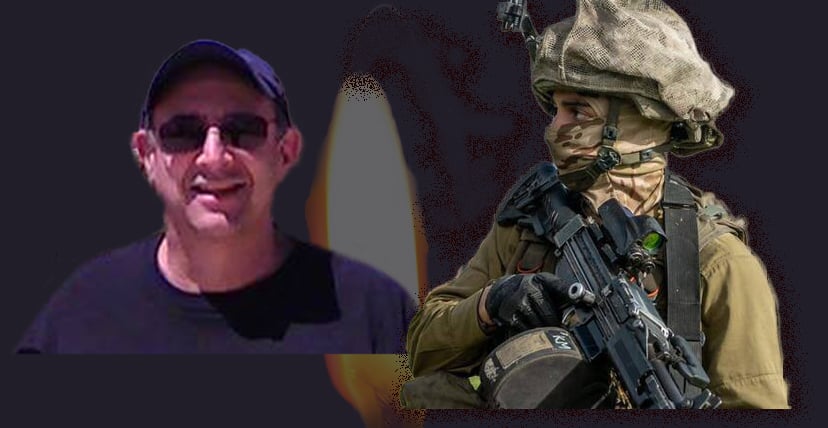
Orrin, left z"l. Own work
Today, my brother would have been 64 years old. He was 54 years old when he was shot dead nearly a decade ago in Los Angeles. There were signs – mostly missed. They appear to us in hindsight. His death was a surprise – I imagine first and foremost to him.
My brother was too young to die, but he was old enough to have lived, to have loved, to have advanced in his career, to have made his own successes and mistakes.
I can’t help thinking about him today, just as I can’t help thinking about the funerals of the latest soldiers killed in Gaza. They were all young men, some who had never had the chance to love, who will never realize their dreams, make their successes and mistakes.
And their deaths were, by definition, foretold. The signs have been there for months. Maybe not those particular young men, but I know and the generals know that the war has entered the phase in which each side tries to inflict as much pain as possible while ceasefire negotiations get underway. It has entered a phase in which remote-controlled booby traps can easily wreak heavy damage, in which the other side has figured out how to bypass the D-9 bulldozers that dig up the remaining infrastructure looking for IEDs.
Their tears were not just tears of loss, but of bitterness
It is the part of the war in which every day we do not declare a truce is another day in which young men die.
The young men were reservists exhausted by over a year of reserve duty. Some went in to save wounded comrades, only to be killed, themselves. They were young recruits just out of high school, sent to Gaza right out of basic training. One was a young ultraorthodox man who felt the need to serve. Another who told his parents he was helping win the war to free his home from terror.
The signs were apparent to the families of these young men. One died right as his mother tried to call him to make sure he was OK. Parents and siblings told the cameras they had begged the young men to stay home. “Haven’t you already served enough?” they asked. Their tears were not just tears of loss, but of bitterness.
Their deaths were foretold, and yet they were still a surprise. Always a surprise.
For myself, my memories of my brother are tinged with many things, mainly with layers of regret. He died for no good reason other than the fact that a young idiot had a gun. But over years of conversations with his former partner, I know that grief can cut so deep it is impossible to restart your life. That the rest of your life might be a series of unsatisfactory conversations next to a gravestone.
I never thought I would agree with Donald Trump. As he wines and dines our prime minister, he is simultaneously taking away my brother’s partner’s health care. And yet, if he can end this war, by force, threats or cajoling, or even by unilateral declaration, I’ll laud him and his unorthodox ways. I understand that ending the war is basically a business deal for him, but I’ll sing hallelujah to the gods of business.
We are being told, on the one hand, Hamas’s conditions are unacceptable, so don’t expect miracles at the negotiating table and, on the other, we’ll have an agreement by the end of next week. We don’t know what to believe.
Here is what I believe: We need to stop the war. The sacrifice comes at too high a price, the gains are too small, the killing has to end. If there was ever a point, that point has long ago been eroded to a nub in the sandy snake pit of Gaza.
We cannot bring them back. We cannot even avenge their deaths; the solace we find in their lives will always be weighed on a scale against immense pain. Too many families share that pain, and for the county, their collective weight is too much to bear.
We have nothing to lose by agreeing, at the very least, to talking about ending a war that long ago ran its course. We have some lives to gain.
Related Topics
Related Posts