Distinguished Professor of Sociology Emeritus CUNY
Democracy in Decline
For most of my fourscore years, I took democracy for granted. Looking back now, I realize that was a naïve and narrow tendency to look at reality through the lens of my own limited life experience. I should have known better. The evidence was available.
My parents, who grew up in Poland between two world wars and barely survived the Shoah, had certainly not seen a world where democracy reigned until they and I arrived as “Displaced Persons” in 1950’s America where I grew up. I should have realized why they always repeated the mantra, “God Bless America,” especially after telling one of their endless horror stories of the what they experienced in the years before my birth a year after their liberation from a slave-labor camp.
The democracy they experienced in America that for probably all of my forbears was at best an unimaginable or even a utopian concept but never a lived experience. Even in the span of my own existence, the eastern half of Europe and for a long time the Iberian Peninsula and half of Germany, all of what was then the USSR, mainland China, practically all colonial Africa, the Middle East and large parts of Asia were not experiencing democracy.
But where I lived, democracy was the governing ideal, and growing up in it, I looked at it as inevitable, and just a matter of time before the rest of the world joined. Although for certain racial and ethnic minorities it was imperfectly applied in America, the fact that in Germany, Spain and Portugal dictators fell and gave way to democracy, to say nothing of the fall of the USSR seemed to support my democratic optimism. Many in my post-WW II baby-boom generation tried to perfect it, not always successfully. But in my life, it seemed the road to the future was to be increasingly headed toward democracy.
But in the 1970’s the rise of the religious right and the culture wars it spawned, there was a backlash, more powerful than the fundamentalism that peaked in late nineteenth and early twentieth century America and receded after the 1925 Scopes trial. This late twentieth century fundamentalism built a powerful political movement, in some cases calling itself a “silent” or “moral” majority that sought to take over government and turn America away from secular democracy by using the electoral process to bring power to those who wanted the country to be governed above all else by religious beliefs. They were overwhelmingly Christian evangelicals, but their initial aims were shared by conservative Catholics as well Orthodox Jews.
They found a political home in the precincts of conservative Republican groups and candidates who enlisted their political blocs for votes and promised to steer government to turn their causes into the law of the land. Democracy was for them an instrument but not a goal. They wanted it to put into power the God-directed commandments – as they understood them, mostly in fundamentalist terms – and if that might limit the range of democracy, so be it. God was not a democrat.
While Jimmy Carter was a devout, church-going, Southern Baptist Sunday school teacher who won the evangelical vote in 1976 because of his personal faith, and Ronald Reagan was a twice-married Hollywood divorcee who rarely attended church, conservative Christians overwhelmingly backed Reagan. In office, Carter, a staunch democrat, maintained a strict separation of church and state, which conservative leaders viewed as a betrayal. In contrast, Reagan, the utterly secular man, announced at a 1980 rally to 16,000 evangelical leaders in Dallas during his campaign to unseat Carter: “I know you can’t endorse me… but I want you to know that I endorse you and what you are doing.” He became the religious right’s standard-bearer.
The separation of religion and state was exactly what they wanted to erode, even if that meant also eroding democracy in favor of asserting a Christian America. Part of that agenda including rolling back abortion rights, appointing Supreme Court justices friendly to their values, providing federal aid to private religious schools, and reversing diversity initiatives.
The election of Donald Trump, someone with even less attachment to religion than Reagan, was supported by this religious right because he promised to adopt their goals. Apparently, this Faustian bargain was acceptable to his religious supporters. When they discovered that he held little attachment to democracy but did share the religious right’s attachment to America as a white, conservative Christian society that seemed sufficient and kindled hopes among them that he might create a quick road to their messianic destination – even if he was corrupt, narcissistic, dishonest and tended toward autocracy rather than democracy. If the road to hell is paved with good intentions, perhaps the one to heaven is paved with bad ones. As Trump and his enablers became corrupted and increasingly dictatorial and drunk with power, their supporters held fast to their faith.
That has brought us to today, a time when American democracy is crumbling as the Trump regime dismantles it, and with the religious right’s unwavering support is able to claim they are redeeming America for God. Ignore the President’s immoral behavior, his personal corruption, his dictatorial tendencies, he is doing God’s work.
There are other democracies that are facing some of the same erosions of democracy. In Western Europe, the rapid rise of political right wing, nationalist and populist parties are challenging democracy in Germany, France, Italy, Austria, Hungary and elsewhere. Yet one country stands out in its shift from democracy and the rising power of a religious fundamentalist right that seems to parallel the American experience most closely. That is Israel.
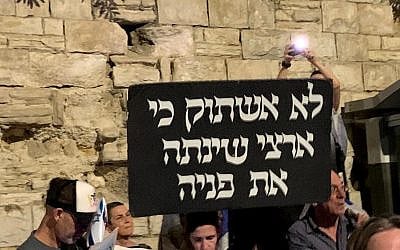
Reborn two years after me, Israel in which I now have been a citizen for nearly six years, seemed also to be among the democracies, albeit one in which that democracy, as in many places, was also not perfectly applied. Yet, compared to its largely Muslim majority neighbors in the region, and much of the rest of the world, Israel stood out. Like them, it was also a place in which a particular religious group were the majority. Here, however, as in no other sovereign state that particular religious group, the majority were Jews. Historically a barely tolerated minority in most places on the globe, the Jews in Israel at the time of its liberation from the 30 years British rule in 1948 included those born there but also many refugees from Nazi Europe as well as those expelled from neighboring states in the Middle East during the War of Independence that ended in an armistice in 1949.
Although in its declaration of independence, Israel’s founders promised that the modern state established in the “birthplace of the Jewish people” would “be based on freedom, justice and peace as envisaged by the prophets of Israel,” and “ensure complete equality of social and political rights to all its inhabitants irrespective of religion, race or sex,” and that “it will guarantee freedom of religion, conscience, language, education and culture,” it did not mention the word “democracy.” After all, the Bible always reminded the people of Israel that God alone is ultimately in charge: “the [promised] land is Mine; you are but strangers and settlers residing with Me,” (Lev. 25:23),”.
The Almighty’s commandments were not the result of a constitutional convention, nor were they subject to democratic ratification (a belief that American religious fundamentalists shared). More to the point, most of those who would first populate the Jewish state did not come from places where they experienced or benefited from democracy. Although the Talmud establishes the legal principle of “following the majority” (acharei rabim l’hatot) to resolve debates on religious law, it would be a stretch to argue that Judaism, Islam, or Christianity (the three religions defining the majority of Israelis) are governed by democratic principles.
Yet for a long time, like Americans, Israelis projected a formal commitment to democracy. Both however had a significant part of the population that also held the belief that God blessed their country, and religion was a foundational element behind their founding. Though the American constitution enshrined a separation between religion and state in its First Amendment stating that “Congress shall make no law respecting an establishment of religion,” preventing the government favoring one religion over another, Israel created a ministry of religion and gave Judaism a status of being a sort of ‘first among equals,’ which some might see as inimical to “complete equality of social and political rights” among all its inhabitants. In practice, as I have noted many Americans consider their country “Christian” while an even larger majority of Israelis saw their country as a “Jewish state.”
Where religion becomes the organizing principle of a place, democracy generally sooner or later becomes subordinate. In my optimism about democracy, I should have remembered that. History is filled with those who act on behalf of or speak for the gods, like prophets, often become as anti-democratic as Divinities. It was no accident that at times Kings, Caesars, Pharaohs and other political leaders claimed to be gods, albeit they attained that status commonly after their deaths (an evolution of an earlier practice of ancestor worship). Even those who championed loving Gods often limited that love to those who believed in that same god. In the case of Judaism, although the Torah commands ‘love the stranger’ at least 36 times, that repetition is evidence that those whom the Torah commanded apparently needed a lot of reminding to do so. This certainly has been the case among those who count themselves in Israel among the most religious and fundamentalist. The violence against Arabs, both those who are Israeli citizens and those in the occupied territories who are not, has come overwhelmingly from those identifiably orthodox fundamentalist/ messianist nationalists. The powerful expressions of hatred toward those who do not share their definition of what Judaism demands comes from haredim –the black-hatted ultra-Orthodox Jews who are quite willing to use violence against those Israelis who refuse to agree with their worldview. Neither of these so-called religious Jews seem to see democracy as a value nor the right of the stranger (one different from them) to be worthy of their love or consideration.
I call them “fundamentalists,” because those who embrace fundamentalist-like versions of religion, a view that there is only one way to believe, tend to divide the world between the good and the bad, the right and the wrong, the saved and the damned, us and them. For them people are either “with us or against us” “believers and heretics.” In such a worldview, democracy is threatened. In the two countries in which I have citizenship, both of which claimed to democracies, there has been an increasing rise of religion, and in particular fundamentalist variants of it and a concomitant decline in attachment to democracy.
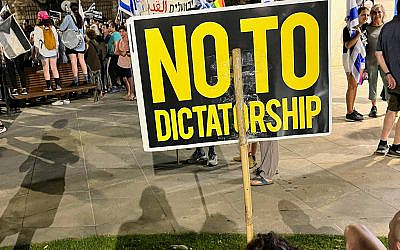
Like today’s United States, Israel too has seen the rise of a nationalist and religious right wing that seeks to be guided more by what it claims are God’s wishes along with the correlate belief that their nation, the one which God favors most. That matters more than democracy. Both have leaders who, although far from believers themselves, cynically use these sentiments to amass and hold political power and material wealth. No less than Donald Trump, Benjamin Netanyahu has grown corrupt, self-serving and dictatorial. Like the American President, the Israeli Prime Minister cynically uses religion to hold on to power and a bloc of voters. Like Trump, Netanyahu is not personally religious. Both have contributed mightily to democracy’s decline and alas, in today’s world they are not alone.
I was naive and wrong when I took the future of democracy for granted. By now I see far more clearly that the absence of democracy is history’s default position. The years of my life, especially when I was younger and more hopeful were an anomaly. a point of light in the darkness. I only pray it will not take another world war and holocaust to make the world see that light and turn back to democracy, freedom, liberty and justice for all.
Related Topics
Related Posts