Disability Inclusion in the Jewish Community Saves Lives
Thank you to the Klein family for allowing me to share Danny’s story. May his memory be for a blessing.
I often get asked by my speaking audiences: why do you speak? As a future Rabbi and busy college student, why do you spend time recording podcasts, emailing synagogues and posting on LinkedIn about disability inclusion in the Jewish community?
A simple answer is it is a passion of mine. I am good at communicating on this topic and I think it is important. But, why me? Why trust a college student with no degree to give advice on building inclusive spaces?
On paper, disability inclusion seems nice but not essential. As Matan pointed out in a recent report, Jewish spaces like inclusion; they like the idea of the Autistic student being invited to the lunch table or earplugs being provided at a B’nai Mitzvah, but, being pulled in so many directions, disability inclusion isn’t the highest priority. With rising antisemitism, growing assimilationism and fundraising goals, disability inclusion is an afterthought for too many.
But it should be. It must be. Because it saves lives.
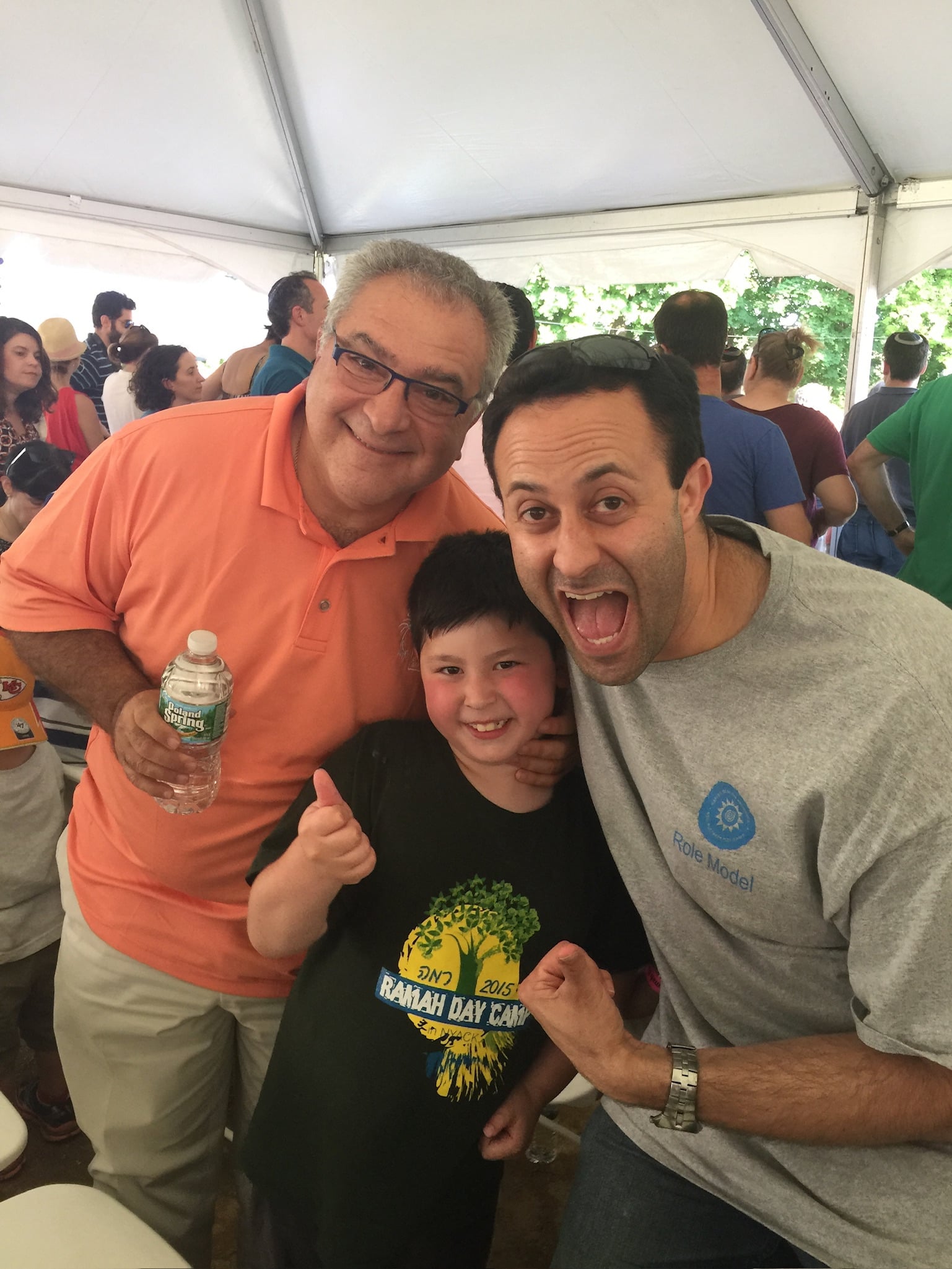
In June of 2015, my father passed away. This is difficult for any eight-year-old, but it was especially hard for me. I had few friends. I had trouble with emotional regulation. And the person I most relied upon for support, personal and emotional, was my father. My coping mechanisms were gone.
My family didn’t cancel our plan, however. I was still sent to Ramah Day Camp in Nyack, our local Jewish day camp, where our family had been in the community for generations. I was paired with a young counselor, Max Slepian, who was trained on how to support me. But training can only go so far; he was given support when challenges arose, and to also be the best counselor he could be for me and others. My grief didn’t go away, but little by little I healed, and I simultaneously was able to work on challenges related to my Autism.
Contrast that experience with that of Danny Klein. He grew up at my synagogue, he had a similar passion for helping others (his dream was to become a psychologist), he was involved with Jewish life, and he had a supportive family. But, he did not always get to benefit from supportive places. He faced bullying and exclusion. He did not get the patience that I received. He did not get to live to the summer of 2015, because that spring he committed suicide.
Danny and I didn’t have radically different experiences. I firmly believe that if I hadn’t gone to Ramah Nyack that summer, or had an inclusive experience, that I would have committed suicide. And the statistics are there. Suicide, depression, anxiety, they are all prevalent issues among neurodivergent youth. It is not a fundamental part of neurodiversity, it comes from a lack of inclusion.
Our tradition teaches us that to save one life is to save a world. Given this, disability inclusion is not just an afterthought. It should be, as a Jewish community, one of our highest priorities.
I feel as if Ramah Day Camp in Nyack offers an example of what we should strive for. First, it is not perfect—for no one except Hashem is perfect—but the good is recognizing our imperfections and striving to be better. Ramah Nyack does that. In a recent podcast interview with me, Ramah Nyack’s director, Rabbi Ami Hersh, recognized how Ramah Nyack is always aiming to do better and to increase its inclusion offerings.
For me, that meant being paired with Max. In recent years, Ramah Nyack has also established a neurodiversity job support program that I am a part of. It works to provide training for staff on neurodiversity, featuring speakers, including me and friends in the space like Sarah Parkes. This summer I am working to form a club within camp as a low-stakes social environment for all staff, neurodivergent or not, to connect with one another. Ramah Nyack treats inclusion as a pillar of its work; it proves that you can value Israel education, relational Judaism, and disability inclusion all at the same time.
Ramah Day Camp in Nyack shows that this isn’t a zero-sum game. We can be inclusive, we can provide engaging Jewish education, and we can educate on antisemitism and Zionism. But this isn’t possible without the hard work: the difficult conversations, the patience and the flexibility to do better.
The Kleins believe in this too. They want a world where kids like Danny can not only live, but thrive. They invested in my Jewish education, advocating for me to be included in my Jewish elementary school. If it wasn’t for their advocacy, I wouldn’t be where I am today.
So I ask us all, not just in February, or in April, but in all months and at all times, to do the hard work. Invite speakers like me. Work with staff to improve personal skills and enhance policy. Elevate inclusion as a key value. And remember, this isn’t about doing the right thing; it is about saving and elevating each and every life.