
Disproportionate Outrage: Media & the Public
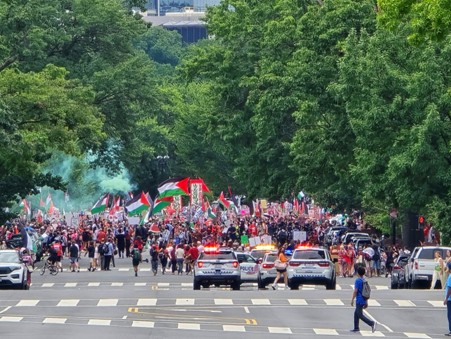
Since October 7, 2023, the world’s media has fixated on the Israel-Gaza conflict with an intensity that eclipses almost every other ongoing humanitarian disaster. The BBC alone produced nearly 4,000 written articles and aired over 32,000 broadcast segments on the conflict in just one year. By contrast, conflicts in Sudan, Syria, and even Ukraine—with all their horror, displacement, and devastation—have garnered significantly less coverage. This is not merely a matter of editorial choice or audience engagement; it speaks to something far deeper and more troubling about how the global media frames Israel and, ultimately, the Jewish people.
We must ask ourselves: why has this conflict received such obsessive attention? Why is every action Israel takes scrutinised under a microscope, while the daily atrocities in places like Sudan barely make the headlines? Why do protests erupt in Western capitals condemning Israel’s right to defend itself, yet the world remains largely silent when Syrian civilians are bombed by their own government, or when ethnic cleansing unfolds in Darfur?
Media Saturation and Selective Outrage
The overexposure of the Israel-Gaza conflict has tangible consequences. It distorts public perception, creating the impression that Israel is uniquely brutal, that it stands alone as a global aggressor. In doing so, it strips context from events, omits history, and reduces a deeply complex geopolitical issue to a binary of oppressor and victim.
Compare this to the media’s treatment of Russia’s invasion of Ukraine. That war has received heavy coverage, yes, but not the same reaction. There were no global boycotts of Russian cultural institutions. Russian civilians living abroad did not face widespread harassment. No one attempted to justify the invasion by arguing that “Ukrainians deserve it” or that Russia was acting out of historical grievance. On the contrary, Ukrainians were rightly supported, humanised, and defended.
Meanwhile, in the case of Israel, Jewish communities around the world have been subjected to rising hate crimes, intimidation, and social exclusion. Jewish students have faced harassment on campuses. Synagogues have been vandalised. Israeli hostages, some of them children, are denied empathy in public discourse. The media may not instruct its audience to hate Jews, but by endlessly presenting Israel as the world’s greatest villain, it creates the climate in which such hatred thrives.
The Double Standard
Why is there such a difference in response? Why are Jewish lives, when caught in conflict, seen as less worthy of sympathy or support? Part of the answer lies in the narratives that are perpetuated by mainstream media. In the case of Israel, the story is often one of colonialism, apartheid, and oppression—loaded terms that are frequently applied without context or balance. In contrast, conflicts in Sudan, Syria, or Ethiopia are presented as tragic, distant, and complex—worthy of pity, but not passion.
The repeated framing of Israel as a “genocidal” or “apartheid” state, often unsupported by international legal consensus, inflames rather than informs. It feeds into centuries-old antisemitic tropes of Jewish power, control, and cruelty. This isn’t just poor journalism; it’s dangerous. It allows hatred to masquerade as activism and turns legitimate criticism into an excuse for bigotry.
Who Is Responsible?
So, who bears the responsibility for this toxic dynamic? Is it the media, for obsessively covering Israel while ignoring bloodshed elsewhere? Or is it the public, for choosing to channel their outrage so selectively and, at times, so hatefully?
The answer, likely, is both. Media organisations must be held to account for their editorial decisions. When disproportionate coverage becomes a form of moral indictment, it ceases to be journalism and becomes propaganda. The BBC and other major outlets must reflect on whether their reporting meets their own stated standards of impartiality and accuracy.
At the same time, the public has agency. Readers, viewers, and social media users are not passive consumers. They choose which narratives to amplify, which injustices to protest, and which victims to humanise. The failure to apply consistent empathy across global conflicts is not just a media failure—it is a societal one.
The Mask Is Slipping
The obsessive focus on Israel, to the exclusion of more deadly or equally urgent global crises, cannot be explained away by journalistic priorities or public interest alone. It exposes a deeply uncomfortable truth: that antisemitism has not disappeared but merely adapted. It now wears the mask of anti-Zionism, of selective activism, and of media bias.
When the world’s only Jewish state is portrayed as the epicentre of global evil, while far greater atrocities are ignored or downplayed, we must ask: what is really motivating this obsession? When Jews around the world pay the price for Israel’s existence, we must ask: has criticism become a cover for hate?
The world needs better journalism, but it also needs deeper moral clarity. Until both are achieved, the line between news and incitement will continue to blur—and the consequences will be felt far beyond the pages of any newspaper.